
Cogeneration and enginesExplainer
What is the methane number and why does it matter for a biogas engine?
The methane number measures a gas's resistance to knocking combustion in an engine. How to understand it, what lowers or raises it and why biogas usually has a high one.
Other language versions: Polski, Deutsch, Español, Français, Italiano, Nederlands.
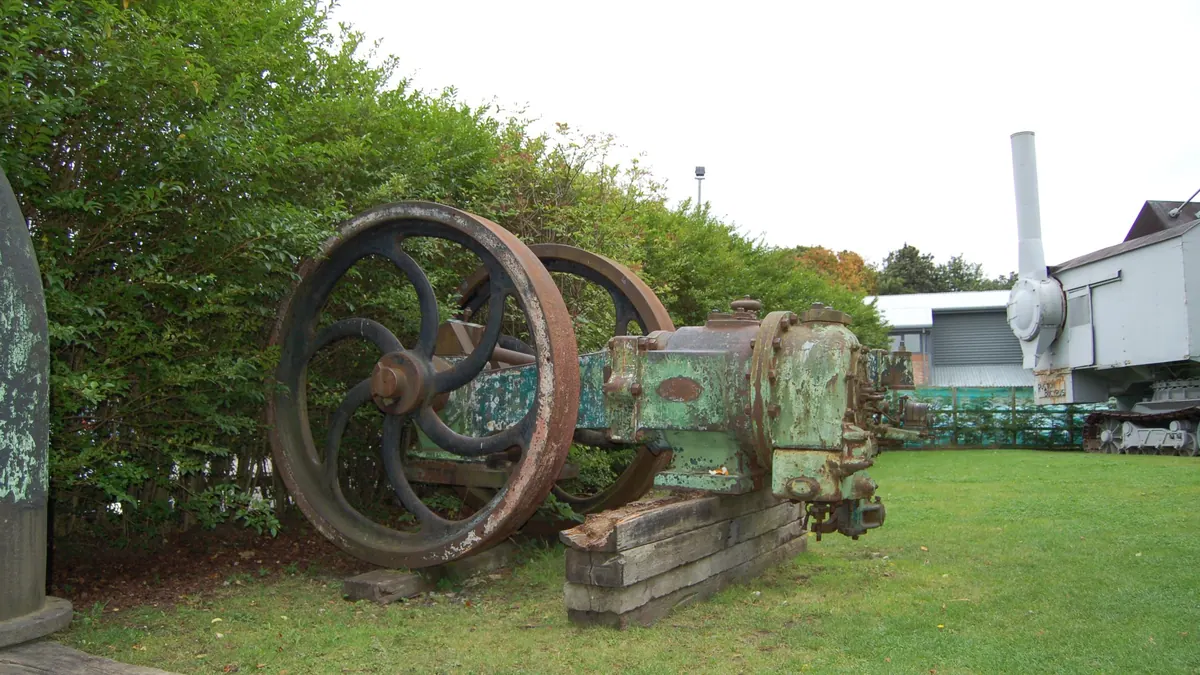

The methane number (MN) is a measure of a gaseous fuel's resistance to knocking combustion in a spark-ignition engine: the higher it is, the lower the risk of knocking. The scale is defined by reference mixtures: pure methane has an MN of 100 and hydrogen an MN of 0. The methane number of a tested gas equals the volume percentage of methane in a mixture with hydrogen that has the same tendency to knock under specified test conditions. It is analogous to the octane number for petrol.
What raises it and what lowers it
| Component | Effect on MN |
|---|---|
| Methane | Reference value (100) |
| CO₂ | Raises (an inert gas, suppresses combustion) |
| Nitrogen | Raises |
| Ethane, propane, butane and higher | Lower |
| Hydrogen | Lowers (it is the zero point of the scale) |
Natural gas, which contains admixtures of higher hydrocarbons, has a lower methane number than pure methane. Biogas, which consists mainly of methane and large amounts of CO₂, usually has a higher one than natural gas. Biogas of typical composition has an MN in the order of 120–140 in calculations; the range depends on the CO₂ content and the calculation method, so this is an indicative value. This value goes beyond the 0–100 scale, because the number calculated for gases with a large share of inert gases can exceed 100.
How it is determined
Direct measurement requires a specialised test engine, so in practice MN is calculated from the gas composition (chromatography). There are various calculation methods: one of them is described in the annex to the standard EN 16726 on the quality of H-group gas, and engine manufacturers use their own methods, which give different results for the same composition. For this reason, when comparing values one must know which method was used. There is no single universal calculation definition, and the engine manufacturer may require its own method.
Significance for a CHP engine
A gas engine has a permissible methane number range defined by the manufacturer. If the gas has too low an MN, the engine is exposed to knocking combustion, which damages pistons and bearing shells. In such a situation the controller reduces the load, retards the ignition or leans the mixture. For biogas the risk of a low MN is small, because CO₂ acts as ballast. A more frequent problem is a low calorific value, contaminants (hydrogen sulphide, siloxanes, moisture) and variability of composition; see Variability of biogas composition and quantity and Servicing CHP engines.
Where the methane number matters in practice
- Blending biogas with another gas, e.g. adding propane to biomethane to reach the calorific value required for grid injection; this may change the MN.
- Fuelling CNG engines with biomethane. The standard EN 16723-2 (CNG fuel for transport) contains requirements, including for the methane number; see Biomethane in transport.
- Hydrogen added to the gas. An admixture of H₂ lowers the MN, which matters for stationary engines.
- A change in composition during a desulphurisation failure or process disturbances. A fall in methane with a rise in CO₂ usually raises the MN.
What to do in practice
- Know the MN range permitted by the engine manufacturer and the method by which it is stated.
- Measure the gas composition (a continuous analyser or periodic chromatography) and calculate the MN using the same method.
- When changing the fuel or adding a component (e.g. hydrogen, propane), consult the manufacturer on the effect on MN.
- Record the symptoms of knocking (noise, loss of power, knock detector log) and correlate them with the gas composition.
Example: how gas composition affects MN
A mixture of methane with an admixture of ethane or propane has a lower methane number than pure methane, and the addition of CO₂ raises it. Two gases of the same calorific value can therefore have different MN if they differ in composition. Biogas from a digester, whose main components are CH₄ and CO₂, behaves differently in this respect from grid gas, in which higher hydrocarbons are present. After upgrading to biomethane, most of the CO₂ is removed, so the methane number falls to a level close to that of pure methane, and after any addition of propane to correct the calorific value it falls further still. In engines fuelled with biomethane it is therefore worth knowing the final composition of the gas, not only the methane share.
Sources
Questions and answers
Can the methane number of biogas be a problem for the engine?
Rarely in terms of knocking, because the CO₂ in biogas raises it. When biogas is mixed with gases containing higher hydrocarbons or with hydrogen, the methane number (MN) falls, and the engine manufacturer may require a load reduction or changed settings.
Related articles