A biogas plant maintenance shutdown: planning, limiting losses and returning to full production
A planned maintenance shutdown can be carried out without destroying the biology of the process. We describe the schedule, stocks and the stages of resuming feeding.
Other language versions: Polski, Deutsch, Español, Français, Italiano, Nederlands.
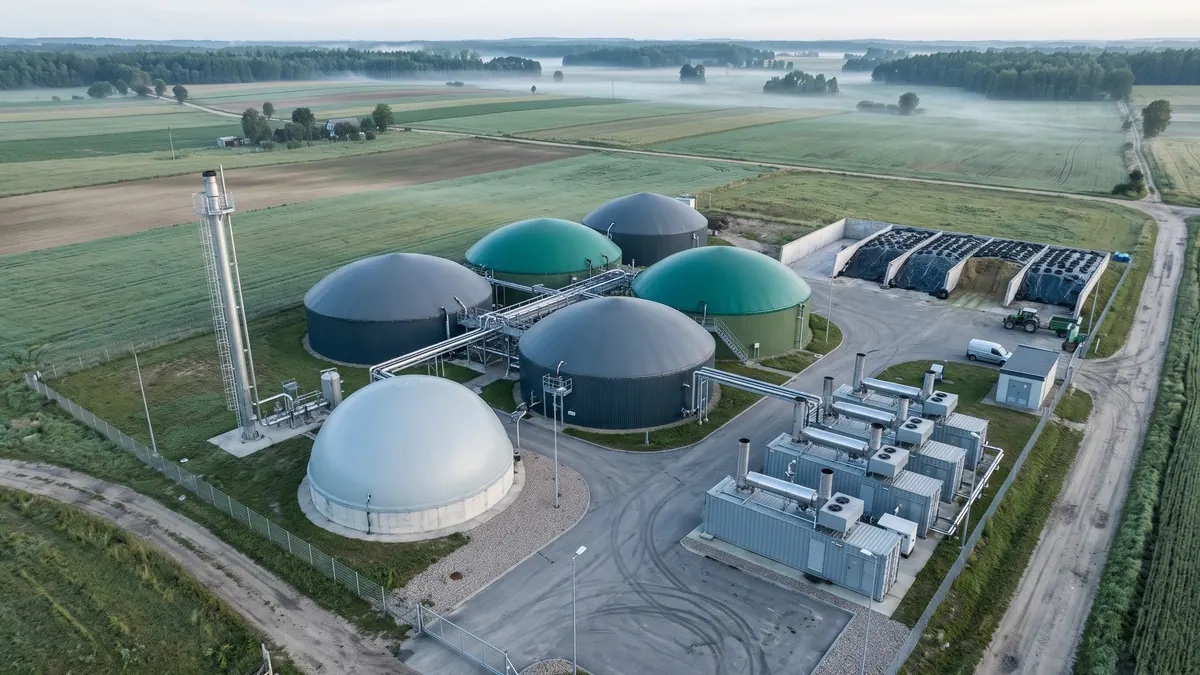
A maintenance shutdown is a planned stop of biogas production or energy generation, in which the main task is to carry out the work without damaging the biology of the process and to return to full capacity in as short a time as possible. The guide below puts the decisions in order, from choosing the date to resuming feeding. The start-up of a new chamber from inoculum is described separately; here we assume that the digester is full of active biomass.
Scope of work and schedule
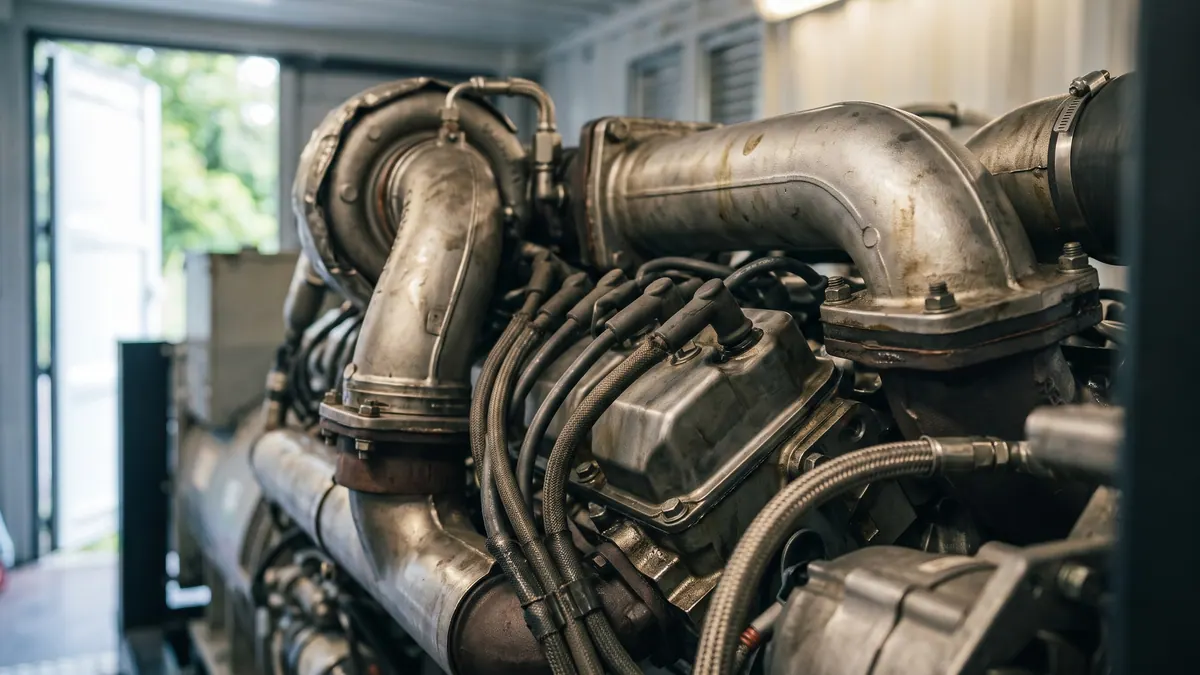
Start with a list of work: inspection and repairs of the CHP, replacement of agitator seals and bearings, inspection of pumps, valves and sensors, cleaning, checks of the gas installation. Divide it into work requiring stopping gas production, stopping only part of the system and carried out without stopping. An hourly schedule with dependencies (what follows what) makes it possible to find needless waiting. Allow time for ordered parts and for the presence of an external service provider; the delay of one crew shifts everything.
Choosing the moment
A good date is one when:
- the feedstock supply is naturally smaller or the substrate can be safely stored,
- the demand for heat is small,
- it does not fall on the peak of field work and digestate transport,
- contractors are available.
Avoid a date right after a change in the type of substrate or during a process disturbance; a shutdown superimposed on unstable biology doubles the risk.
Substrate stock and digestate storage
During the shutdown the plant may still receive substrate deliveries, and digestate is produced if fermentation continues. Check two things: whether there is room in the store for the substrate delivered in that time, and whether the final tank has the capacity for a possible emptying of the digesters for the work. If the work requires emptying the tank, and emptying and cleaning the tank are covered by separate procedures, including the texts on scum and sediments, the plan must also take into account safety when entering the tank.
Biology in a short and a long shutdown
- Short shutdown (up to a few days): maintain the temperature (heating from an emergency source or boiler), mix periodically to avoid stratification, and limit dosing. The biogas produced in that time needs an outlet: a flare or storage. A lack of an outlet may lead to overpressure.
- Long shutdown (weeks): the activity of methanogens declines as the temperature falls and food is lacking. After the return, a longer period of increasing the load is needed. Consider partly maintaining the temperature and a minimal sustaining dose.
There is no single universal time; it is determined by the temperature, the load before the shutdown and the state of the slurry.
Winding down feeding and returning to OLR
Before the shutdown, reduce doses gradually so as not to leave an excess of readily degradable material in the digester without the possibility of gas offtake. After the repair, resume from a fraction of the previous organic loading rate (OLR), for example from several dozen percent, and increase in small steps, monitoring the gas composition, volatile fatty acids, pH and foaming. Rushing the restart at the expense of stability is the most common mistake: the result is acidification, which costs more days than the hours gained.
Return-to-work checklist
- All protections and sensors checked and confirmed before start-up.
- Gas system checked for tightness and free flow.
- Digester temperature at operating level.
- Feeding resumed according to the gradual plan.
- Measurements of gas composition and process parameters every few hours in the first 24 hours.
- Operator log completed with the scope of work and changes.
Communication and documentation of the shutdown
A shutdown affects many parties: the service provider, substrate suppliers, buyers of energy or heat, and in a biomethane plant also the grid operator. Notify them in advance and agree how long the break will last and what happens to deliveries. Within the team, appoint a person in charge of the shutdown, who approves the sequence of work and clears the plant for restart. Afterwards, write down what was done, which parts were replaced and what running hours the equipment has after the repair. These data go into the operator log and are the basis for planning subsequent inspections, as well as the annual summary of plant operation.
Practical notes
Before starting work, check the completeness of parts and tools, and the qualifications of contractors. The most expensive delays come from trifles: a missing gasket, an unavailable crane or a contractor who arrived a day late. Plan also a time reserve for unforeseen discoveries, because after opening a device the scope of repair is often larger than assumed. It is good to allow at least a dozen or so percent of reserve in the schedule and to determine in advance which work can be postponed if time shrinks.
Related materials
Resuming operation after a longer stop or after a failure, with emphasis on the biology of the process, is described in the text on restarting the digester. This guide concentrates on planning the repair: the schedule, choice of date and communication. The scope of work on the engine is covered by the text on servicing CHP gas engines.
What to remember
- A shutdown is a project with a schedule and a list of dependencies.
- Protect the biology: temperature, mixing and gas offtake.
- Resume feeding gradually, not in jumps.
- Do not confuse a restart after a shutdown with a start-up from zero.
Sources
Related articles