

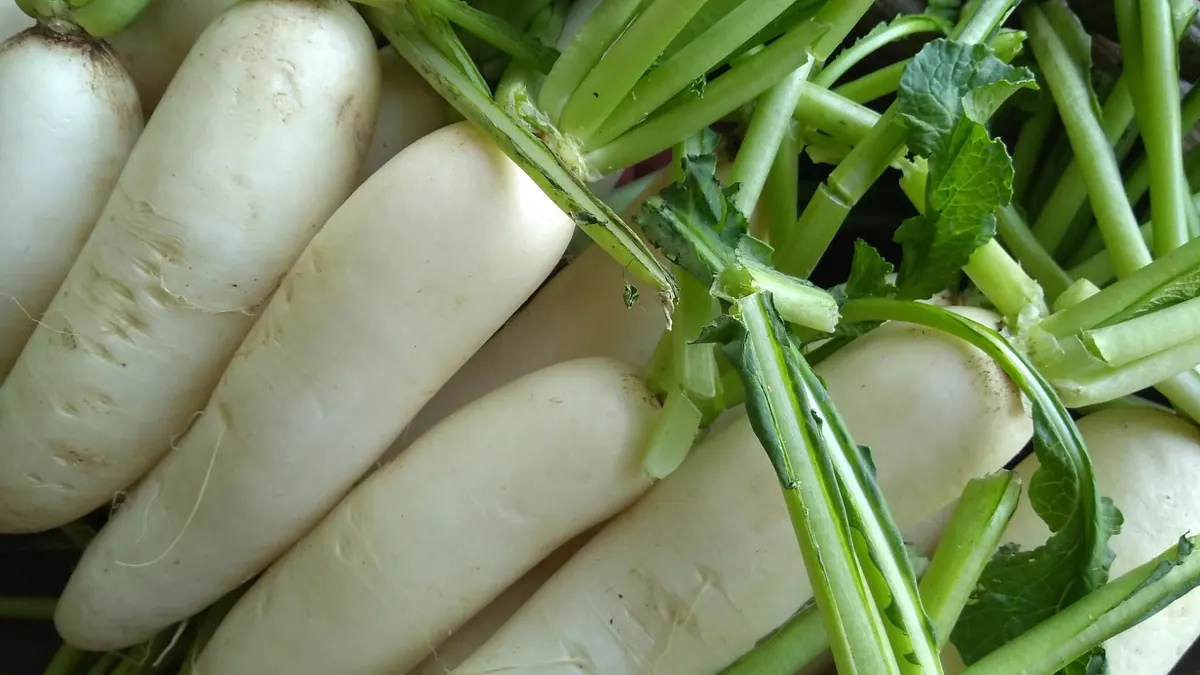
BMP testingFruit, vegetables and their residues
Radish — BMP: 3 studies, weighted mean 286 m³ CH₄/t VS
Radish (roots) is a watery vegetable waste of the Brassicaceae family, with stable results between cultivars and the typical risk of hydrogen sulphide formation.
Photo Thamizhpparithi Maari / Wikimedia Commons, licence CC BY-SA 4.0, source file; changes: cropping

- Weighted mean
- 286m³ CH₄/t VS
- Range
- 273–304m³ CH₄/t VS
- Records
- 3studies
- Publications
- 2sources
- Temperatures
- 35 °Cof the test
Methane in biogas
Medium methane content · ≈ 5.5 kWh/m³ of biogas
estimate from the substrate type The collected studies contain no measurement. The interval follows from the approximate composition (protein from total nitrogen (N 3.4 % DM × 6.25)) and the yields of compound groups according to FNR.
Rating for biogas plants
not rated — editorial rating for biogas plants
Not rated: no dry matter or volatile solids in the data. We calculate the rating when the dry matter and volatile solids of the material are known.
Add to the co-digestion calculator CSV data
BMP curves from 3 studies
Weighted mean Individual records
Dashed lines are a model curve (first-order kinetics, B(t) = B₀·(1 − e−kt)); the end point comes from the publication. All curves are model curves.
Cumulative methane production over the test [m³ CH₄/t VS]. The thick line is the weighted mean of all records (286); dots mark the end values given in the publications. Point at the chart to read values; click a legend item to hide or show a record.
Records and sources
Download CSV| Source | BMP m³ CH₄/t VS | Temperature | Sample | Curve |
|---|---|---|---|---|
| Yan et al. (2021) DOI | 273 | — | Red radish (Raphanus sativus) – Whole | end point (model curve) |
| Gunaseelan (2004) · 1 DOI | 293 | 35 °C · mesophilic | radish yellow white | end point (model curve) |
| Gunaseelan (2004) · 2 DOI | 304 | 35 °C · mesophilic | radish pale pink | end point (model curve) |
| Weighted mean | 286 | arithmetic mean 290, SD 16 | ||
Typical composition
- Volatile solids (VS)
- 84.9 % DM (range 81.7–91.3)
- Nitrogen
- 3.4 % DM
- C/N ratio
- 12.5
Median and range of the determinations reported in the publications behind this substrate's BMP records (read from: BCBPD, MY-D); dry matter: 0 determinations, volatile solids: 3 determinations. C/N was calculated as the ratio of C and N content (% DM) from the same source. No DM in the sources – the calculator has to ask for a value.
Sources: Yan et al. (2021); Gunaseelan (2004).
The composition of the raw material varies between batches — for plant calculations use an analysis of your own sample. The calculator inserts typical values automatically.
Process properties
Low confidence: the description is based on general characteristics of the substrate group, not on studies of this material. Treat it as a hint to be verified.
No published process studies
The literature we use does not describe the advantages or drawbacks of digesting this substrate beyond the BMP test results. Below are process characteristics assigned on the basis of the type of material — an editorial classification, not a study result.
- easily degradable
- sugars, starch, glycerol → fast hydrolysis and acidification (VFA), needs buffering
- carbon-rich
- high C/N → nitrogen deficiency; combine well with nitrogen-rich substrates
- low in nitrogen
- high C/N → nitrogen deficiency; combine well with nitrogen-rich substrates
- poor in trace elements
- poor in trace elements — mono-digestion requires supplementation
- seasonal
- seasonal availability — requires storage
Co-digestion — what to combine it with, what to watch out for
- combines well
substrates: nitrogen-rich — e.g. Pig slurry, Poultry manure, Waste activated sludge (secondary sludge), Chlorella vulgaris, Nannochloropsis salina
A nitrogen-rich co-substrate balances the low C/N of fruit and vegetable waste (Bouallagui et al. 2009).[1]
- combines well
substrates: high alkalinity (buffer) — e.g. Cattle manure, Pig slurry, Cattle slurry, Duck slurry, Rumen and digestive tract content
Co-digestion of easily degradable substrates with dairy slurry increased the methane yield relative to slurry alone.[2]
Dosing
No source limits on the dose for this substrate.
Introduce gradually, starting with a small dose and monitoring the process (e.g. FOS/TAC, pH, gas composition).
Sources of the process data
- Improvement of fruit and vegetable waste anaerobic digestion performance and stability with co-substrates addition
- Biochemical methane potential and biodegradability of complex organic substrates
- Compositional components and methane production potential of typical vegetable wastes
- Biochemical methane potential of fruits and vegetable solid waste feedstocks
- Lab-scale anaerobic digestion of cassava peels: the first step of energy recovery from cassava waste and water hyacinth
- Effects of size and thermophilic pre-hydrolysis of banana peel during anaerobic digestion, and biomethanation potential of key tropical fruit wastes
- Effect of particle size on biogas generation from biomass residues
The co-digestion calculator will assess a specific mixture containing this substrate.
What it is and where it comes from
Radish (Raphanus sativus) is grown in Poland primarily as the spring radish, grown in the open field and under cover, and as the larger-rooted summer and winter radish. The waste arises in packing houses and on plantations (overgrown, cracked roots that do not meet commercial standards), and also in salad processing. The stream is small and strongly seasonal.
Properties relevant to digestion
The radish root contains more than ninety per cent water, and the dry matter is rich in soluble sugars, pectins and protein, with a low lignin content. As a result, the material hydrolyses quickly and supplies readily available carbon, but requires sensible dosing because of the risk of acidification. Radish contains glucosinolates responsible for its pungent taste; their breakdown products and other sulphur compounds promote the formation of hydrogen sulphide in the biogas. Sand and soil adhering at harvest also have a minor effect. The low dry matter content means that the energy density per tonne of fresh matter is small.
How to read the spread of results
The dataset contains several records from several sources, including records without a stated temperature and mesophilic ones, relating to the yellow-white and light pink cultivars and to the red one. The results are similar to one another, which suggests that, expressed per volatile solids, cultivar is not the dominant factor in variability. However, uncertainty remains owing to the small number of sources, the way the sample was chopped and prepared, and the inoculum. With a very watery material, the accuracy of the dry matter determination is also important.
In biogas plant practice
Radish is a marginal addition that makes sense mainly where it arises on site in larger quantities. After chopping, it is mixed with slurry or silage, and the dose is spread over time. The plant should have efficient desulphurisation. Storage is limited because the roots spoil quickly. Plant waste from trade and processing counts as waste and requires appropriate provisions in the permit, whereas residues from the farm's own holding are treated as agricultural products.
Because the stream is small, radish rarely requires separate planning; it is enough to include it in the balance of seasonal vegetable waste and to remember that, together with other Brassicaceae such as cabbage or turnip, it increases the load on the desulphurisation system.
Methodology in brief
BMP is the amount of methane obtained from volatile solids (VS) in a batch test, given in m³ CH₄ per tonne of VS (numerically the same as NmL CH₄/g VS in the publications) and converted to normal conditions (0 °C, 101.325 kPa). The weighted mean gives each publication a total weight of 1, split equally between its results for the substrate — a paper testing twenty varieties does not outweigh a paper with a single sample. In inter-laboratory programmes the unit is the laboratory (total weight 1), and within it the weight of a test grows with the number of bottles (replicates). Results after pretreatment (e.g. thermal, chemical, enzymatic) are shown separately and are not included in the mean.
Solid lines are curves measured in the tests. Where a publication gives only the final result, we draw a first-order kinetic model, B(t) = B₀·(1 − e−kt): only the end point comes from the publication, and the shape of the curve serves purely as visualisation — do not read the production on a particular day from it. For this substrate k = 0.245 d−1 was assumed (median of rate constants k reported in the sources and/or fitted to the mean measured curves).
The statistics describe the spread of published results — a descriptive compilation, not a meta-analysis or a guarantee of plant yield.
Bibliography
- Yan, H.; Cai, F.; Wang, L.; Chen, C.; Liu, G. (2021). Compositional components and methane production potential of typical vegetable wastes. Environmental Science and Pollution Research 28(38), 54177–54186. DOI: 10.1007/s11356-021-15798-y DOI
- Gunaseelan, V. (2004). Biochemical methane potential of fruits and vegetable solid waste feedstocks. Biomass and Bioenergy 26(4), 389–399. DOI: 10.1016/j.biombioe.2003.08.006 DOI
All sources of the site: bibliography.
Other substrates in the group “Fruit, vegetables and their residues”
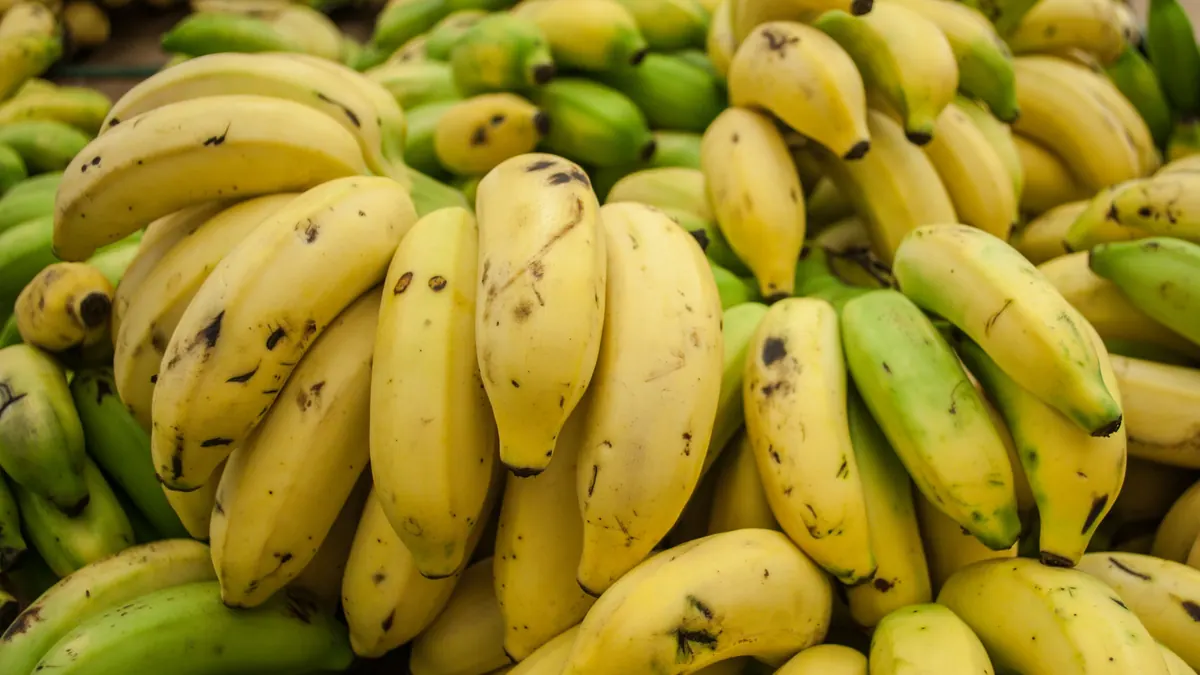
Bananas (fruit, pulp) — BMP: 6 studies, weighted mean 336 m³ CH₄/t VS
336 m³ CH₄/t VS weighted mean from 6 studies
≈52 %
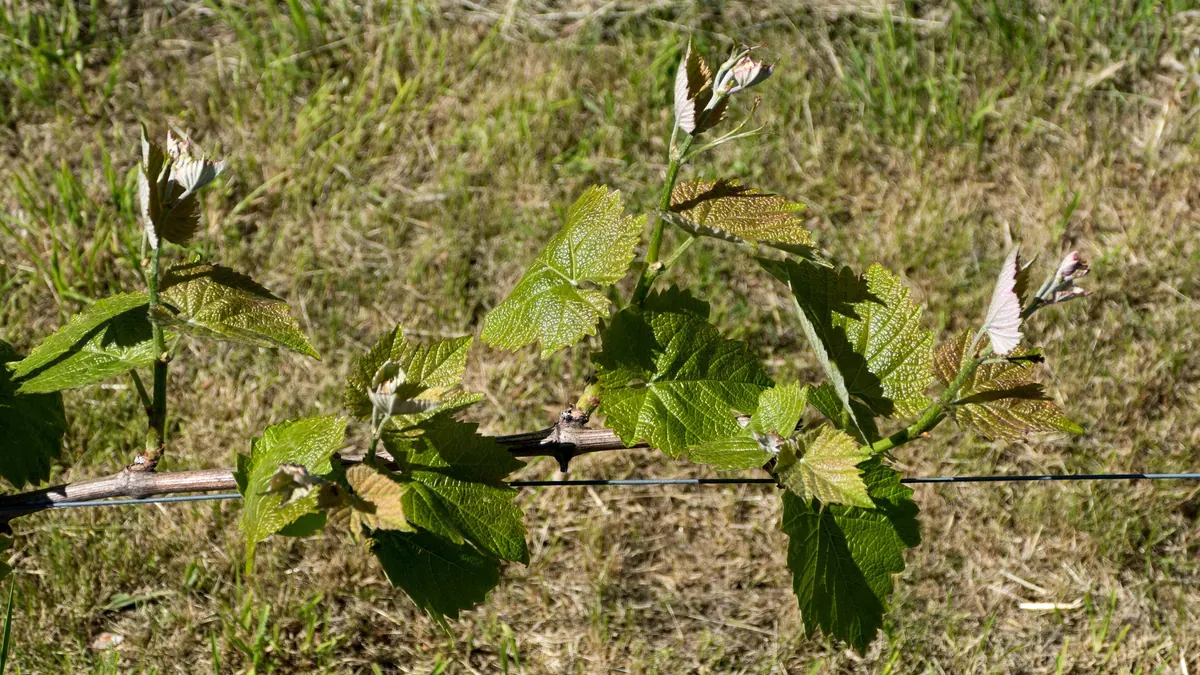
Grapevine leaves — BMP: 2 studies, weighted mean 292 m³ CH₄/t VS
292 m³ CH₄/t VS weighted mean from 2 studies
≈52 %
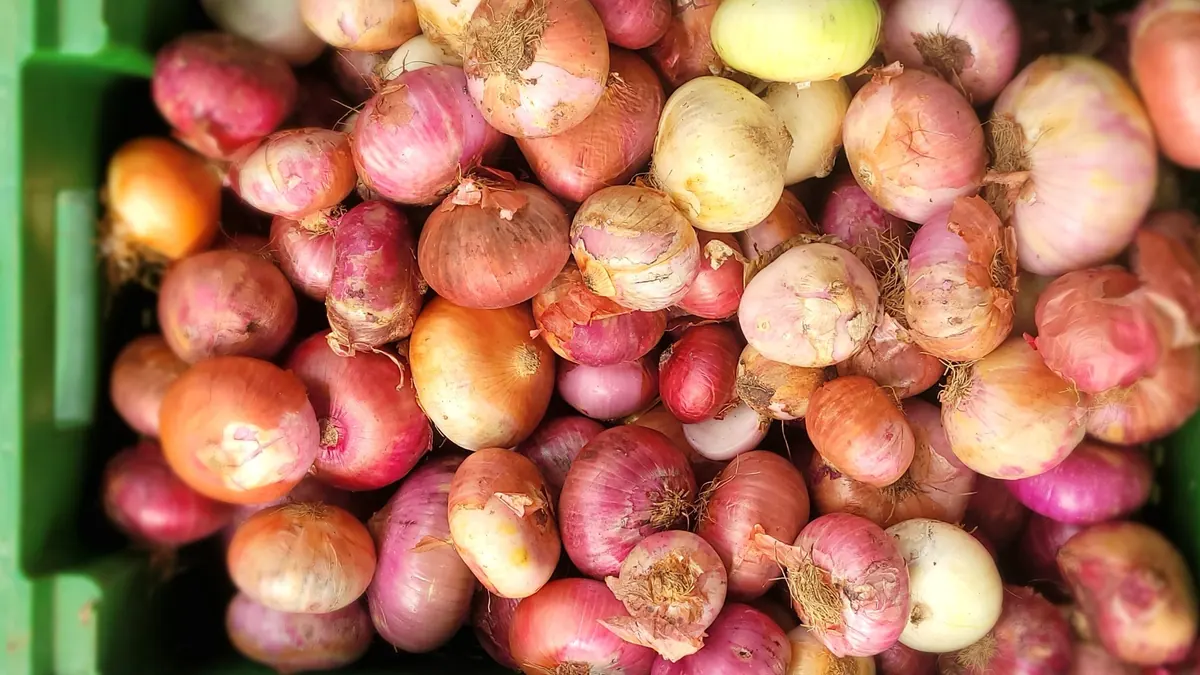
Onions — BMP: 2 studies, weighted mean 305 m³ CH₄/t VS
305 m³ CH₄/t VS weighted mean from 2 studies
≈52 %
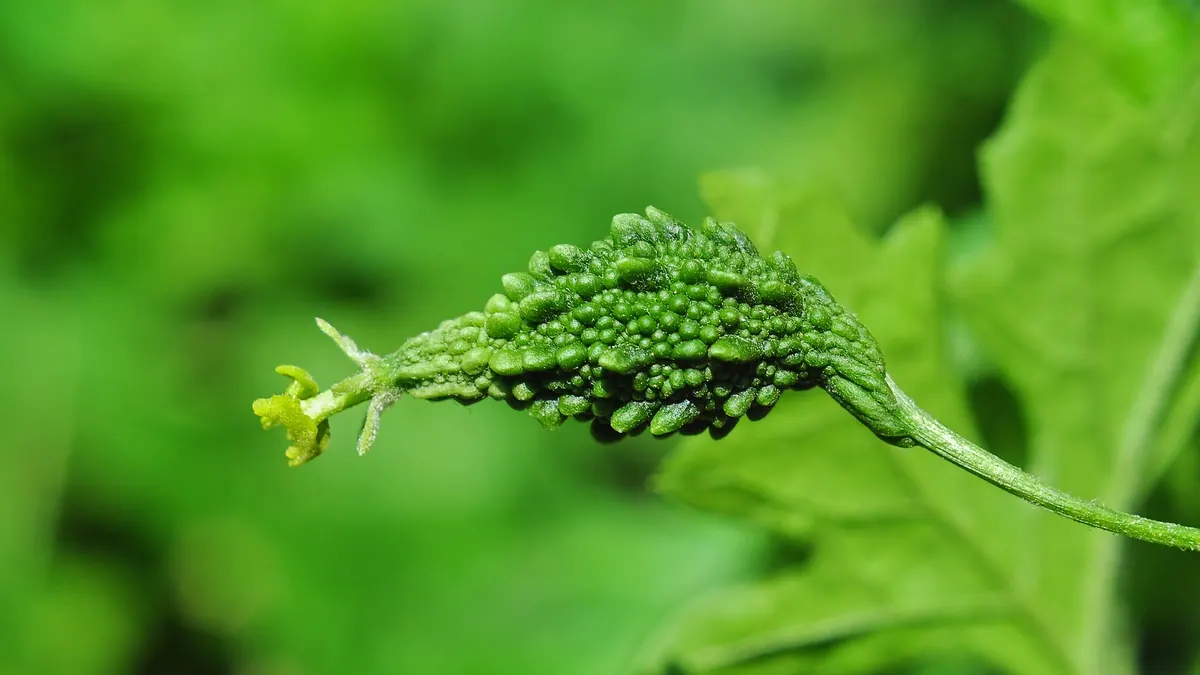
Other cucurbit vegetables (bitter melon, luffa, wax gourd, chayote, horned melon) — BMP: 5 studies, mean 274 m³ CH₄/t VS
274 m³ CH₄/t VS weighted mean from 5 studies
≈55 %