

BMP testingFruit, vegetables and their residues
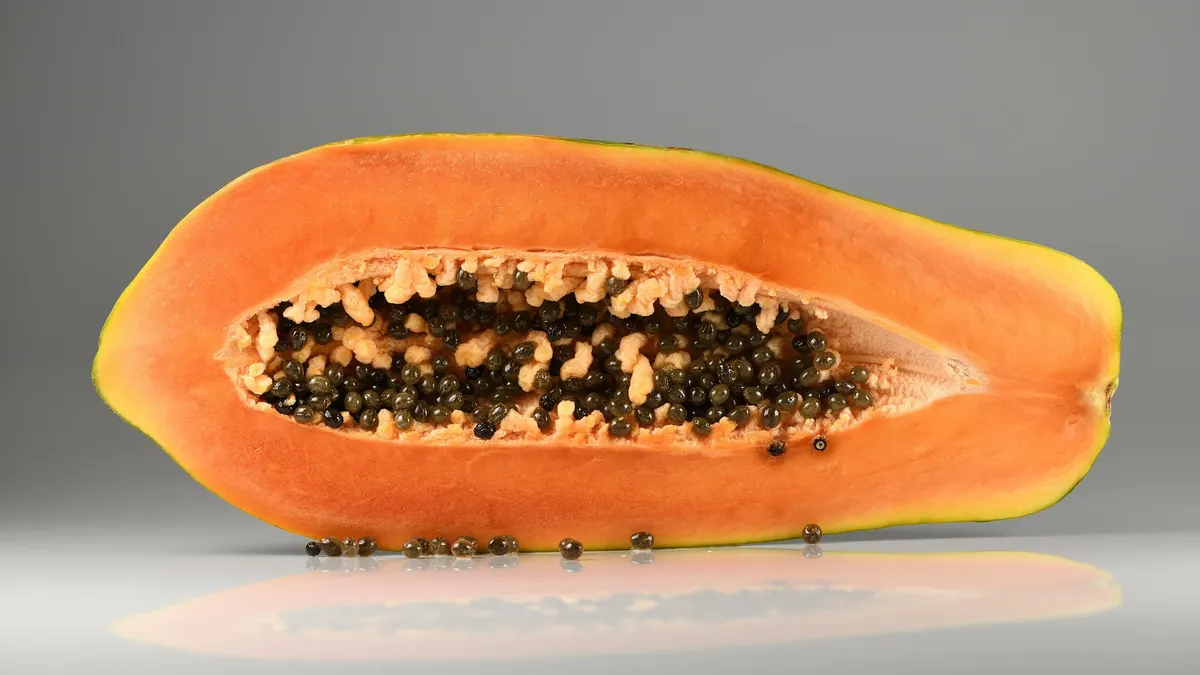
Whole tropical fruit (papaya, mango) — BMP: 2 studies, weighted mean 333 m³ CH₄/t VS
Whole tropical fruit (papaya, mango) is a material rich in sugars and water; records from different studies describe rejected fruit or fruit processed whole.
rating: neutralCH₄ ≈ 56 % (estimate)
Photo Ivar Leidus / Wikimedia Commons, licence CC BY-SA 4.0, source file; changes: cropping

- Weighted mean
- 333m³ CH₄/t VS
- Range
- 306–360m³ CH₄/t VS
- Records
- 2studies
- Publications
- 2sources
- Temperatures
- 35 °C, 37 °Cof the test
Methane in biogas
Medium methane content · ≈ 5.6 kWh/m³ of biogas
estimate from the substrate type The collected studies contain no measurement. The interval follows from the approximate composition (protein from total nitrogen (N 4.2 % DM × 6.25)) and the yields of compound groups according to FNR.
Rating for biogas plants
neutral — editorial rating for biogas plantsNo clear advantages — worth charging a fee for accepting it
Potential per tonne of fresh matter: moderate (33 m³ CH₄/t); process risk: acidification. No additional handling requirements.
Why? Rating factors
Potential per tonne +1
- +1potential 33 m³ CH₄/t fresh matter (BMP 333 × DM 10.7 % × VS 92.4 %)
Process stability −1
- −1acidification: rapid degradation / acidic pH, risk of VFA accumulation, needs buffering
Handling and costs 0
- 0no factors
Total points: 0 · thresholds: ≥ 2.5 very good, ≥ 1 good, below — neutral; negative with cumulative process risk.
Add to the co-digestion calculator CSV data
BMP curves from 2 studies
Weighted mean Individual records
Dashed lines are a model curve (first-order kinetics, B(t) = B₀·(1 − e−kt)); the end point comes from the publication. All curves are model curves.
Cumulative methane production over the test [m³ CH₄/t VS]. The thick line is the weighted mean of all records (333); dots mark the end values given in the publications. Point at the chart to read values; click a legend item to hide or show a record.
Records and sources
Download CSV| Source | BMP m³ CH₄/t VS | Temperature | Sample | Curve |
|---|---|---|---|---|
| Ge et al. (2014) DOI | 360 | 37 °C · mesophilic | papaya | end point (model curve) |
| Kouas et al. (2017) DOI | 306 | 35 °C · mesophilic | mango | end point (model curve) |
| Weighted mean | 333 | arithmetic mean 333, SD 38 | ||
Typical composition
- Dry matter (DM)
- 10.7% (range 10.7–10.7)
- Volatile solids (VS)
- 92.4 % DM (range 92.4–92.4)
- Nitrogen
- 4.2 % DM
- C/N ratio
- 12.4
Median and range of the determinations reported in the publications behind this substrate's BMP records (read from: MY-D); dry matter: 1 determination, volatile solids: 1 determination. C/N was calculated as the ratio of C and N content (% DM) from the same source. DM from a single determination – indicative value.
Sources: Ge et al. (2014).
The composition of the raw material varies between batches — for plant calculations use an analysis of your own sample. The calculator inserts typical values automatically.
Process properties
Low confidence: the description is based on general characteristics of the substrate group, not on studies of this material. Treat it as a hint to be verified.
No published process studies
The literature we use does not describe the advantages or drawbacks of digesting this substrate beyond the BMP test results. Below are process characteristics assigned on the basis of the type of material — an editorial classification, not a study result.
- easily degradable
- sugars, starch, glycerol → fast hydrolysis and acidification (VFA), needs buffering
- acidic
- low pH of the substrate (silages, stillage, whey, fruit)
- dilutes the feed (low DM)
- low dry matter, dilutes the feed
- seasonal
- seasonal availability — requires storage
- poor in trace elements
- poor in trace elements — mono-digestion requires supplementation
- carbon-rich
- high C/N → nitrogen deficiency; combine well with nitrogen-rich substrates
- low in nitrogen
- high C/N → nitrogen deficiency; combine well with nitrogen-rich substrates
Co-digestion — what to combine it with, what to watch out for
- combines well
substrates: nitrogen-rich — e.g. Pig slurry, Poultry manure, Waste activated sludge (secondary sludge), Chlorella vulgaris, Nannochloropsis salina
A nitrogen-rich co-substrate balances the low C/N of fruit and vegetable waste (Bouallagui et al. 2009).[1]
- combines well
substrates: high alkalinity (buffer) — e.g. Cattle manure, Pig slurry, Cattle slurry, Duck slurry, Rumen and digestive tract content
Co-digestion of easily degradable substrates with dairy slurry increased the methane yield relative to slurry alone.[2]
Dosing
No source limits on the dose for this substrate.
Introduce gradually, starting with a small dose and monitoring the process (e.g. FOS/TAC, pH, gas composition).
Sources of the process data
- Improvement of fruit and vegetable waste anaerobic digestion performance and stability with co-substrates addition
- Biochemical methane potential and biodegradability of complex organic substrates
- Biogas energy production from tropical biomass wastes by anaerobic digestion
- Robust assessment of both biochemical methane potential and degradation kinetics of solid residues in successive batches
- Effects of size and thermophilic pre-hydrolysis of banana peel during anaerobic digestion, and biomethanation potential of key tropical fruit wastes
- Effect of particle size on biogas generation from biomass residues
The co-digestion calculator will assess a specific mixture containing this substrate.
What it is and where it comes from
Papaya (Carica papaya) and mango (Mangifera indica) are tropical fruits grown on a large scale in Asia, Africa and the Americas. A considerable part of production is lost at harvest, transport and sale because of spoilage and damage, and fruit that fails commercial standards is sent for feed, compost or to biogas plants. The entry concerns whole fruit, without separating peel, pulp and stone; the peels of other tropical fruits are covered in a separate entry.
Properties relevant to digestion
The pulp of the fruit contains simple sugars, pectins and small amounts of protein, so it degrades quickly and gives a rapid increase in organic acid production. Too sudden a load can lower the pH and inhibit methanogenesis. Pectins can increase the viscosity of the suspension. Whole mango fruit contains a hard stone, which degrades more slowly than the pulp, and papaya contains numerous small seeds. A high water content means a low concentration of energy per tonne of fresh matter.
How to read the spread of results
The records concern two different species from different studies and temperatures close to mesophilic, so their comparison is not a repetition of the same measurement. The result is influenced by the variety, the degree of ripeness or spoilage (overripe fruit has a different composition), the share of seeds and peel, size reduction, moisture and the way of converting to volatile solids. Literature values can therefore indicate only an order of magnitude for fruit with well-mixed fractions.
In biogas plant practice
In tropical countries rejected fruit is a seasonal supplement to the mix. In Poland such streams are small quantities from wholesalers and exotic fruit processors, usually mixed with other fruit and vegetable waste. The basic rules are to crush the stones, feed gradually, monitor pH and volatile fatty acids, and choose a tank with a buffer reserve. Food waste is waste within the meaning of the waste act, so its acceptance requires a permit.
Methodology in brief
BMP is the amount of methane obtained from volatile solids (VS) in a batch test, given in m³ CH₄ per tonne of VS (numerically the same as NmL CH₄/g VS in the publications) and converted to normal conditions (0 °C, 101.325 kPa). The weighted mean gives each publication a total weight of 1, split equally between its results for the substrate — a paper testing twenty varieties does not outweigh a paper with a single sample. In inter-laboratory programmes the unit is the laboratory (total weight 1), and within it the weight of a test grows with the number of bottles (replicates). Results after pretreatment (e.g. thermal, chemical, enzymatic) are shown separately and are not included in the mean.
Solid lines are curves measured in the tests. Where a publication gives only the final result, we draw a first-order kinetic model, B(t) = B₀·(1 − e−kt): only the end point comes from the publication, and the shape of the curve serves purely as visualisation — do not read the production on a particular day from it. For this substrate k = 0.245 d−1 was assumed (median of rate constants k reported in the sources and/or fitted to the mean measured curves).
The statistics describe the spread of published results — a descriptive compilation, not a meta-analysis or a guarantee of plant yield.
Bibliography
- Ge, X.; Matsumoto, T.; Keith, L.; Li, Y. (2014). Biogas energy production from tropical biomass wastes by anaerobic digestion. Bioresource Technology 169, 38–44. DOI: 10.1016/j.biortech.2014.06.067 DOI
- Kouas, M.; Torrijos, M.; Sousbie, P.; Steyer, J.P.; Sayadi, S.; Harmand, J. (2017). Robust assessment of both biochemical methane potential and degradation kinetics of solid residues in successive batches. Waste Management 70, 59–70. DOI: 10.1016/j.wasman.2017.09.001 DOI
All sources of the site: bibliography.
Other substrates in the group “Fruit, vegetables and their residues”
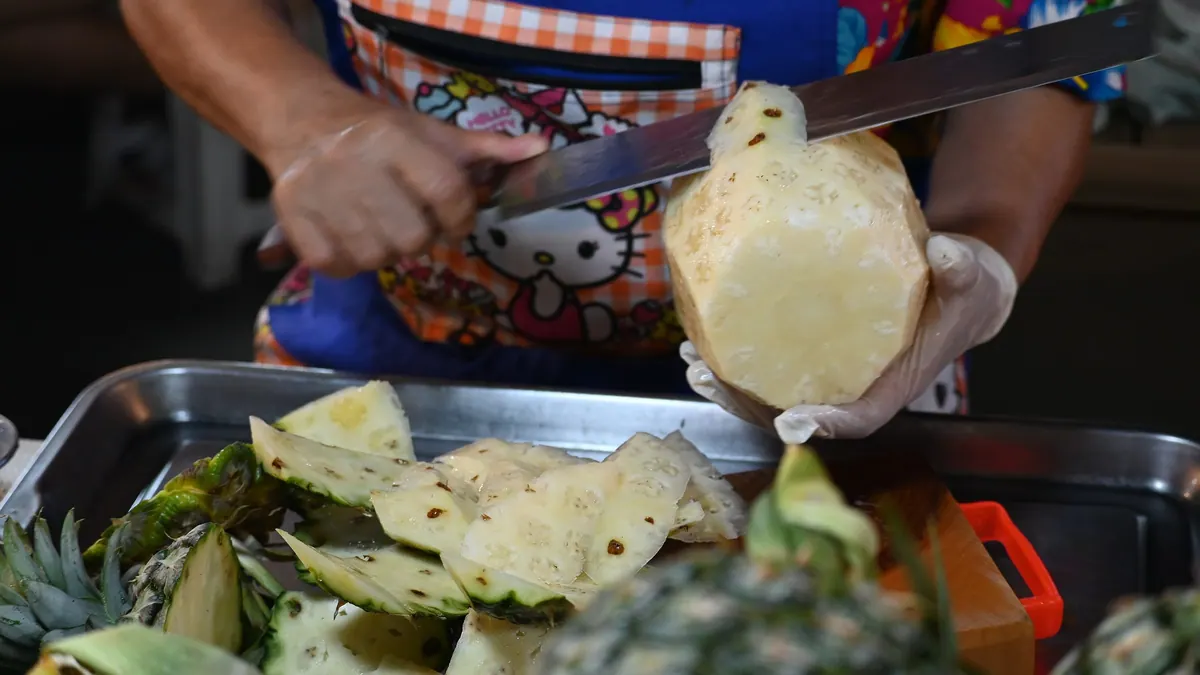
Pineapple peels — BMP: 2 studies, weighted mean 194 m³ CH₄/t VS
194 m³ CH₄/t VS weighted mean from 2 studies
≈52 %
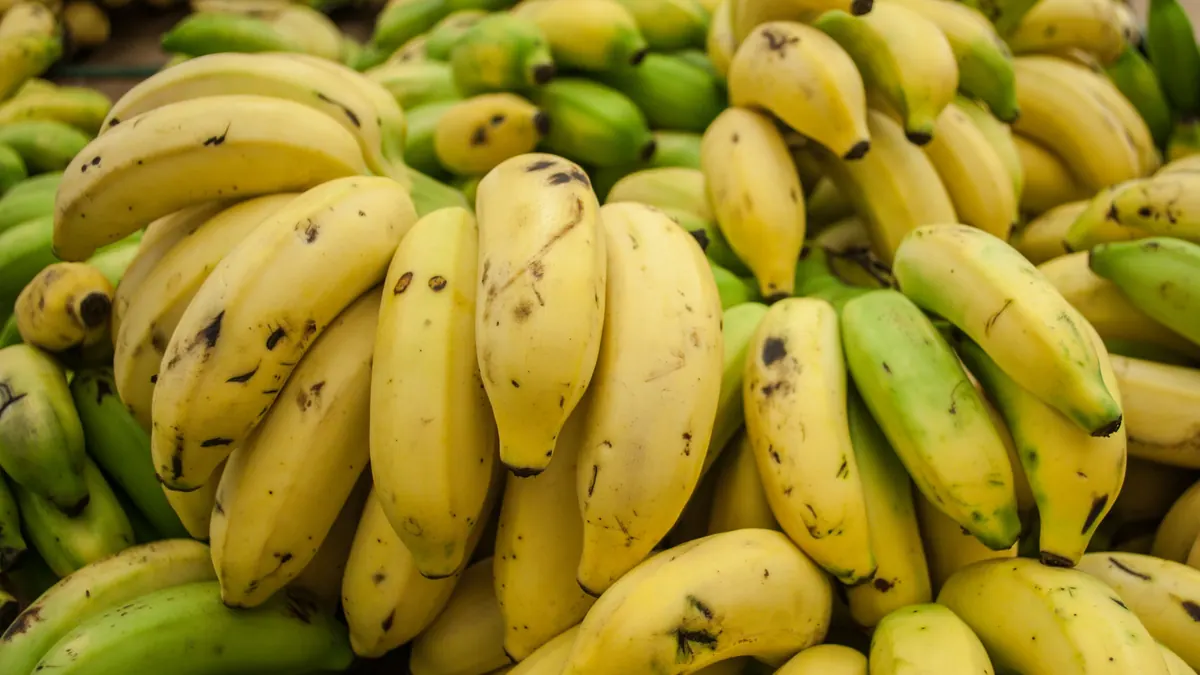
Bananas (fruit, pulp) — BMP: 6 studies, weighted mean 336 m³ CH₄/t VS
336 m³ CH₄/t VS weighted mean from 6 studies
≈52 %
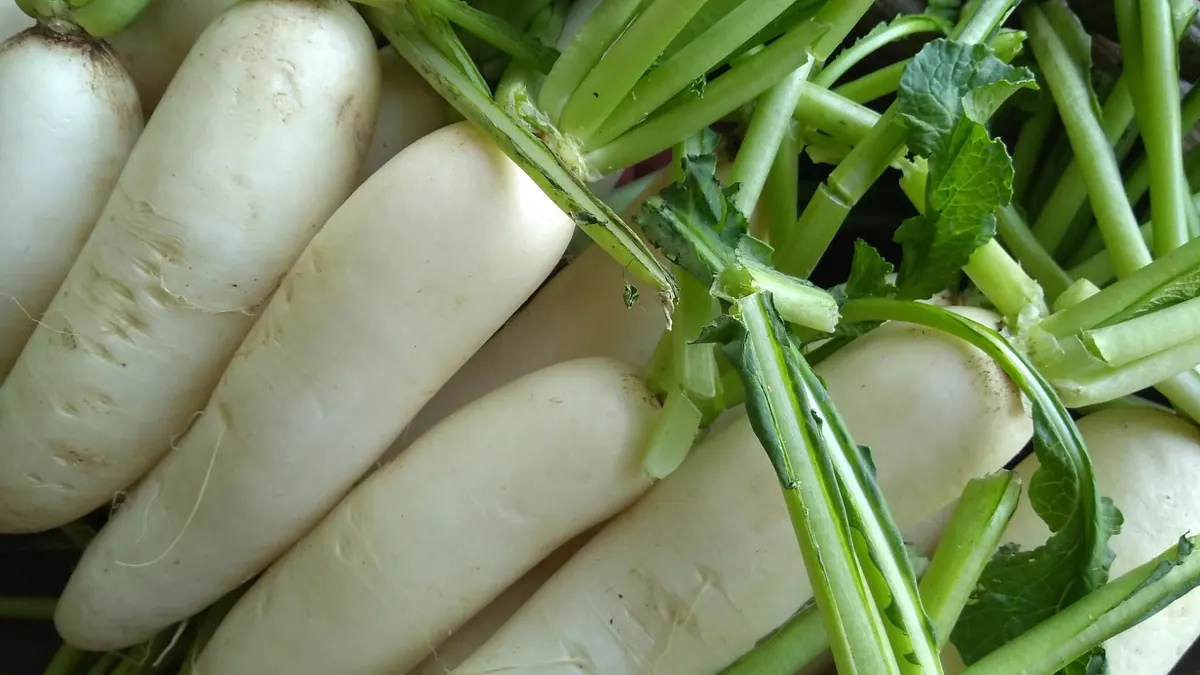
Radish — BMP: 3 studies, weighted mean 286 m³ CH₄/t VS
286 m³ CH₄/t VS weighted mean from 3 studies
≈56 %
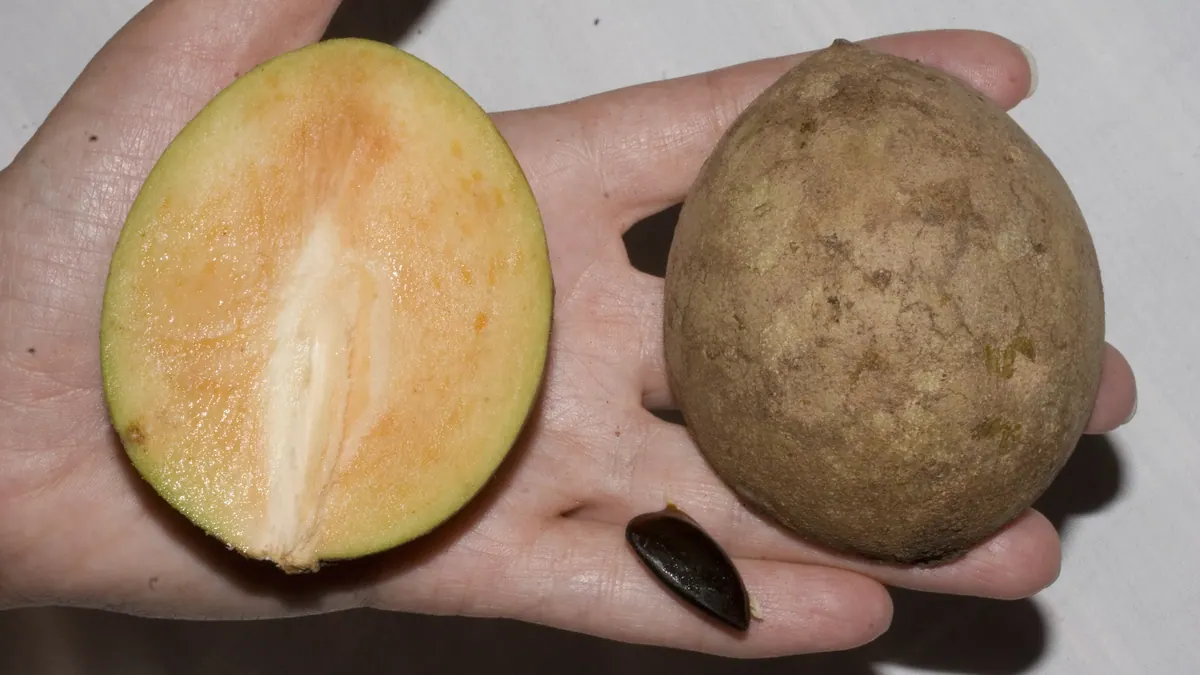
Sapodilla fruit and peels — BMP: 2 studies, weighted mean 286 m³ CH₄/t VS
286 m³ CH₄/t VS weighted mean from 2 studies
≈52 %