Cogeneration and enginesExplainer
Cogeneration on biogas from a wastewater treatment plant: fuel characteristics and integration with process heat
Biogas from sludge digesters differs from agricultural biogas in composition, siloxanes and heat needs. We explain how a CHP unit fits into a wastewater treatment plant.
Other language versions: Polski, Deutsch, Español, Français, Italiano, Nederlands.
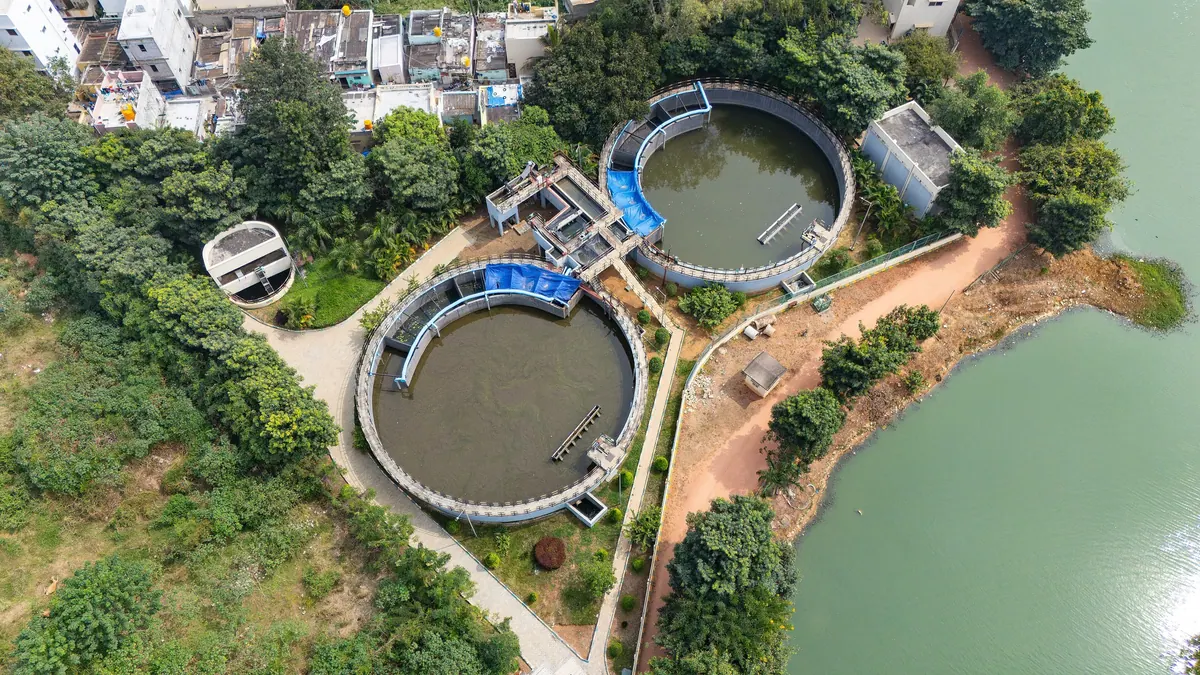

Biogas from sewage sludge digesters differs from agricultural biogas in composition, stability and the way heat is used: it typically has about 60–65% methane, contains trace siloxanes, and a large part of the heat from cogeneration returns to heating the digesters. As a result, a CHP unit at a wastewater treatment plant is a natural element of the plant's energy self-sufficiency. Below we explain what is specific and what to pay attention to.
What this biogas is
Sludge from a wastewater plant (primary and waste activated sludge) is subjected to anaerobic stabilisation in closed digesters (WKFz, the Polish abbreviation for closed digestion chambers). The biogas usually has 60–65% CH4, 33–38% CO2 and trace admixtures. The composition is often more stable than in the co-digestion of agricultural substrates, because the sludge inflow is continuous and homogeneous. The methane content nevertheless depends on the proportions of the sludges, the sludge age and the process temperature. Measurements from the site must always be used, not averaged literature values.
Contaminants and siloxanes
Municipal wastewater contains siloxanes from personal hygiene products, cosmetics and detergents. In the digestion process they pass into the biogas. In the engine they burn to silica, which deposits on pistons, valves and spark plugs, acts as an abrasive and shortens the service intervals. The siloxane content, given in mg Si/m³, depends on the wastewater, so an assessment requires an analysis from the given site; engine manufacturers indicate permissible limits. The H2S content of biogas from sludge is usually lower than in agricultural biogas, but it may change with the composition of the wastewater, especially sulphates, and this translates into corrosiveness and engine oil condition. Gas cleaning methods are described in the article Biogas pre-treatment: H2S, siloxanes, water; they are selected by the designer on the basis of analyses.
Integration with process heat
A wastewater plant has a constant heat demand:
- Sludge heating in mesophilic digesters (usually 35–38°C) or thermophilic ones (about 52–55°C); heat is needed to warm the cold sludge at the inlet and to cover the losses of the digester.
- Hygienisation of the sludge (for example thermal), when required for its further use.
- Heating of buildings, technological and social.
- Sludge drying, if used; it is the largest heat consumer, but it requires high output.
In winter the demand rises, in summer it falls, but the heating of the digesters remains constant, which makes the balance more even than at a biogas plant with a purely seasonal heating consumer.
Illustrative example. A digester with an inflow of 150 m³ of sludge per day with a dry matter content of 4% has a heat demand resulting from heating the sludge through a temperature difference of, for example, 25 K. Energy: 150 m³ × 1000 kg/m³ × 4.19 kJ/(kg·K) × 25 K ≈ 15.7 GJ/day, that is about 4.4 MWh/day, which corresponds to an average output of about 180 kW, plus the losses of the digester. The values are merely an illustration of the method of calculation.
Blowers and self-sufficiency
Biological aeration is the largest consumer of electricity at a wastewater plant (often about half of consumption). Energy from the CHP unit can power the blowers directly, and some facilities use a mechanical drive of the blower from a gas engine or heat recovery from compression. The electrical self-sufficiency of a wastewater plant depends on the size of the facility, the amount of sludge and the energy efficiency of the process; many facilities cover part of their consumption, and a small number exceed 100%. The exact degree can be determined from the annual balance of the given plant.
A broader picture of the wastewater plant as a facility that produces energy and recovers phosphorus is given by the article Wastewater treatment plants as biorefineries, and an example of a facility with energy storage in The Slupsk bioenergy island. This article deals solely with the cogeneration unit.
Determining the values
- Measure the biogas production (flow meter) and the composition (CH4, CO2, H2S, oxygen) at fixed intervals.
- Take gas samples for analysis of siloxanes and other trace components.
- Carry out the heat balance of the digester: heat to warm the sludge and losses; compare with the heat from the CHP unit.
- Carry out the electricity balance: consumption of the plant, CHP production, purchase from the grid.
- Determine any surplus heat and the way it will be used.
Practical conclusions
- A CHP unit at a digester has high operating hours, but requires more frequent oil checks and servicing because of siloxanes.
- The heat system is more stable than the agricultural one, so the heat buffer can be smaller.
- Biogas storage makes it possible to smooth out fluctuations in production; an emergency flare remains a mandatory safety element.
- It is worth carrying out an analysis of the alternative early (cf. CHP or biomethane): upgrading to biomethane instead of producing electricity and heat, depending on the location and the gas grid.
Summary
Cogeneration at a wastewater plant is simple in concept, but requires attention to siloxanes and an accurate heat balance. The basis of design decisions is measurements at the plant's own site, not values transferred from other installations.
Sources
Related articles