Digestate and fertilisersExplainer
Can digestate be hauled away in winter? Conditions, restrictions and storage
In winter the agricultural use of digestate is sometimes restricted by deadlines and ground conditions, but transporting and handing over digestate is something different from fertilising. We explain the difference.
Other language versions: Polski, Deutsch, Español, Français, Italiano, Nederlands.
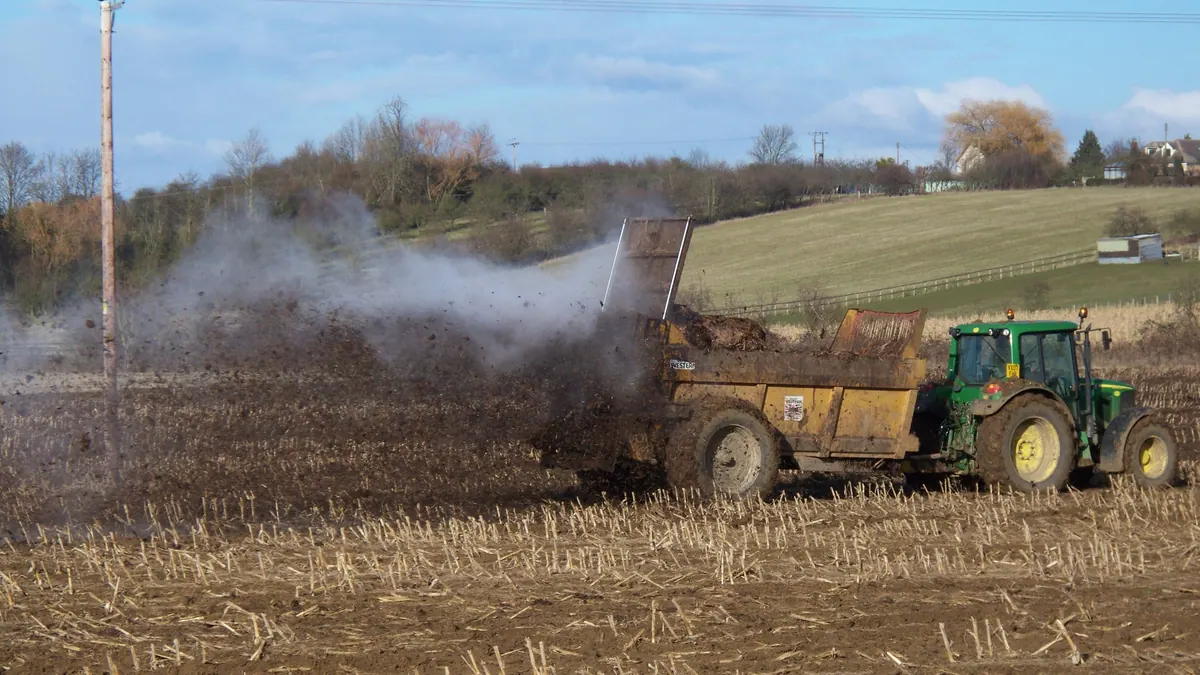

Hauling digestate away in winter is possible only as far as transport and handover are concerned, whereas its application on the field is restricted by the programme of measures aimed at reducing water pollution by nitrates from agricultural sources. The programme sets out the periods in which fertilisers are not applied and the ground conditions that rule out application. That is why in winter we do not usually ask "can it be hauled away", but "where and in what ground condition can fertiliser be applied".
What restricts application on the field
The fertilisation rules are based on the Act on Fertilisers and Fertilisation (ustawa o nawozach i nawożeniu) and on the Nitrates Action Programme, which applies across the whole country. It introduces:
- periods in which selected fertilisers may not be applied (with a distinction between liquid natural fertilisers, solid ones and mineral ones, depending on the type of crop and conditions),
- a ban on application to ground frozen to a given depth, covered with snow, waterlogged or flooded,
- a limit on the nitrogen dose from natural fertilisers, described in the article on applying digestate to fields,
- rules on the capacity of tanks for liquid natural fertilisers and an obligation to have a fertilisation plan.
The exact dates of the closed periods and the details should be checked in the current regulation on the action programme and in the requirements of your farm. In practice, digestate is treated differently depending on the legal route: as a fertiliser under the Act on Fertilisers and Fertilisation, as a by-product (Directive 2008/98/EC) or as a fertilising product within the meaning of Regulation 2019/1009. The fertilisation rules in the nitrates programme, however, cover nitrogen from various organic sources, so the answer "it is not a natural fertiliser, so it is allowed" is often wrong.
Why soil is a problem in winter
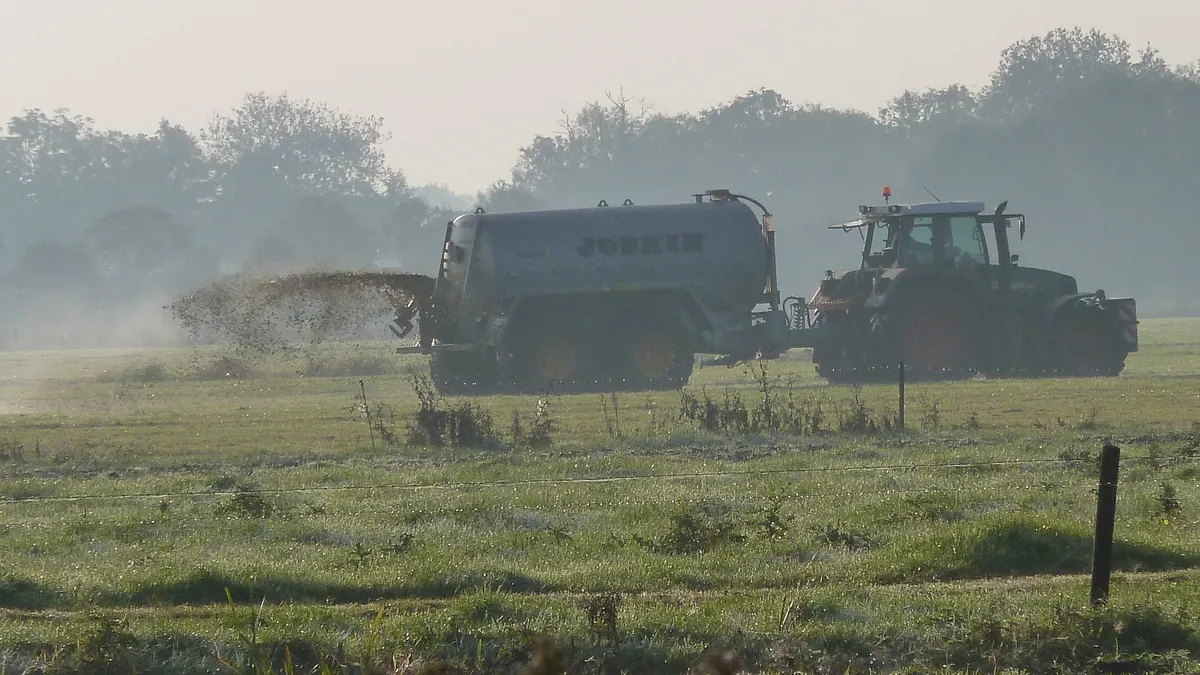
Frozen or waterlogged soil does not absorb liquids. Digestate runs off over the surface into ditches and watercourses, and ammonium nitrogen and phosphorus reach the water. At the same time, plants in dormancy do not take up nutrients, so the nitrogen is not utilised. Additional risks are soil compaction by heavy equipment and low temperature reducing the activity of soil microorganisms. The same mechanisms explain why the bans also apply to very wet ground at other times of the year.
What to do instead of hauling to the field
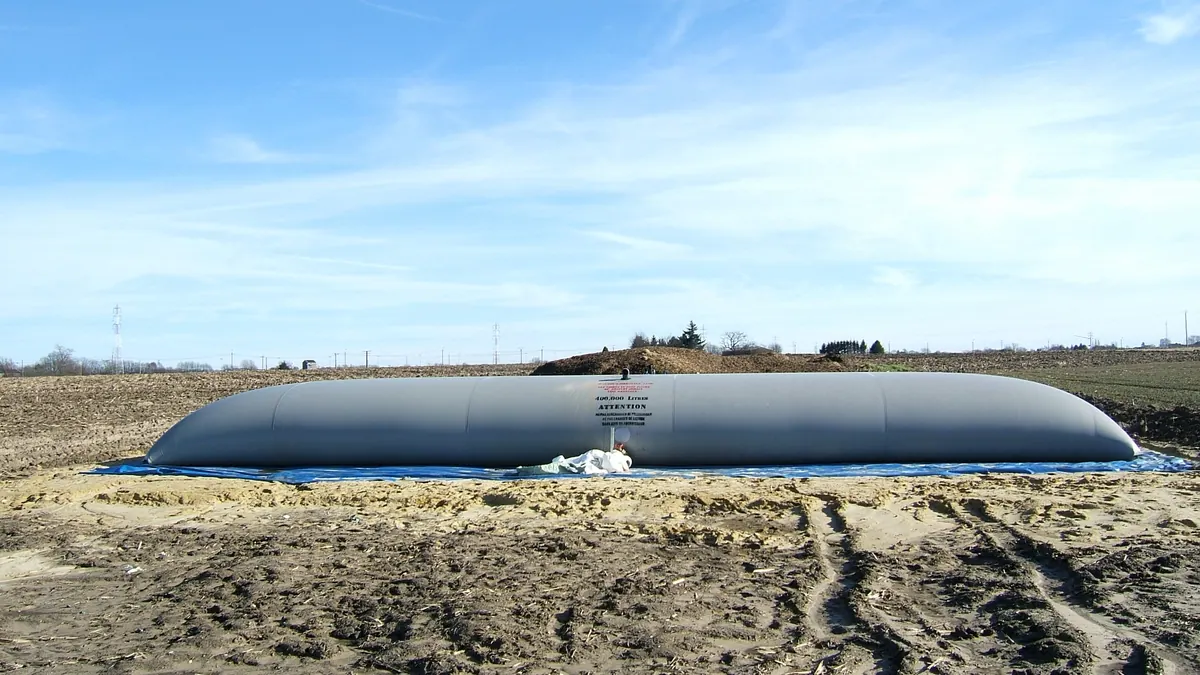
- Storage in tanks. The capacity of digestate tanks is designed taking into account the period in which application is prohibited. See the article on storage and application of digestate and on the capacity of tanks and lagoons.
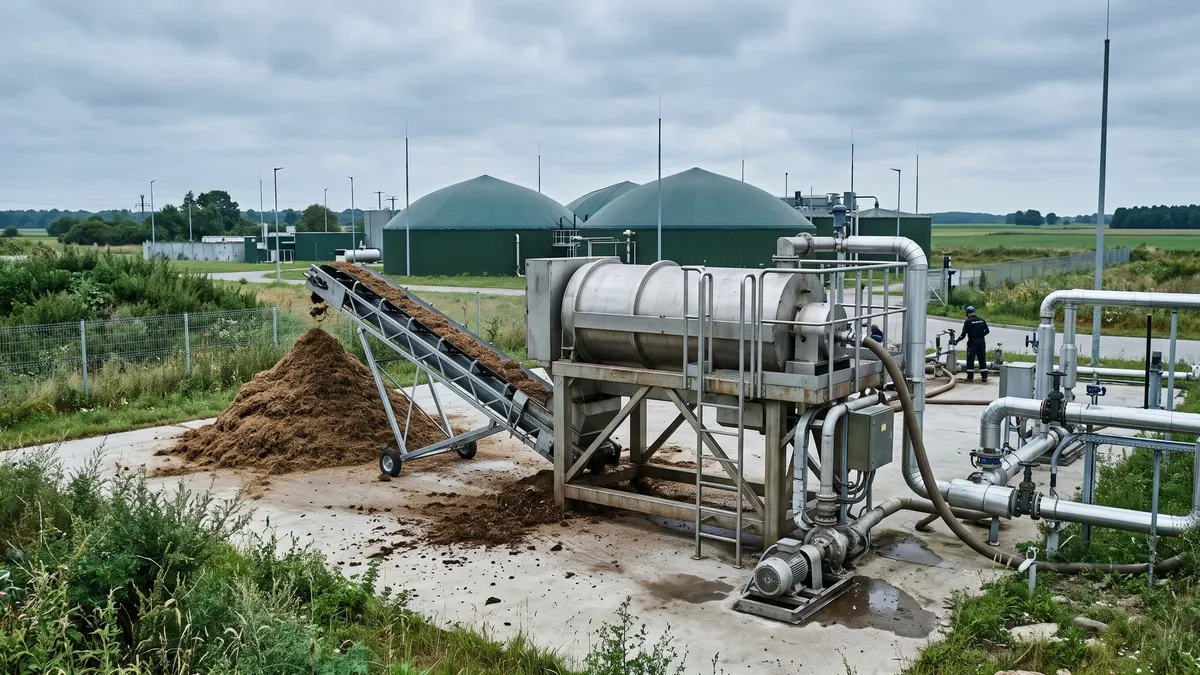
- Separation into fractions. The solid fraction is easier to store and transport (see digestate separation).
- Handover to a recipient. Transporting digestate to the recipient's tank in winter is usually permissible, provided that the recipient has sufficient capacity and meets the requirements. Delivery documentation and the legal status of the digestate must be taken into account.
- Planning the distribution. Hauling in autumn, before the closed period begins, and in spring, when ground conditions allow, is the standard cycle.
The difference between transport and application
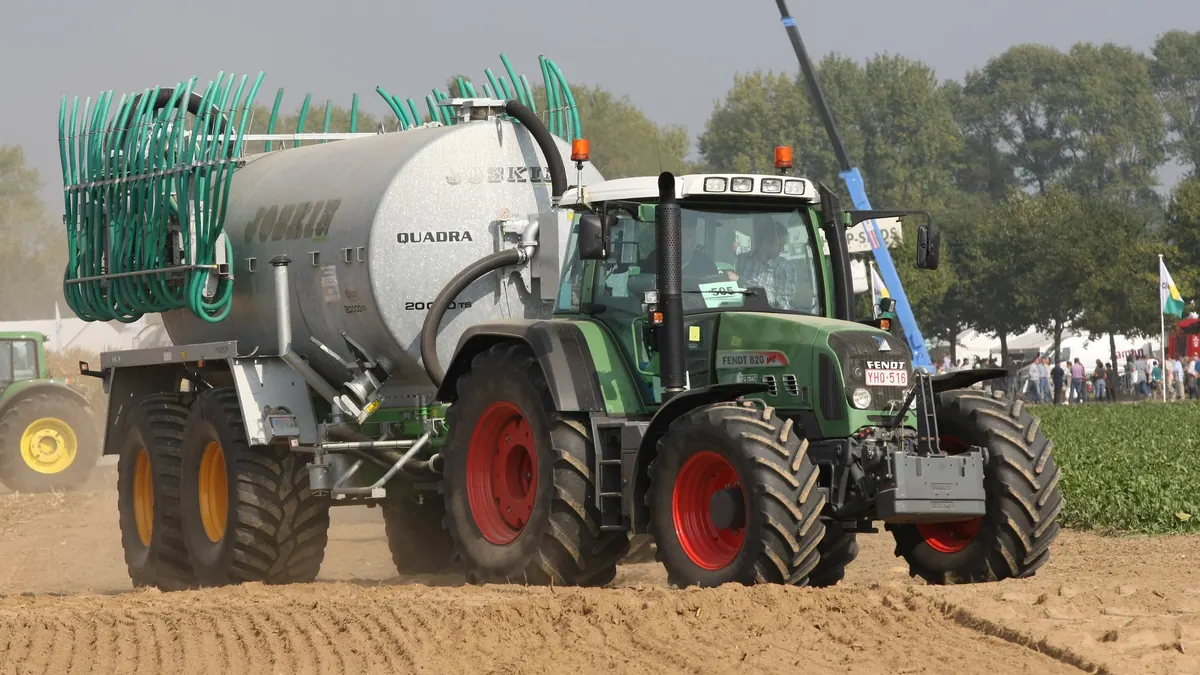
For clarity it is worth separating three concepts. Transport is moving digestate by vehicle between points, regulated, among other things, by transport rules and delivery documentation. Handover is a change of holder, the legal basis of which is determined by the status of the digestate. Application is only the introduction to the soil, which is subject to the nitrates programme and the fertilisation rules. Many misunderstandings stem from the fact that the ban on application is confused with a ban on hauling. In winter you can therefore take digestate to a store at the recipient's, but you cannot spread it on a frozen field.
What to check before a winter run
Before setting out it is worth establishing three things: whether the recipient has free tank capacity and a valid legal basis for accepting the material, whether the access road is passable for a heavy vehicle, and whether there is an emptying plan in case hoses and valves freeze. An interrupted unloading in a field or by the road because of a frozen valve is one of the more frequent sources of accidental spills.
Practical tips
- Before every winter run, check the condition of the field, not just the calendar.
- Remember to keep distances from water, buildings and water intakes.
- In winter, simply moving vehicles along roads may be difficult, and digestate may freeze in tankers and hoses, so plan the emptying and flushing of equipment.
- Take care of documentation: quantities, dates, recipients and the legal basis of the handover.
To sum up: digestate can be transported in winter, but it may be used as fertiliser only within the limits of the regulations and when ground conditions permit. A solution that does not involve risk is sufficiently large storage capacity.
Sources
Related articles