Safety and ATEXGuide
How to read the Ex marking on equipment: group, category, temperature class and EPL
The rating plate of Ex equipment tells you where it may be installed. We break it into parts: group, category, type of protection, gas group, temperature class and EPL.
Other language versions: Polski, Deutsch, Español, Français, Italiano, Nederlands.
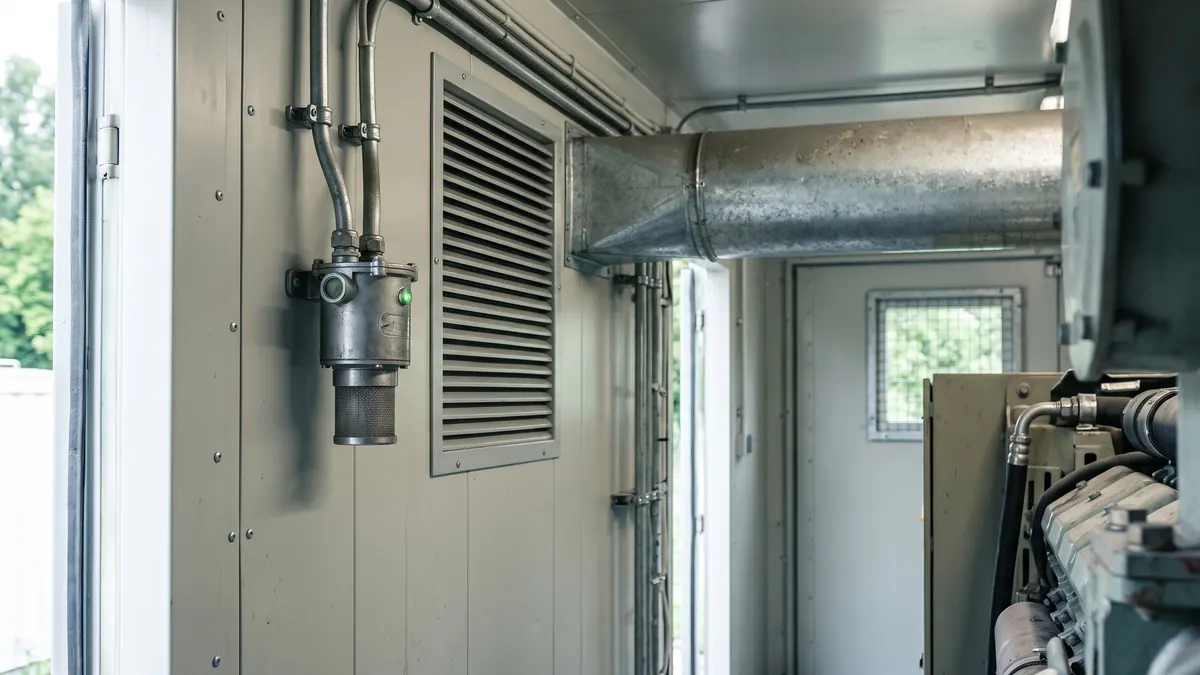
Equipment intended for hazardous areas carries several groups of symbols on its rating plate, which together state where it may be installed. The Ex marking is not decoration: it is a record of limitations, each of which must match the classification of the zone in which the equipment is to operate. Below is a breakdown of a typical marking using the example II 2G Ex db IIB T4 Gb.
The structure of the marking step by step
The full notation consists of two parts. The first follows from Directive 2014/34/EU: the Ex mark in a hexagon, the equipment group and category. The second is the marking according to the 60079 series of standards: type of protection, gas group, temperature class and equipment protection level (EPL).
| Element | Example | Meaning |
|---|---|---|
| Equipment group | II | Group I is mining, II is all other plants, including biogas plants |
| Category | 2G | 1, 2, 3 define the level of protection; G means gas, D means dust |
| Type of protection | Ex db | flameproof enclosure, protection level "b" |
| Gas group | IIB | IIA, IIB or IIC according to the hazard of the gas |
| Temperature class | T4 | maximum surface temperature 135 °C |
| EPL | Gb | equipment protection level in a gas atmosphere |
Categories, EPL and selection for the zone
The category defines how many faults the equipment must tolerate without producing an ignition source. Category 1G is intended for zone 0, 2G for zone 1 and 3G for zone 2. The counterpart in the 60079 standards is EPL: Ga, Gb and Gc. Equipment with a higher level of protection may be used in a zone of lower hazard, but not the other way round: 3G equipment in zone 1 is an error, while 2G in zone 2 is acceptable.
At a biogas plant, zone 1 or 2 typically occurs around leaking components, safety valves, blowers and gas tanks, and zone 0 inside the gas space of tanks or pipelines if an explosive atmosphere may be present there. The classification depends on the design and is recorded in the explosion protection document, not on the fitter's intuition. The principles of determining zones are described in the article on classification of zones 0, 1 and 2, and the user's obligations are covered in the text ATEX at a biogas plant: directives, obligations and the explosion protection document.
Types of protection
The abbreviation after "Ex" indicates the method of preventing ignition.
- d: flameproof enclosure; if an explosion occurs inside, it will not be transmitted to the outside.
- e: increased safety; the equipment does not produce sparks or excessive temperatures in normal operation.
- ia, ib, ic: intrinsic safety; circuit energy is limited below the ignition threshold. Used in sensors and measuring circuits.
- p: enclosure pressurised with protective gas.
- m: encapsulation in resin.
- n (the older designation nA) and the newer ec: equipment for zone 2 that does not produce ignition sources in normal operation.
One device often combines several types, for example Ex db eb, where the enclosure is flameproof and the terminal box is made in the increased safety mode.
Gas group and temperature class
Gas groups IIA, IIB and IIC reflect the ability of a gas to transmit a flame through a narrow gap and its ignition energy. Methane belongs to IIA, the least demanding group, while hydrogen and acetylene belong to IIC. Equipment marked IIB may operate in an IIA atmosphere, and IIC covers all of them. It is worth remembering this if other gases or additives appear in the installation, and in a biomethane plant, for example, hydrogen in mixtures.
The temperature class states how hot the hottest surface of the equipment may get: T1 up to 450 °C, T2 up to 300 °C, T3 up to 200 °C, T4 up to 135 °C, T5 up to 100 °C, T6 up to 85 °C. The rule is that the surface temperature must be lower than the autoignition temperature of the gas. Methane ignites only at about 537 °C, so in theory T1 is enough, but in practice equipment is usually rated T3 or T4 and such a margin is useful.
Other marks on the rating plate
In addition to the symbols above, check the number of the type-examination certificate (for example one ending in "X", which denotes special conditions for safe use), the mark of the notified body, the ambient temperature range (Ta) and the IP degree of protection. If the letter X appears in the certificate, the special conditions must be read and met, for example a limit on ambient temperature or a method of mounting.
Checklist for equipment acceptance
- The marking on the plate is complete and legible, and the serial number matches the documentation.
- The category and EPL correspond to the zone, and the gas group and temperature class to the gas.
- The ambient temperature range covers winter and summer conditions at the place of installation.
- The declaration of conformity, the instructions and the certificate are available; the "X" conditions have been checked.
- Cable glands, blanking plugs and cable entries have their own Ex markings and fit the enclosure.
- The enclosure has no cracks, corrosion, missing screws or changes after transport; earthing is in place.
Typical mistakes
The most common findings are uncertified cable glands in an Ex enclosure, replacement of components with substitutes without a certificate, painting of flameproof joints or damaging them with a grinder, missing blanking plugs in unused entries, and "almost Ex" equipment without documents. Such deviations void the protection, even if the device itself is good.
Sources
Related articles