Operation and failuresExplainer
Measuring level and pressure in the digester: common reading errors and how to catch them
Foam, scum and variable density distort level and pressure readings in the digester. We explain where the errors come from and how to catch them.
Other language versions: Polski, Deutsch, Español, Français, Italiano, Nederlands.
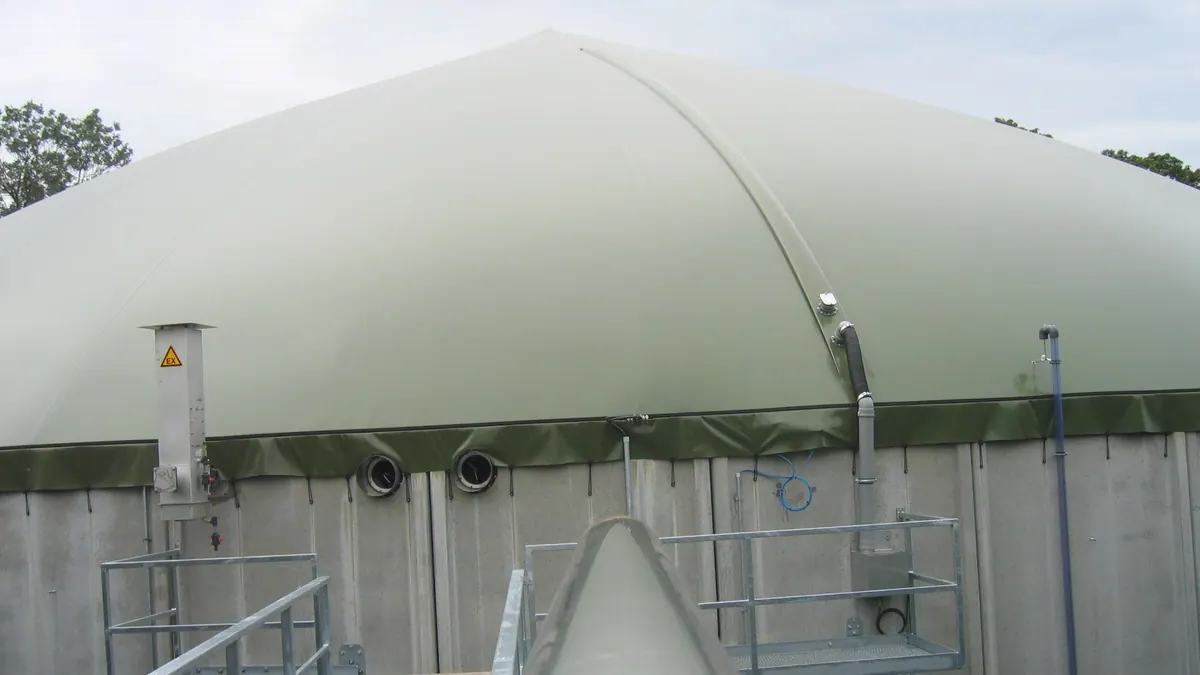

Level and pressure measurement in the digester are two of the most important signals for biogas plant automation, and at the same time among the easiest to falsify. Slurry of variable density, foam, scum and aggressive biogas mean that a sensor that works flawlessly in clean water can show a value far from reality in a digester. Below we discuss the mechanisms of error and simple ways of detecting them.
Level measurement methods and their weak points
In practice, three approaches are found. Each has a different sensitivity to conditions in the tank.
- Hydrostatic (probe or pressure transmitter at the bottom): measures the pressure of the liquid column, which is converted into height assuming a given density. When the density of the slurry changes by a few percent, for example after a change in feedstock composition, the reading shifts by the same relative amount. In addition, the probe membrane becomes coated with deposits and fat.
- Radar: does not touch the medium and does not depend on density, but reflects from the first surface in the path of the wave. A thick layer of foam or scum can be read as the liquid level.
- Ultrasonic: sensitive to foam, vapours and changes in air temperature in the gas space, which change the speed of sound.
There is no perfect method. That is why it is good practice to combine two measuring principles, for example hydrostatic with radar, and to watch the difference between them.
Where incorrect level readings come from
The most common causes can be reduced to a few mechanisms:
- Foam and scum. A layer a few dozen centimetres thick overstates radar and ultrasonic readings. We write about scum in more detail in the text on scum and bottom sediments.
- Variable density. A hydrostatic reading converted with a constant density departs from reality when the dry matter of the contents changes.
- Sensor fouling. Sediment, fibres and fat on the membrane or antenna change the measurement characteristic.
- Gradient in the tank. With poor mixing, the density at the bottom is higher than at the top, so a measurement at the bottom does not represent the whole column.
Gas pressure measurement: drift and clogged connections
A pressure sensor in the gas space works in a humid, corrosive gas. The values are usually small, in the order of a few to a few dozen millibars, so even a small zero drift matters in relative terms. Typical problems:
- Condensate in the impulse line. Condensate forms a water plug and distorts the reading; hence the need for a falling line and a condensate trap.
- Clogged connection. Sediment or foam drawn into the line cuts the sensor off from the tank, and the indication "freezes" at a constant value.
- Zero drift. Over time the sensor shows a constant offset; it is detected by comparing the reading at a known state, for example after disconnecting from the process.
An indication that does not change even by a fraction of a unit for a long time, despite changes in temperature and gas production, is suspicious. The real pressure in the tank always "breathes" a little.
How to catch an error: cross-verification
Three simple techniques are effective and require no additional investment:
- Two independent measurements. Comparing the readings of two sensors; a discrepancy above a set threshold triggers a diagnostic alarm, not only a process alarm.
- Volume balance. The volume of feedstock dosed minus the volume of digestate removed (corrected for the loss of mass in the form of biogas) should correspond to the change in level. A systematic discrepancy points to an error in the dosing or level measurement.
- Visual and manual check. Periodic comparison with a sight glass or a manual measurement where this is safe and permitted by procedures. Entering an explosion hazard zone requires observing the safety rules described in separate texts.
It is also worth recording reference values after each calibration, because without them it is hard to judge whether the sensor is drifting.
Consequences of a false reading
An incorrect level measurement can result in the tank overflowing, when the automation "sees" a lower level than the real one, or in the pumps and agitators stopping, when it sees a level that is too low. An incorrect pressure measurement risks opening the overpressure protection too late, or underpressure, which when the tank is emptied can draw in air and form an explosive mixture. We described the valves and protections of the gas storage in the text on the double-membrane roof, and the general sensor layout in the material on monitoring and automation.
Related materials
Protection against overflow, including overflows and siphons, is covered by a separate text on protection against tank overfilling, and the placement of sensors on the roof and tank by the text on monitoring the roof and tank. This text complements them from the diagnostic side: how to recognise that a sensor is lying before the protection acts. The causes of foam are described in the material on foaming in the digester.
It is also good practice to record in the operator log every case of discrepancy between sensors together with its cause. After a few months such a record shows which measuring point is most prone to disturbances and where it is worth investing in a second sensor or in more frequent cleaning. It also makes it possible to determine whether discrepancies intensify seasonally, for example after a change in feedstock composition.
What to remember
- Treat every single level and pressure reading as a hypothesis, not a fact.
- Use two different measuring principles and a discrepancy alarm.
- Check the volume balance from time to time and record values after calibration.
- Clean and inspect connections and condensate traps on a schedule, not only after a failure.
Sources
Related articles