Tanks and membranesGuide
Overflow protection for tanks: overflows, siphons and level measurement
Tank overflow is often the result of a simple error and ends in a leak and damage to the membrane. We show how to build several layers of protection.
Other language versions: Polski, Deutsch, Español, Français, Italiano, Nederlands.
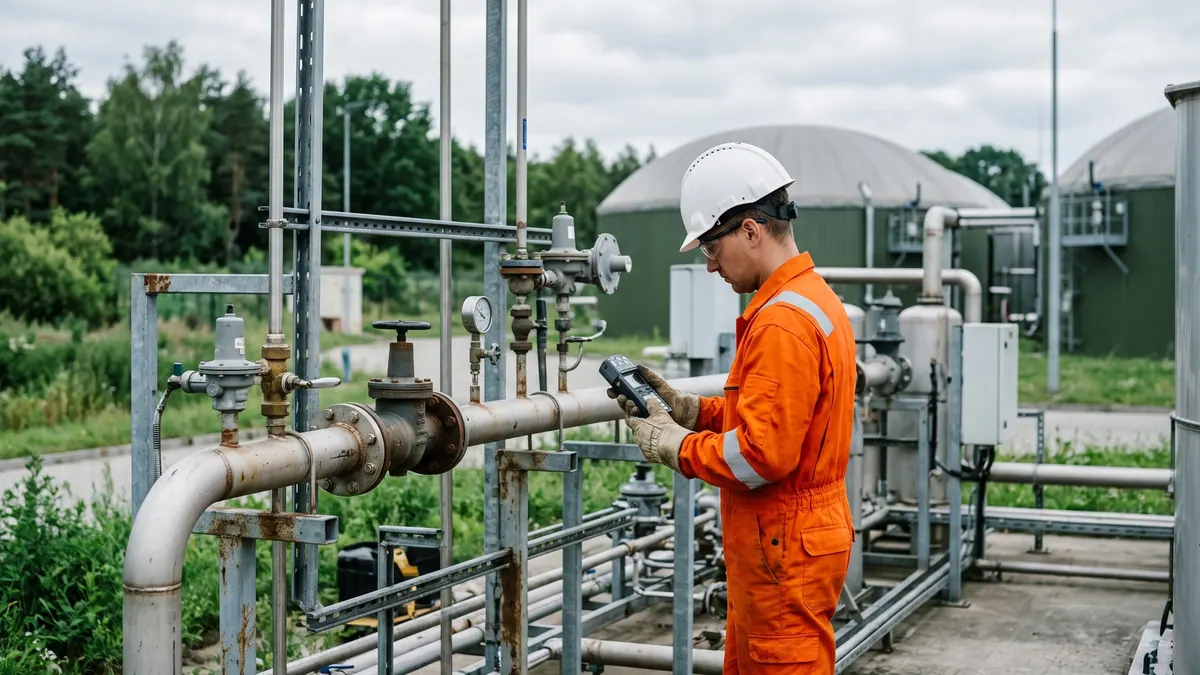
Overflow of a digester tank is an event that in extreme cases means a leak of thousands of cubic metres of digestate, damage to the membrane and environmental contamination. Good protection is not based on a single sensor, but on several independent layers, each of which will work even when the previous one fails. Below we describe the causes, the technical solutions and inspection.
Where overflow comes from
Overflow is most often caused by the following situations:
- Foaming: foam increases the volume of the contents and pushes them through the overflow or into the gas space. The causes and control are described in the article on foaming in the digester.
- Pump or valve failure: the feed pump does not stop, a check valve leaks, and liquid flows in an unplanned direction.
- Control error: an incorrect sequence, a hung program or a manual operating mode without supervision.
- Level reading error: sediments, foam, condensate or fouling disturb the measurement.
- Excessive dosing of liquid substrate or process water, for example after a change in the configuration of the installation.
Level measurement: redundancy
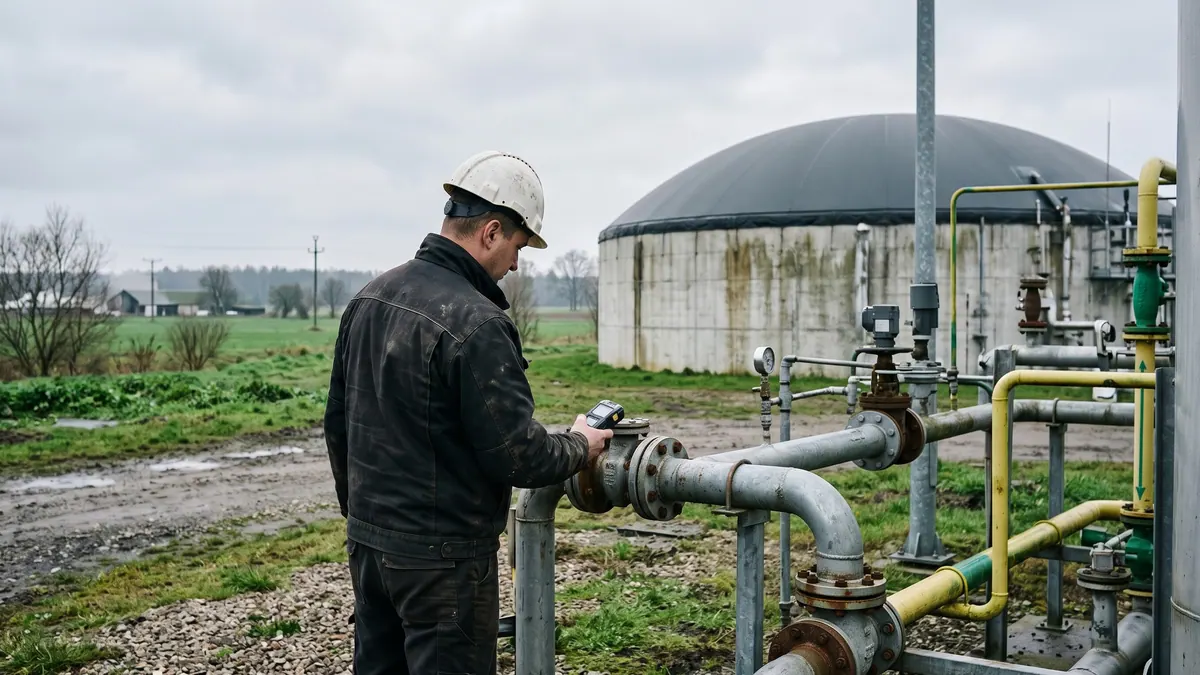
The liquid level in a tank is measured by various methods: hydrostatic (pressure probe), radar, ultrasonic, float and vibrating switches. Each has limitations: foam disturbs ultrasound, sediments block floats, and steam and condensate can affect radar.
The rule: at least two measurements with different operating principles, one of them continuous (for control), the other a limit one (for the alarm and interlock). In addition it is worth having a mechanical or sight indicator, independent of the control system. Alarm values are set at several levels: warning, switching off the feed pumps and a critical alarm.
Pump and valve interlocks
Regardless of the main controller, it is worth using a hardware interlock: a limit switch cutting off the supply to the filling pump after the maximum level is exceeded. Feed valves should go to a safe (closed) state on loss of power or signal. An additional safeguard is limiting the substrate dose in one cycle, so that a single mistake is not enough to cause an overflow.
Emergency overflow and siphon
An emergency overflow carries excess liquid to a safe place, for example to the digestate store or an emergency tank, before the liquid reaches the roof. Important rules:
- the overflow is located below the level at which the liquid could endanger the membrane or the gas pipes;
- the overflow must have a hydraulic seal (siphon), which prevents gas escaping through the overflow pipe;
- the siphon requires constant filling and protection against freezing, and its free passage must be checked, because sediments and fibres can block it;
- the overflow pipe is routed so that if used it does not cause an outflow beyond the bund.
A gravity overflow between tanks has additional consequences: if the target tank is full, the overflow will not solve the problem, only transfer it. For this reason the capacity balance of the entire tank system must be checked, not only of a single tank.
Bund and containment of a leak
The last layer is a bund or a containment basin, which is to hold the contents of the tank or a specified part of it, in accordance with the regulations and environmental decisions for the given installation. The bund should be tight, and the drainage of rainwater from its interior should be closable, so that in the event of a leak the liquid does not flow into the sewer or a ditch. Inspection covers the condition of the embankment, the tightness of the gate valves and the free passage of the inspection drainage.
Foam and the membrane
When the liquid level rises and foam fills the gas space, foam may enter the gas pipe, the safety valves, the heat exchanger connections and the area under the membrane. Foam under the membrane increases its load, and when it dries it forms deposits. Safety valves flooded with foam may not work, and gas pipelines may become blocked. For this reason one of the symptoms of overflow is a sudden rise in gas pressure or fluctuations in the membrane level. We describe these signals in the article on tank and roof monitoring.
Gas protection in the context of overflow
Overflow also threatens gas fittings: liquid or foam that reaches the pressure-vacuum valve can block it. The rules for selecting and testing these valves are described in the article on overpressure and vacuum protection. It is good to specify in the operating instructions who checks the condition of these valves and how often after every event with foam or a high liquid level, and to record the results in the register, so that after the next event the response of the safeguards can be compared.
Pre-winter and periodic inspection
Checklist before the winter season:
- checking the free passage of overflows and siphons and topping up the barrier liquid with antifreeze, if the instructions allow it;
- testing the limit sensors and calibrating the continuous measurement;
- testing the pump interlocks (simulating exceeding the level);
- inspecting the bund and gate valves;
- reviewing procedures: who responds to an alarm, whom to notify, where the leak containment equipment is.
The emergency plan for a leak, a fire and other events is discussed in the article on the emergency plan of a biogas plant. What matters most here is that overflow protection is tested, not only installed, because the most common reason for its failure is a lack of inspection during the time when everything is working.
Sources
Related articles