Process biology and start-upAnalysis
When to replace part of the digester contents: decision criteria and organising the rebuilding of the biology
From load relief and dilution to emptying the digester: criteria for choosing a strategy, logistics, costs and rebuilding the biology using inoculum.
Other language versions: Polski, Deutsch, Español, Français, Italiano, Nederlands.
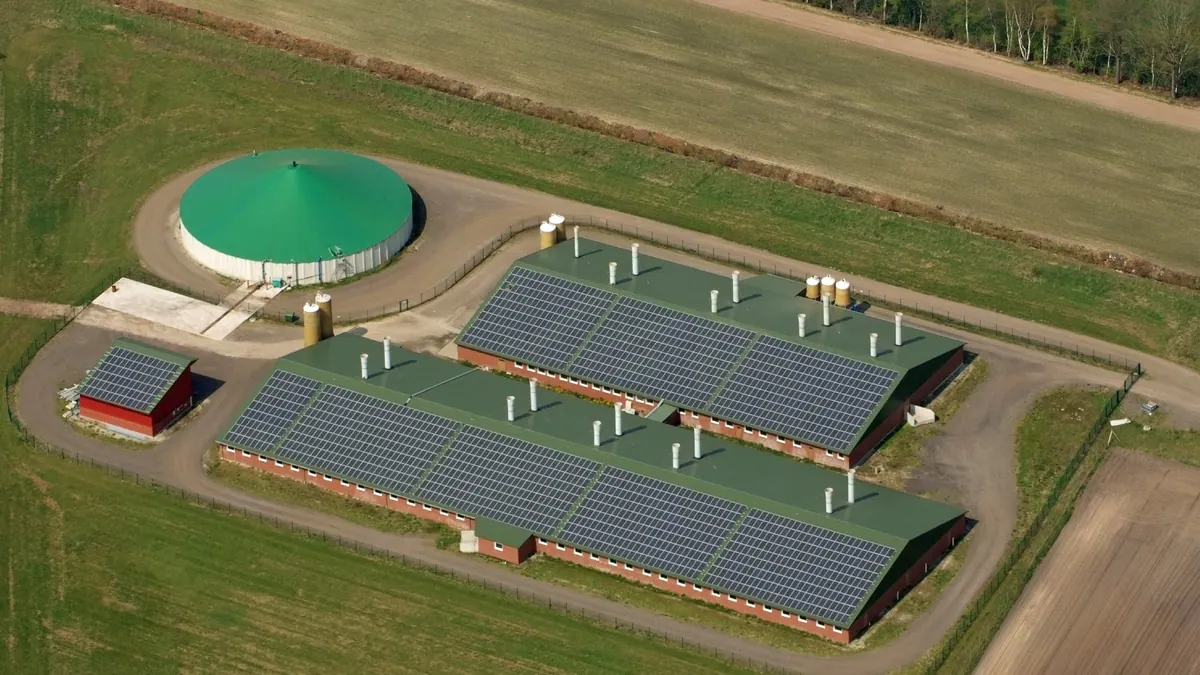

Replacing part of the contents of a digester means removing a portion of the liquid or mixture and replacing it with water, inoculum or other material, in order to lower the concentration of an inhibitor or rebuild the population of microorganisms. It is a costly and logistically difficult intervention, so the decision should follow from criteria, not from panic. The procedure for acidification is described in the article on digester acidification, and the course of start-up in the text on digester start-up. Here we concentrate on the decision: whether, how much and how to replace.
Four strategies
- Wait and relieve. Reduce or suspend the dose so that the biomass consumes the accumulated acids. The cheapest, but effective only if the cause has gone and the biomass is alive.
- Dilute. Add water or liquid with a low inhibitor concentration. Effective for soluble inhibitors (ammonia, salts), but it also dilutes the biomass and increases the volume of digestate.
- Replace part of the contents. Remove, for example, 10-40% of the volume and top up with diluent or inoculum.
- Empty and restart. A last resort in the case of lasting damage to the population or a failure that cannot be remedied in any other way.
Decision criteria
| Criterion | Signal for "wait and relieve" | Signal for replacement |
|---|---|---|
| Trend of VFA and FOS/TAC | falling after relief | constant or rising despite relief |
| pH | stable or recovering | falls below the range in which methanogens live and does not recover |
| Inhibitor | weakening (source stopped) | remains high (ammonia, salt, biocide), no way to remove it |
| Methane production | slow improvement | no improvement over several HRT of observation |
| Duration of disturbance | up to a few days | weeks, risk of population washout |
| Tank capacity | none | sufficient to receive and transport |
What matters is the trend, not a single measurement. The biomass reacts with a delay of days (see generation times and kinetics), so the effectiveness of load relief should be assessed at intervals of several days.
Logistics
Capacity. The volumes replaced are large. Example: a digester of 3,000 m3, replacing 30% is 900 m3. With a tanker of about 25 t capacity (density close to 1 t/m3) this requires about 36 one-way trips, and take-up by farmers is often limited by deadlines and field capacity.
Law. Digestate is managed in line with the regulations on fertilisers, waste and animal by-products (Regulation 1069/2009 and implementing rules), and application to fields is limited by deadlines and doses resulting from implementation of the Nitrates Directive (91/676/EEC). An emergency emptying during a ban period on application requires intermediate tanks or take-off agreements. Establish in good time who will take the digestate and on what terms.
Safety. Emptying and opening the digester requires health and safety procedures for gases (CH4, H2S, lack of oxygen) and for work in confined spaces.
Costs and rebuilding time
Costs include transport, lost production, water, energy to heat the new volume and possibly the purchase of inoculum. Added to this is time: after replacement the biomass must reach stable functioning, which usually takes weeks, depending on the extent of replacement, the temperature and the quality of the inoculum. The dose should rise gradually, as at start-up.
A simple heating example: topping up 900 m3 with water at 10 °C to 40 °C requires approx. 900,000 kg × 4.18 kJ/(kg·K) × 30 K = 113,000 MJ, i.e. approx. 31 MWh of heat (without losses). This figure does not include losses or heating during start-up.
Inoculum from another digester
The best inoculum is liquid from a healthy digester with similar conditions (temperature, substrates, ammonia concentration). Liquid from a digestate storage tank is also acceptable (part of the biomass is active there, but less than in the digester), as is material from another installation. Remember:
- Matching temperature. Mesophilic inoculum in a thermophilic digester requires adaptation and loses activity rapidly.
- Matching substrate. Biomass accustomed to slurry reacts differently to silage.
- Health of the inoculum. Do not transfer the problem, e.g. high ammonia or an infection.
- Sanitary and legal requirements. Transporting material between plants has requirements concerning animal by-products and transport documents.
- Quantities. Usually this is a few to over ten percent of the volume, in order to speed up rebuilding.
Recommended order of actions
- Confirm the cause and the trend (measurements, VFA, FOS/TAC, pH, inhibitors).
- Stop the source of the problem, e.g. the substrate or dosing.
- Relieve the digester and observe for a few days.
- If there is no improvement, consider dilution or partial replacement, planning the take-off of digestate and the inoculum.
- When replacing, change the volume in stages, measuring the effect.
- Return to feeding slowly, over several weeks.
Emptying the digester makes sense when all milder options have failed or when a technical failure requires the digester to be opened. The vast majority of disturbance episodes can be resolved by the earlier steps, and logistics prepared in advance shorten the time to action.
Sources
Related articles