Co-digestion of substrates: how to increase biogas plant stability and yield
Co-digestion combines two or more substrates in one digester. We explain C:N, proven combinations, synergy and the rules for introducing new mixtures.
Other language versions: polski.

Co-digestion, i.e. the simultaneous anaerobic digestion of two or more substrates, is in practice the standard in biogas plants, because it improves process stability and the nutrient balance, and often the economics too. A mixture can make up for the shortcomings of one substrate (e.g. low C:N or lack of trace elements) with the properties of another. Effectiveness is not automatic, however: the proportions must be selected and checked in the laboratory.
Why mix substrates
Every substrate has different characteristics. Some supply a lot of energy but acidify the digester, others have a low methane potential but stabilise pH thanks to high buffer capacity. Combining them makes it possible to:
- improve the carbon-to-nitrogen ratio (C:N),
- dilute potentially inhibiting substances (e.g. ammonia),
- even out seasonal fluctuations in availability,
- improve the rheological properties of the mixture,
- increase microbial diversity.
The C:N ratio
A commonly adopted optimum is a C:N in the range of approx. 20–30:1. One that is too low (below approx. 15:1) promotes excessive release of ammonia, which inhibits methanogens, and one that is too high (above approx. 35:1) means a nitrogen deficiency for microbial biomass. Poultry and pig slurry have a low C:N (from a few to over a dozen), maize silage about 40, and straw a clearly higher one (several dozen). C:N alone is not enough for assessment; carbon availability, pH and ammonia must be taken into account (C:N ratio in the substrate mix).
Proven combinations
- Slurry + food waste: the slurry provides a buffer and a population of microorganisms, the waste adds energy; the key is a gradually increased dose to avoid acidification.
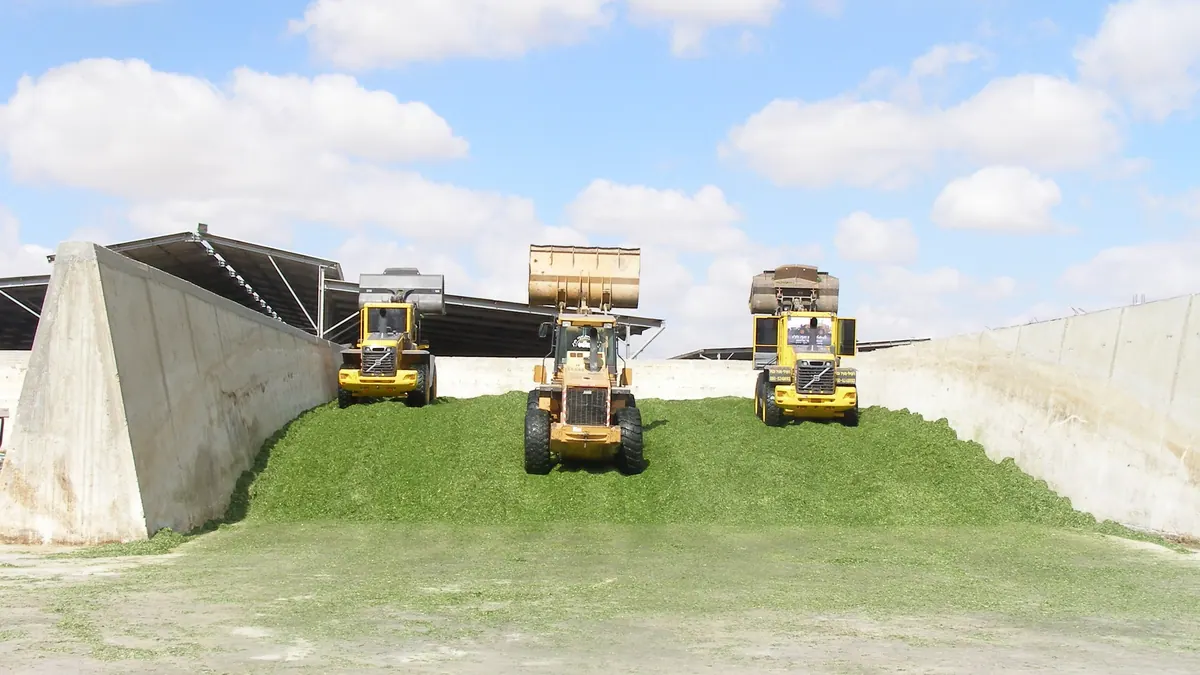
- Maize silage + slaughterhouse waste: the silage gives a stable feed, the slaughterhouse waste raises the yield; the risks are foaming, ammonia and long-chain fatty acids, so the share of such waste is limited and introduced carefully. Sanitary requirements additionally apply.
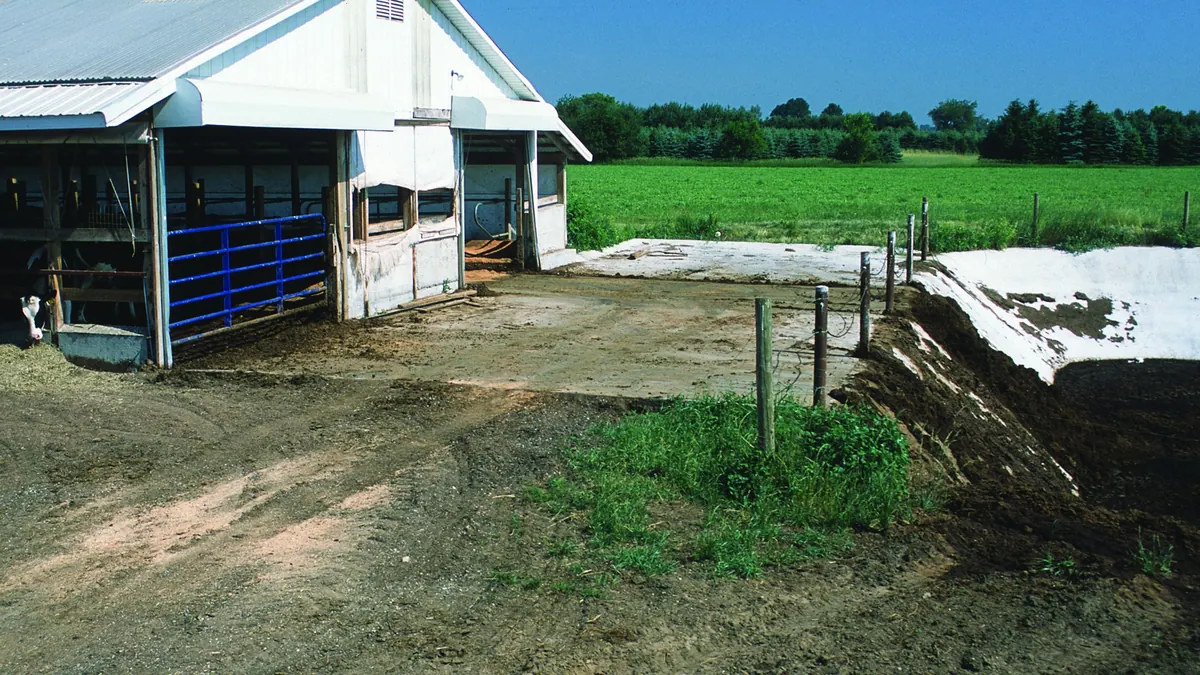
- Manure + fruit and vegetable waste: the manure stabilises pH and supplies trace elements, and the waste contributes readily fermentable sugars; particularly beneficial in regions with agri-food processing.
Individual substrates are described in the entries Slurry as a base substrate and Maize silage for biogas.
Synergy: what it is and when it occurs
We speak of synergy when the methane yield from a mixture is higher than the sum of the results from the individual substrates digested separately. The mechanisms are better balancing of macro- and micronutrients, dilution of inhibitors, improved sludge structure and greater microbial diversity. The effect is, however, not the rule: in some mixtures it occurs, in others it does not, and in some it is negative. That is why, before changing the recipe at technical scale, it is recommended to carry out a BMP test of the mixture in the proportions that are to be used (Co-digestion: planning the substrate mix).
Practical rules for implementation
- Introduce new substrates gradually; increase the share by a small percentage over a week, observing the process.
- Monitor FOS/TAC and pH regularly (FOS/TAC: how to measure).
- Homogenise the mixture before feeding it to the digester, to avoid local acidification zones.
- Document recipes and correlations with performance.
- Check legal requirements: the list of substrates for agricultural biogas, the rules on waste and animal by-products.
Planning the annual balance of substrates and reserves is discussed in the entry Planning substrate demand.
Risks and limitations
Co-digestion is not a universal solution. Adding a substrate with a high protein or fat content can increase the risk of foaming and inhibition, and a change of mixture affects rheological properties, which translates into the operation of agitators and pumps. The composition of the digestate and its legal status also change if waste from outside the list of substrates for agricultural biogas enters the feed. For these reasons every new recipe must be assessed from the technological, economic and legal point of view, and not only on the BMP result.
The role of the laboratory
BMP tests of mixtures, TS and VS analysis, determination of ammonia, FOS/TAC and biogas composition form a set of tools that make it possible to verify assumptions. It is also worth keeping your own database of results: linking the recipe with the actual yield from the plant makes it possible over time to calibrate laboratory results to technical scale.
Sources
Questions and answers
Does co-digestion always give more biogas than the sum of its components?
No. In some studies of mixtures a higher yield than the sum is observed, in others no effect or a decrease. It is therefore worth testing the specific mixture with a BMP test.
Related articles