Cogeneration and enginesAnalysis
Local district heating network from a biogas plant: losses, costs and minimum heat density
Does it pay to build a district heating network from CHP heat? We show the losses, cost ranges and the heat density measure that decides whether the investment makes sense.
Other language versions: Polski, Deutsch, Español, Français, Italiano, Nederlands.
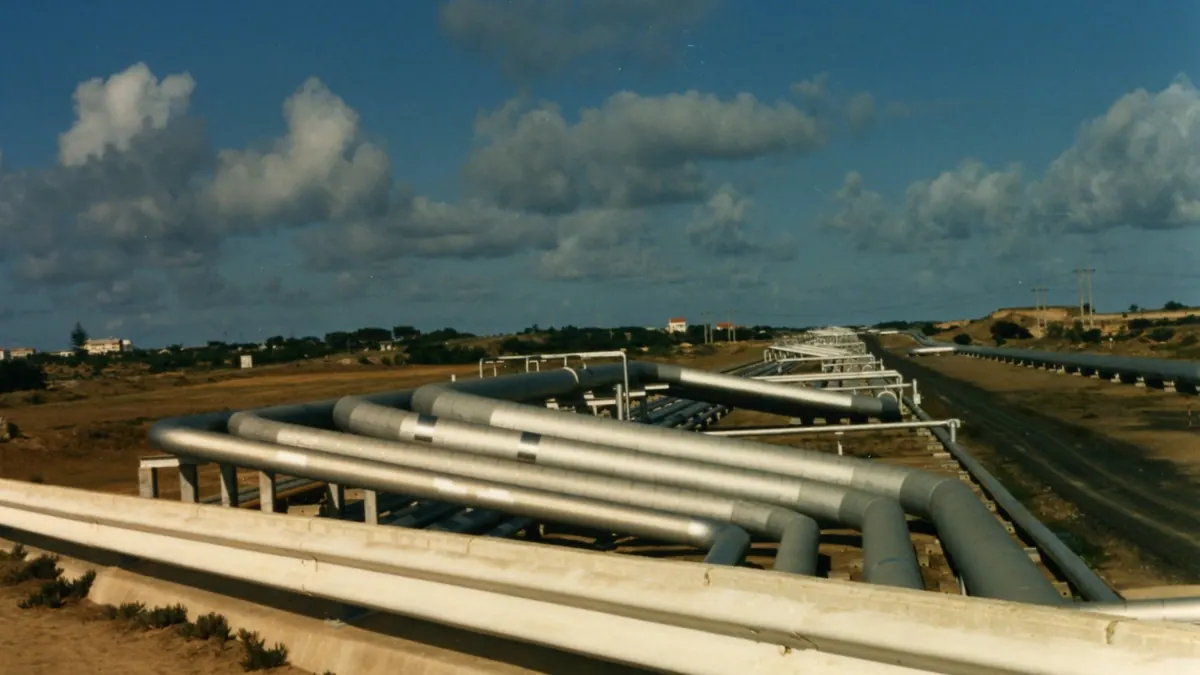

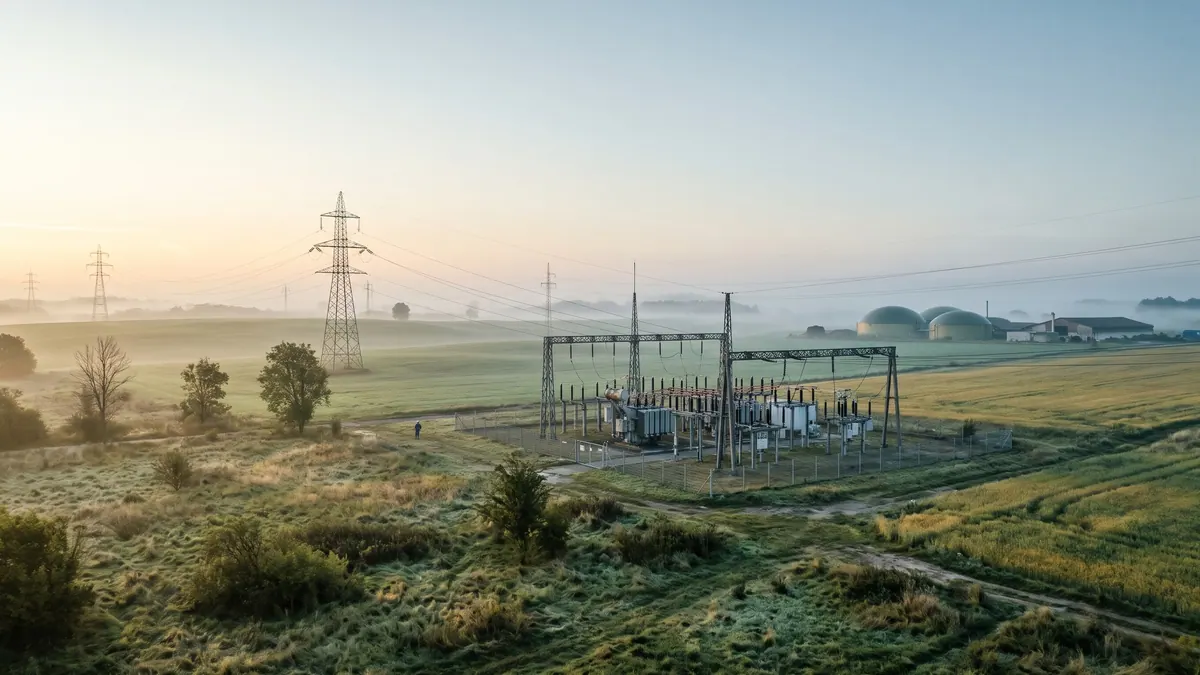
A local district heating network supplied from the CHP unit of a biogas plant is profitable only when the heat sold per metre of pipe is large enough to cover the investment cost and the losses. The most common mistake is to calculate only the consumers' demand without converting it to the length of the route. Below we show how to do this and when a single-point consumer makes more sense.
Heat density as a measure
Heat density is the annual heat sales divided by the route length: MWh/(m·year). In dense urban development these are values of several MWh/(m·year), in dispersed rural development often below 1. The lower the density, the larger the share of losses and capital cost in the price of heat.
Illustrative example. Consumers: 20 buildings, 1000 MWh of heat per year in total (a school, an office, several multi-family houses), route 1500 m. Density: 1000/1500 ≈ 0.67 MWh/(m·year). This is a low value. With a route of 600 m it is 1.67, which changes the picture of the project. The figures are hypothetical.
Heat losses
The losses of a pre-insulated network depend on the diameter, insulation thickness, water temperature and ground temperature. Typically a pair of pipes (flow and return) DN 50–DN 100 loses in the order of 20–50 W per metre of route, at temperatures of 80/50°C; for lower temperatures (a low-temperature network at 60/35°C) the losses are smaller. On an annual route of 1000 m:
- 30 W/m × 1000 m × 8760 h ≈ 263 MWh of losses per year,
- with sales of 1000 MWh this is about 26% of the energy sold, and relative to the energy delivered to the network (about 1263 MWh) about 21%.
For this reason rural networks often have losses in the range of 15–30%, and in poorer projects more. Losses are greatest in summer, when consumption is low and the water in the network still has a high temperature.
Investment costs
The cost of building a network from pre-insulated pipes, including earthworks, is indicatively from several hundred to over a thousand zlotys per running metre of route, depending on the diameter, surface, ground and roads. To this are added the heat substations at the consumers (several dozen thousand zlotys each), automation, metering and permits. The exact cost must be obtained from a cost estimate.
A simple estimate: a route of 1000 m at PLN 1200/m = PLN 1.2 million plus substations. With annual sales of 1000 MWh and a heat margin of about PLN 150/MWh, the gross profit is PLN 150 thousand per year; the payback period exceeds 8 years, without maintenance costs and losses, and with them clearly more. The range of values is purely illustrative.
Seasonality and summer heat
The heat balance of the CHP unit and its seasonality are shown in the article Waste heat from a biogas plant CHP; summer heat can also be used in dryers.
A heating network makes sense in winter; in summer consumption is limited to domestic hot water, which can be 10–20% of the winter output. The CHP unit produces heat all year round. To use the summer, the network is combined with a dryer, absorption cooling or another process. Without this, the efficiency of heat use falls, and the share of network losses grows.
Regulatory and tariff aspects
The sale of heat to consumers is subject to the provisions of the Energy Law Act (Prawo energetyczne, the Polish act governing energy activities), including licence and tariff requirements in certain cases and contracted capacity thresholds. The legal situation on the date of the entry should be verified; the rules may change. The economic analysis also takes into account priority of connection, long-term contracts and the risk of consumers disconnecting.
When a network makes sense
- High heat density (at least about 1.5–2 MWh/(m·year)), consumers anchored by contracts.
- A short route, with a pipe or a technical corridor already in place.
- Investment support or a low-interest loan available.
- Use of heat in summer secured.
When these conditions are missing, connecting one large consumer (a processing plant, a greenhouse, a dryer) with a short pipe is often better, because it minimises losses and costs. The decision is worth basing on your own hourly model and cost estimate, not on the averaged ranges from the article.
What to check before the decision
Before starting the project, collect declarations from consumers with preliminary agreements, the actual heat consumption over several seasons and the parameters of the internal installations (flow and return temperatures). A low return temperature at the consumers reduces losses and allows a cheaper network. Also check who will maintain the network, how connections will be settled and what will happen if a consumer withdraws. It is worth calculating financial models in three variants, with cautious assumptions about heat consumption and the heat price. In each variant calculate the network losses in summer and in winter separately, because the winter average hides the summer deterioration of the indicator. It is also worth checking whether the network can be expanded in stages, starting with the section with the highest heat density.
Sources
Related articles