Market and investmentAnalysis
The potential of municipal biogas plants in Poland: biowaste, EU targets and barriers
The organic fraction is a significant part of municipal waste, and EU recycling and landfilling targets force its processing. Municipal biogas plants can help, but face financial and administrative barriers.
Other language versions: polski.
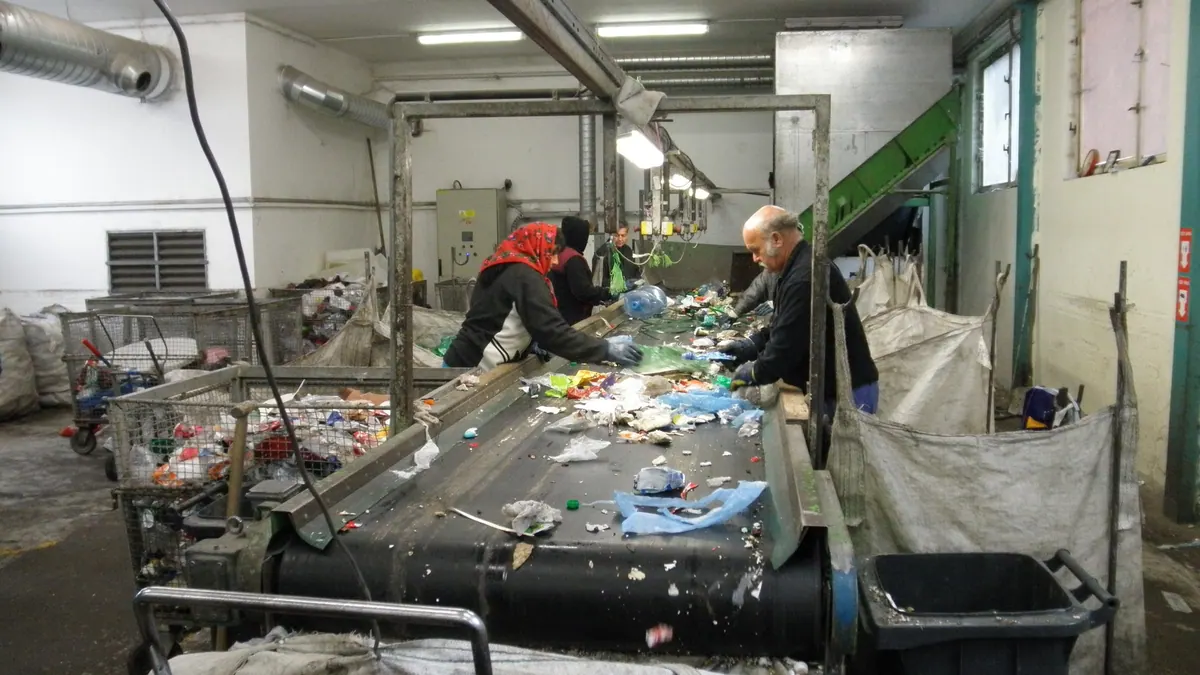

Municipal biogas plants can become one of the tools for meeting EU waste management requirements, because they turn the organic fraction into energy and fertiliser instead of sending it to landfill, but their development is held back by costs, procedures and a lack of competence in municipalities. Below we discuss the targets, benefits and barriers.
EU targets and Poland's position
The Waste Framework Directive, amended in 2018, sets levels of preparation for re-use and recycling of municipal waste: 55% by 2025, 60% by 2030 and 65% by 2035. The Landfill Directive limits the landfilling of municipal waste to 10% by 2035. For Poland the challenge is not only infrastructure, but also the management model: in many municipalities mixed collection and transport to landfill still dominate. A comparison of the targets with data is described in the entry Recycling and landfilling levels for municipal waste. The organic fraction (biowaste) is one of the largest in the municipal waste stream, and landfilling it causes emissions of methane, a potent greenhouse gas.
Scale and municipal potential
Poland has over 2.4 thousand municipalities, but not every one has enough biowaste for its own plant. Local analyses indicate that centres with a larger population or groups of municipalities that jointly provide a steady supply are particularly promising. Rural and urban-rural municipalities can additionally obtain substrates from farms, creating local biomass processing centres. Practical planning of a network of municipal installations is described in the entry RIPOK and WPGO: regional waste treatment installations and waste management plans. An example of using municipal biogas is cogeneration from waste in Tarnów (MPEC Tarnów).
Benefits
Management of organic waste
A biogas plant can accept kitchen waste, green waste, expired food from shops and catering, and sludge from treatment plants. This reduces the mass of waste sent to landfills and extends the life of existing ones.
Renewable energy
Biogas can be used in cogeneration, after upgrading as biomethane (into the gas grid) or as a fuel for municipal vehicles (bioCNG). The choice depends on the location and the off-taker (CHP or biomethane).
Fertiliser and climate
Digestate can replace part of mineral fertilisers, provided it meets quality and legal requirements (Digestate: fertiliser or waste). Processing biowaste instead of landfilling reduces methane emissions; the value of the reduction depends on local conditions and comparison assumptions, so it is worth calculating it for a specific project instead of adopting general values.
Barriers
- Investment costs of a municipal biogas plant can reach millions or tens of millions of zlotys, depending on scale and technology, and require external financing.
- Administrative procedures: environmental decisions (DUŚ), development conditions, connections and permits can take many years.
- Public opposition arising from concerns about odours and noise; transparency and good technology help.
- Unstable support: the system of incentives and tariffs requires predictability.
- Lack of competence: small municipalities usually do not have specialists to run a plant; the solution can be intermunicipal cooperation or contracting an operator.
- Biowaste quality: contaminated biowaste requires depackaging and lowers yield (Depackaging).
Conclusion
Municipal biogas plants will not solve all waste management problems, but they can be an important element of the system: where there is a steady stream of good-quality biowaste, an energy off-taker and a competent operator. The decision should be based on local analysis and BMP tests of the substrates, not on general slogans.
How to start: the order of steps in a municipality
A municipality considering its own or a shared plant should start with an inventory: how much biowaste it collects, of what quality and seasonality, what the haulage distances are and who the potential off-taker of the gas or heat is. Next it is worth testing the methane potential of representative samples, assessing technological variants (dry or wet digestion, composting as an alternative) and putting the costs together with possible sources of financing. Only on this basis does a feasibility study and dialogue with residents make sense. Skipping any of these steps usually ends in an underloaded plant or one with an uncertain off-take of products.
Sources
Questions and answers
Can every municipality have its own biogas plant?
Not always. Profitability depends on the quantity and quality of biowaste, access to a buyer for the gas and heat, and the capacity to manage the installation. Regional installations serving several municipalities more often make sense.
Related articles