BMP testingExplainer
What is a BMP test and why is it key for a biogas plant?
A BMP test measures how much methane can be obtained from a given substrate under anaerobic conditions. We explain the course of the test, the units, interpretation of the curve and situations in which it is worth ordering one.
Other language versions: polski.
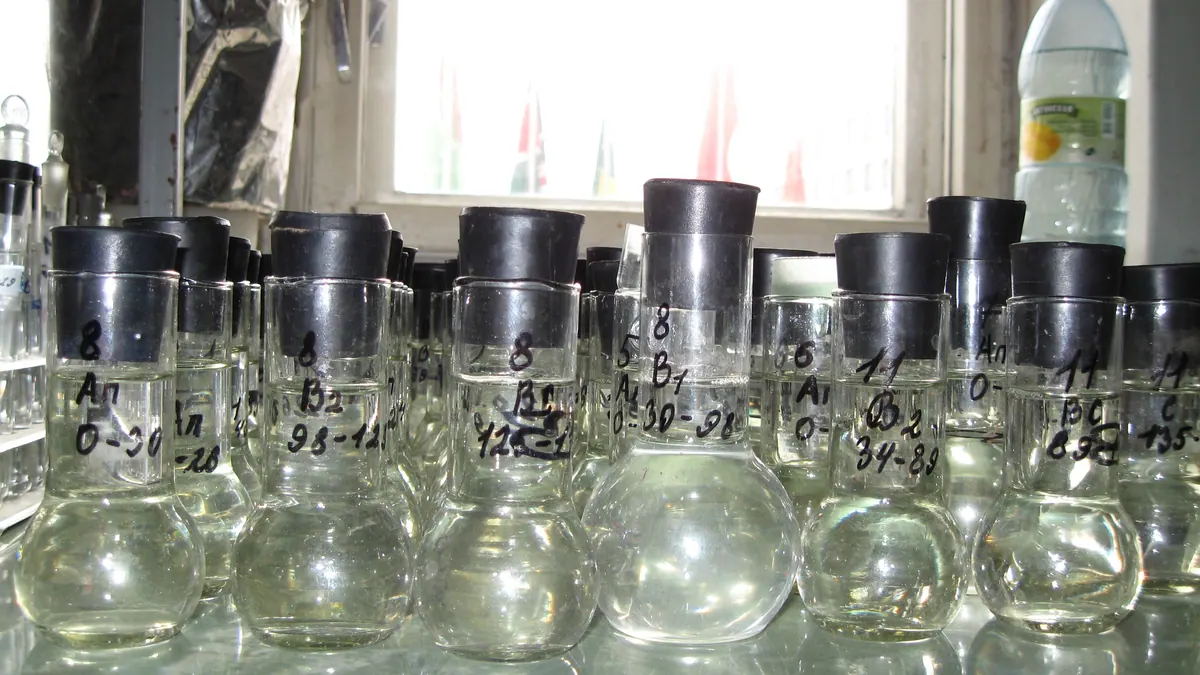

A BMP (Biochemical Methane Potential) test is a laboratory test that determines the maximum amount of methane that can be obtained from a given substrate under anaerobic digestion conditions. For biogas plant operators and investors, the BMP result is the basis for energy and economic calculations, because it shows the energy value of a substrate before it reaches the digester. It is, however, a starting point, not a guarantee: the yield in a plant depends on many additional factors.
How the test proceeds
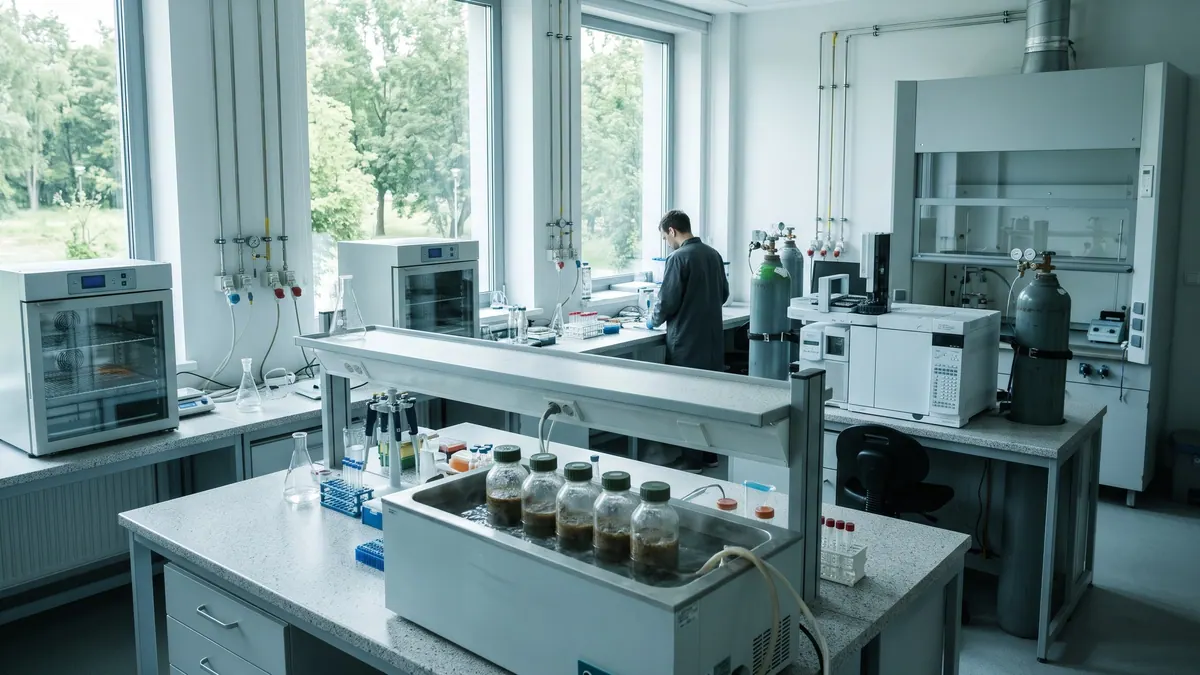
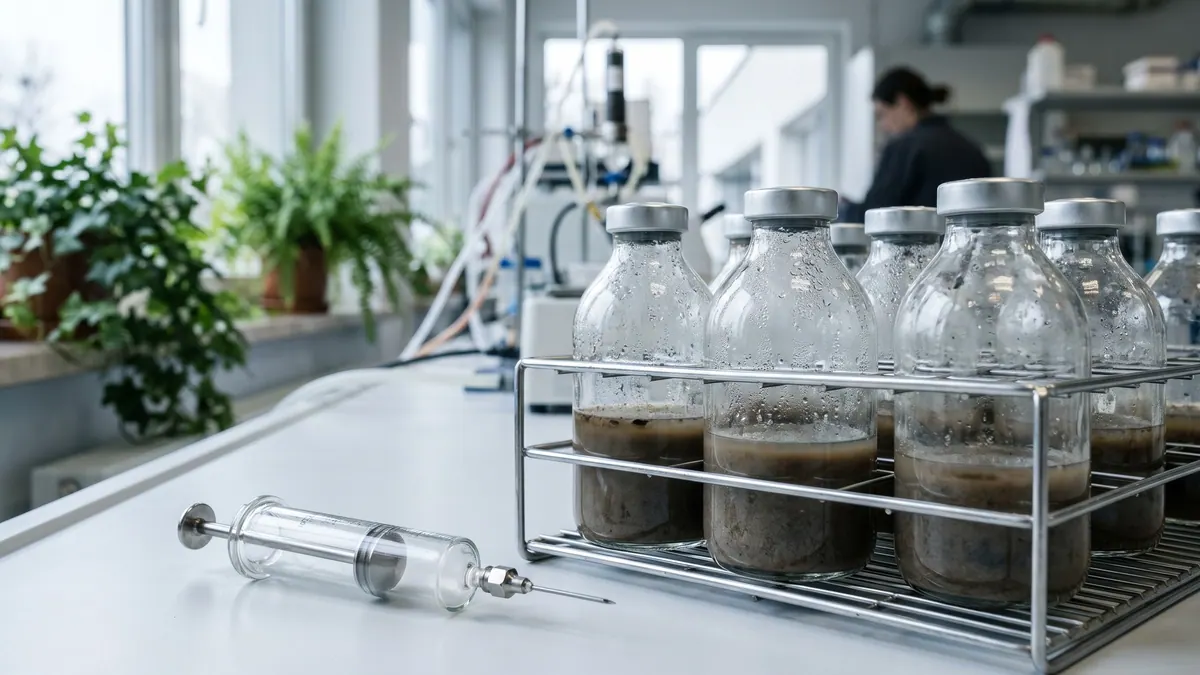
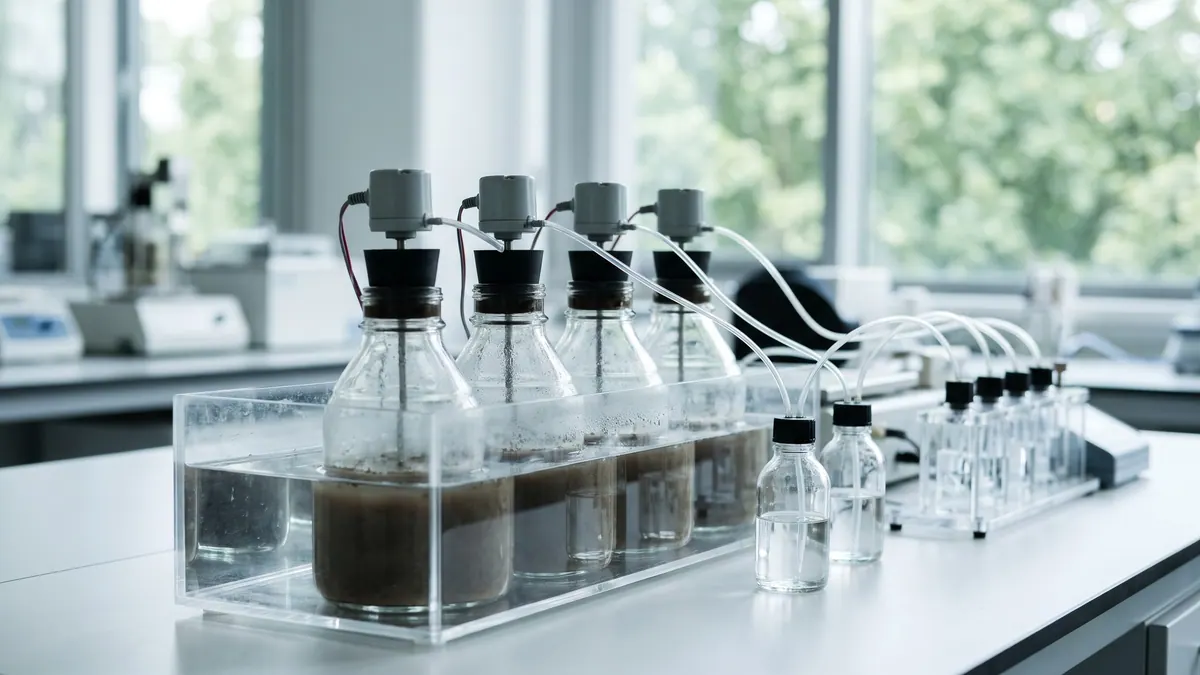
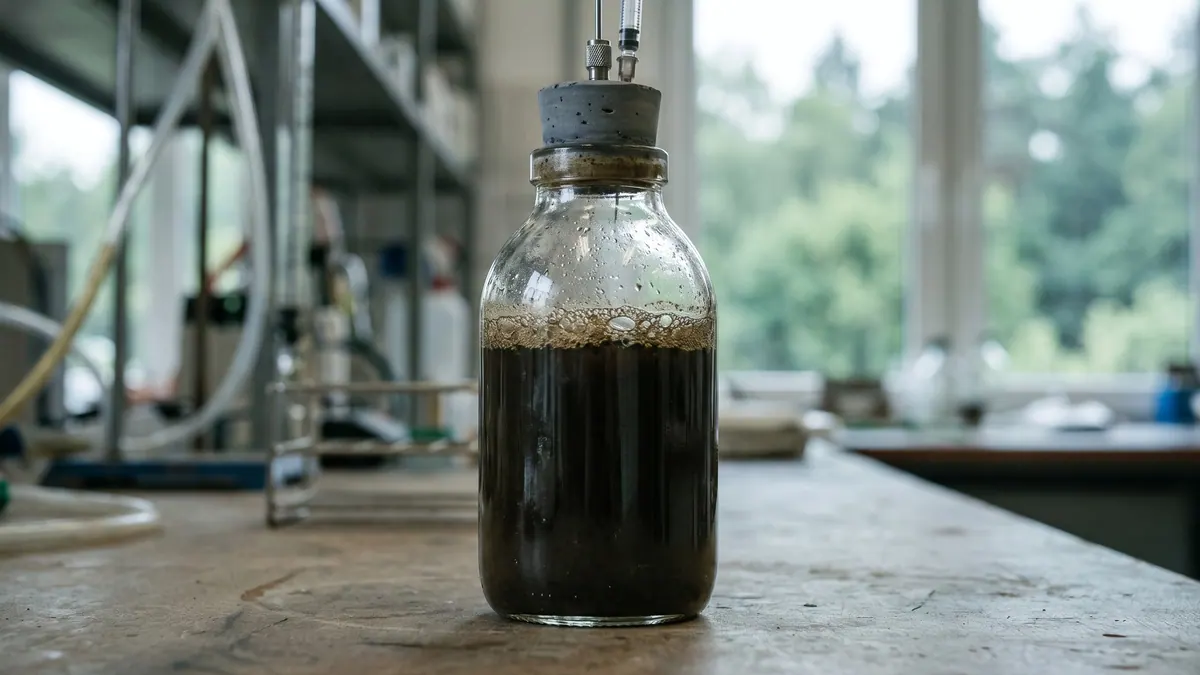
A sample of the substrate is placed in a sealed reactor (usually a bottle with a capacity of from several hundred millilitres to several litres) together with inoculum, i.e. active biomass of microorganisms, most often taken from an operating biogas plant. The reactor is incubated at a constant temperature, usually mesophilic (37–38 °C), and the gas is collected and measured continuously or periodically. The biogas composition, including methane content, is analysed with a gas chromatograph or an infrared analyser. The test ends when the daily methane increase falls to a small value; the duration depends on the substrate and the criteria adopted (from over a dozen to several dozen days), which we discuss in the entry The BMP test protocol step by step.
To make the result reliable, every series includes:
- a blank (inoculum alone), to subtract the gas coming from the inoculum,
- a positive control (e.g. cellulose) confirming the activity of the inoculum,
- replicates, because the scatter between bottles can be significant,
- the right inoculum-to-substrate ratio (I/S), so as to prevent overloading.
The test validation criteria are described by the recommendations of Holliger et al. (2016), and in Germany by the VDI 4630 guidelines. Details: Validation criteria for the BMP test according to Holliger (2016).
Units and calculations
The result is most often expressed as NmL CH₄ per gram of volatile solids (VS), which is equivalent to normal litres of methane per kilogram of VS. A figure per tonne of fresh matter is also encountered, which takes into account the dry matter (TS) and VS content of the substrate; such values are lower and must not be compared with values per VS (Dry matter and volatile solids). The gas volume is converted to normal conditions (0 °C, 1013 hPa), according to the method described, among others, in the entry Calculating methane production in the BMP test (Hafner 2020).
Indicative ranges from the literature (specific records with publications are collected in BMP studies): cattle slurry has a low potential, in the order of several hundred NmL CH₄/g VS starting from the low one hundred and something; maize silage usually about 300–370; food waste and fats clearly more. The scatter results from variety, harvest date, composition and sample preparation.
Kinetics and interpretation of the curve
The final yield alone does not describe the rate of degradation. A substrate with a high BMP but slow degradation (e.g. lignocellulosic material) requires a longer retention time in the digester, which lowers plant throughput. The cumulative methane curve shows: a rapid initial rise (readily degradable matter), a possible lag phase (a delayed start may signal inhibition) and a long tail (more slowly degradable fractions). We describe this in the entries on first-order kinetics and the modified Gompertz model.
Why test before investing
Literature data are helpful at the preliminary stage, but the actual potential of a specific batch of substrate can differ significantly from them: composition changes seasonally and depends on production technology and storage conditions. A BMP result makes it possible to size the digester properly, plan logistics and assess revenue. BMP tests are also useful when assessing new substrates, mixtures (co-digestion) and substrates of variable composition, e.g. waste from food processing.
Limitations
- The result applies to the sample, not the whole batch; representative sampling is critical.
- The test does not reproduce long-term digester operation (adaptation, ammonia inhibition, trace element deficiency).
- Results from different laboratories may differ; see Scatter of BMP results between laboratories and BMP and yield at technical scale.
The basic rules for reading a report are collected in the checklist: How to read a BMP test report. The definition and applications are also discussed in the entry What is BMP.
Sources
Questions and answers
Can a BMP result be transferred directly to a biogas plant?
No. BMP determines the potential of a sample under ideal laboratory conditions. In a plant, the yield is determined by retention time, loading, mixing, the composition of the recipe and process stability.
What does the "N" in NmL CH₄/g VS mean?
The letter N denotes gas volume converted to normal conditions (0°C and 1013.25 hPa), so that results from different laboratories can be compared regardless of the temperature and pressure of measurement.
Related articles