InnovationAnalysis
Algae and macroalgae as a substrate for methane fermentation: potential and barriers
Microalgae and macroalgae can yield biogas, but they contain a lot of nitrogen and salt and are costly to cultivate. We analyse composition, barriers and relevance for Polish biogas plants.
Other language versions: Polski, Deutsch, Español, Français, Italiano, Nederlands.
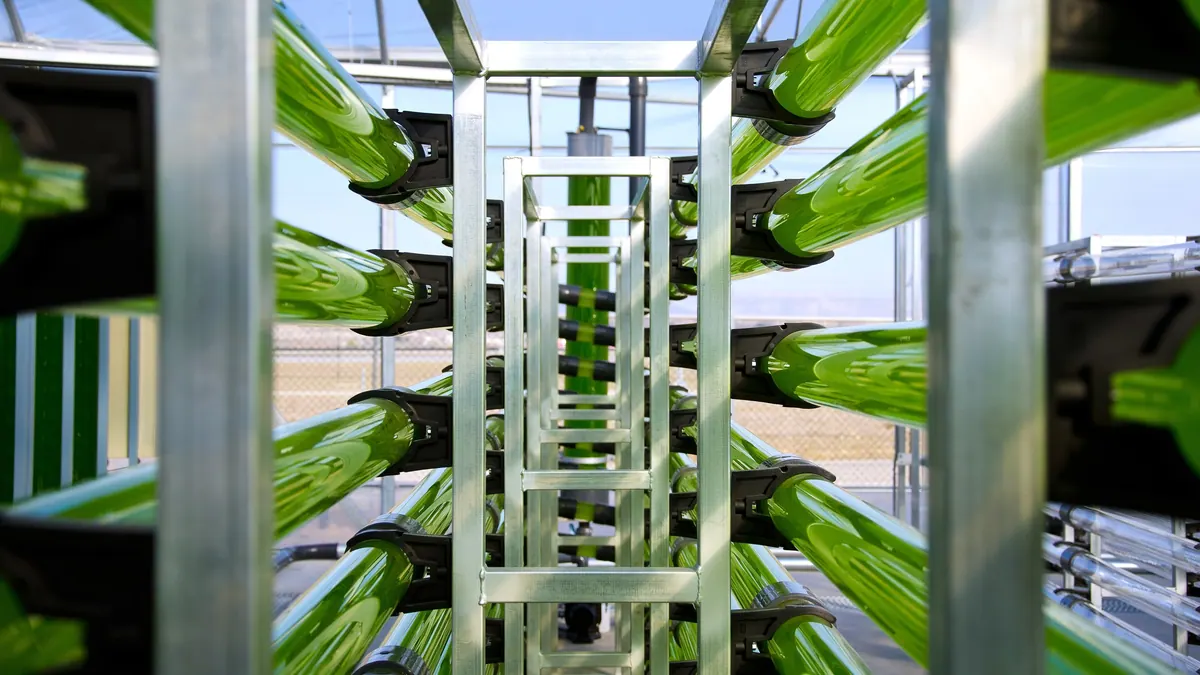

Algae have appeared for years in the debate about "third-generation biomass": they grow fast, do not require arable land and can grow on water containing waste. In methane fermentation, however, they are a demanding substrate, and their profitability depends more on the cost of cultivation than on the biogas potential. We assess the opportunities and barriers.
Microalgae and macroalgae
Microalgae are single-celled organisms such as Chlorella or Spirulina (the latter is formally a cyanobacterium), cultivated in open ponds or closed photobioreactors. Macroalgae (seaweeds) are multicellular marine organisms such as brown algae (Laminaria), green algae (Ulva) or the genus Sargassum, harvested from natural populations or cultivated at sea.
They differ in composition, and therefore in behaviour in the digester:
- microalgae contain a lot of protein (often several dozen percent of dry matter) and variable amounts of lipids; they have cell walls that hinder enzyme access,
- macroalgae contain above all polysaccharides (alginates, laminarin, fucoidan, ulvan), little lignin, but a lot of salt, ash and iodine.
Methane potential
The literature gives the methane potential of algae in wide ranges — from several dozen to over 400 ml CH₄ per g of organic dry matter — depending on species, harvest time, pretreatment and test conditions. The highest values usually come from batch tests under ideal conditions and do not transfer to continuous installations. Biogas from protein yields less methane per gram of organic dry matter than from fat. When planning, you should always carry out your own BMP test for the specific batch. In our database algae appear as an entry in the substrate studies, but the data are not duplicated here.
Technological barriers
- Cell walls. Microalgae with hard walls (especially Chlorella) degrade slowly; pretreatment (mechanical, thermal, enzymatic) improves this, but raises the cost.
- Ammonia. A high protein content means a high nitrogen share, and therefore a risk of ammonia inhibition (see ammonia in the digester) and a low C/N ratio (C/N ratio in the substrate mix).
- Sodium, iodine, sulphur. Marine macroalgae bring in salt, and some species a lot of iodine and sulphur compounds; they cause inhibition or increase hydrogen sulphide formation. Rinsing with fresh water reduces salinity, but increases cost.
- Metals and contaminants. Algae accumulate metals from the water; this may limit the use of the digestate.
- Seasonality and variability. Macroalgae harvesting is seasonal, and the composition changes over the year; ensiling and drying are difficult and costly.
Cultivation cost and energy balance
This is the biggest problem. Microalgae cultivation requires light, nutrients, mixing and often CO₂; harvesting from a dilute suspension (usually a fraction of a percent of dry matter) requires dewatering, that is, energy. In many analyses, the energy used in cultivation, harvesting and treatment is comparable to the energy contained in the biogas obtained, or greater. The balance improves when algae grow on waste streams (e.g. water from a treatment plant) and at the same time perform a purification function, and the product is valuable for other reasons. The conclusions are not clear-cut and depend on the assumptions made, so treat every report of "profitable" algae critically.
A realistic scenario: co-digestion
Algae are rarely suitable for digestion as a monosubstrate: high protein and salt lead to inhibition. It is more realistic to add them in a small share to slurry or other carbon-rich substrates, which dilute ammonia and sodium and improve C/N. The proportion should be determined in tests and verified in continuous operation, with monitoring of ammonia, VFA and pH. The principles of co-digestion are described in the articles in the biogas section.
Relevance for Polish biogas plants
In Poland there is no commercial cultivation of energy algae at a scale that would supply raw material for biogas plants, and the Baltic coast has a low macroalgae resource and different conditions from the Atlantic. What appears is therefore mainly individual research projects and algal waste from industry (e.g. after extraction). The practical conclusion for the operator: do not plan a biogas plant on algae; it is worth treating them as an interesting entry in BMP and as an example of a research direction.
How to approach an offer
If someone proposes algae deliveries or a technology for cultivating them at the biogas plant, apply the rules from the guide How to assess a new technology: check the scale of the references, the composition and variability of the raw material, the energy balance of cultivation and the guarantee of supply. Ask for samples for a BMP test before any contract.
What to do in practice
If algae are to go into the digester even as an additive, start with a sample and analysis: dry matter, organic dry matter, total nitrogen, sodium, iodine and sulphur. Only the result allows you to assess what share of the mix is safe. Pay attention to the consistency of deliveries and to whether the raw material is a waste with an unclear legal status, because this affects the possibility of using the digestate. It is best to treat algae as a small-scale experiment, not as an element of the production plan.
Sources
Related articles