
InnovationAnalysis
Innovations at biogas plants that are leaving the laboratory: technology maturity on the TRL scale
CO₂ from biogas, methanation and power-to-gas, digital process control, biochar and new feedstocks: an overview of innovations with an indicative assessment of maturity on the TRL scale.
Other language versions: Polski, Deutsch, Español, Français, Italiano, Nederlands.
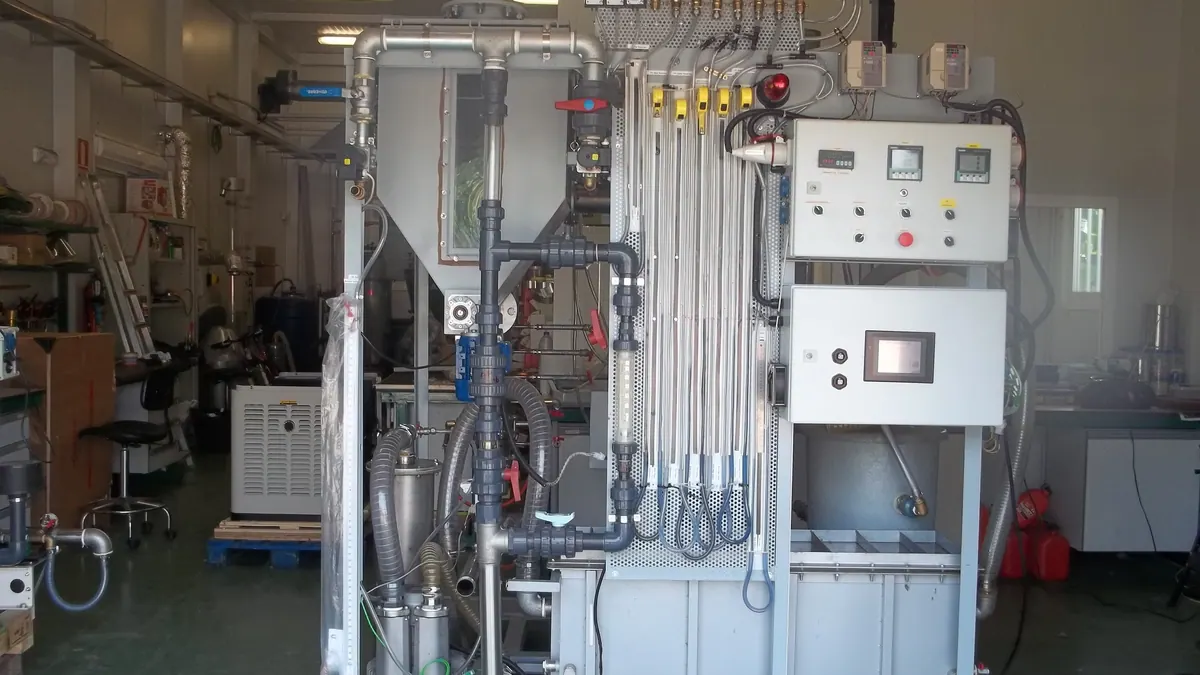

Around biogas plants many ideas are accumulating, from the realistic to the purely marketing. To find one's way among them, one criterion is useful: technology maturity, expressed on the TRL (Technology Readiness Level) scale. Level 1 is the observation of basic principles, 2–3 is the formulation of a concept and its initial proof, 4 is validation in the laboratory, 5–6 is validation and demonstration in a relevant environment, 7 is a prototype in operational conditions, 8 is a complete and qualified system, and 9 is a system proven in operation (in line with the scale in the annex to the Horizon programme). For each innovation below we give an indicative editorial assessment. This is an approximate assessment; for a specific project it must be confirmed with references from operating installations. Innovations serve here the same purpose as the whole series: fuller use of local resources and less dependence on fossil fuels and mineral fertilisers.
CO₂ from biogas: from waste to product
Biogas usually contains about 35–45% CO₂ (depending on the substrate and process), which after upgrading is a separate, very pure stream. It can be vented, liquefied and sold to the food industry or as dry ice, used in greenhouses, and in future combined with hydrogen in synthetic fuels or stored. CO₂ liquefaction works commercially at several installations in Europe and North America, so the assessment is TRL 8–9. The limits are scale, the purity required by the buyer and logistics. See Biogenic CO₂ from biomethane plants: applications. Storage of biogenic CO₂ (BECCS) is at an earlier stage, around TRL 6–7, as described in the article BECCS and storage of biogenic CO₂.
Methanation and power-to-gas
Methanation combines CO₂ with hydrogen into methane. The catalytic route is known from industry, and the biological route uses hydrogenotrophic archaea in a separate reactor (ex situ) or in the digester (in situ, with the risk of a rise in pH). Catalytic methanation has first demonstration and commercial installations, TRL 7–9; biological methanation operates in demonstration installations, TRL 6–8; the in situ variant remains mostly in research, TRL 4–6. The key limitation is economic: the efficiency from electricity to methane is clearly lower than 100% (the literature gives an indicative range of about 50–80%, depending on the technology and the method of calculation), so the cost of electricity and the number of electrolyser operating hours decide the outcome. This is described in the article Methanation and power-to-gas with biogenic CO₂, and we also write about hydrogen in the analysis Biohydrogen realistically.
Digital process control
Process models (e.g. based on ADM1), machine learning and digital twins are used to forecast gas production, select the substrate dose, detect disturbances and control CHP operation in response to market signals. They are already used in installations, TRL 6–8, but the quality of the effect depends on sensors, calibration and data discipline. It must honestly be said that the gain values in the literature are a wide range and depend on the starting point, and an "AI" label in a product description is not a guarantee of effectiveness. A good criterion is to ask for measurable references: by how much process stability increased and what effect that had with a given substrate. The basic process indicators (pH, FOS/TAC, gas composition) remain the foundation; a digital system can only make better use of them.
New feedstocks and fractions
- Hermetia (BSF) larvae convert food waste into protein and fat: TRL 8–9 for food waste, whereas for digestate studies show poor larval growth, so it is not a business model today (TRL 3–4). It is limited by feed regulations.
- Microalgae on CO₂ and digestate (water polishing, biomass): TRL 4–6, limited by light in winter and by cost.
- Volatile fatty acids as a platform: PHA (biopolymer) TRL 6–7, chain elongation to caproic acid TRL 5–6.
- Co-digestion of fats and glycerol: TRL 8–9 for the process itself, but it requires adaptation of the microflora and a limit on the dose.
Digestate and biochar
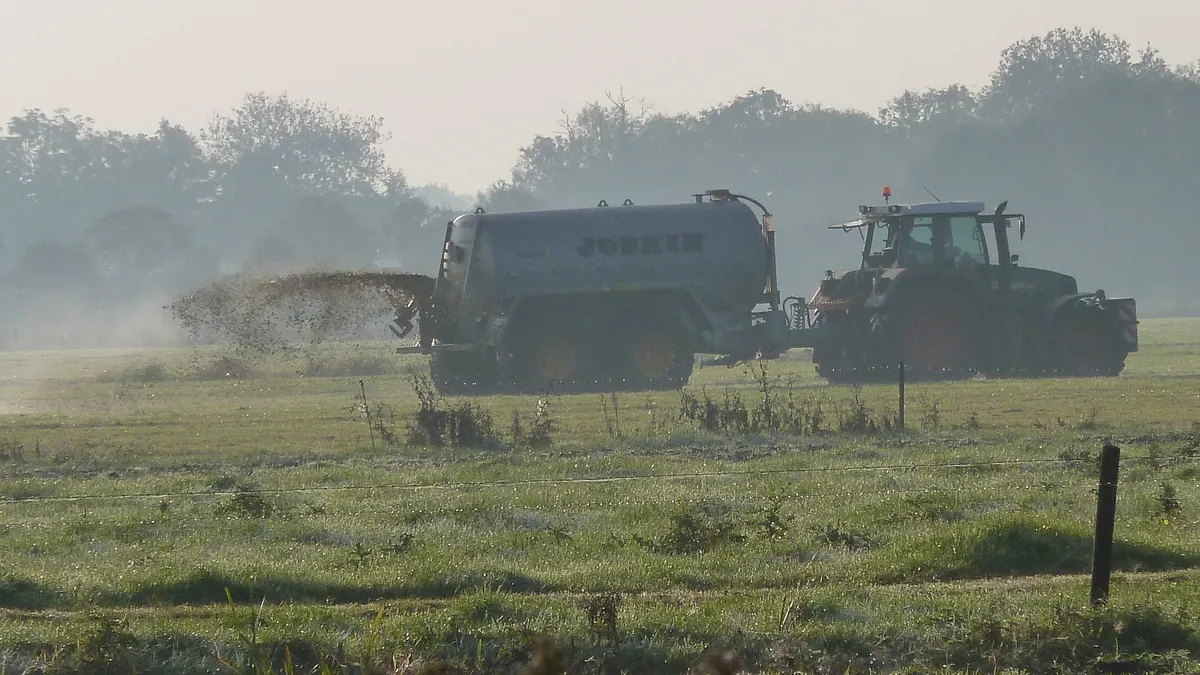
Pyrolysis of the solid fraction of digestate gives biochar, and the heat can be used for drying. Pyrolysis technology is mature (TRL 8–9), whereas uses of biochar in soil require confirmation of quality and legal status. Biochar as a reactor additive (improving stability, binding ammonia and H₂S) shows benefits in laboratory studies, but full-scale data are limited: TRL 4–5. Recovery of nutrients from digestate (stripping, struvite) is mature, TRL 8–9; we discussed it in the article Digestate and nutrient recovery instead of part of mineral fertilisers.
How to assess an innovation
- Ask about reference installations at a scale similar to yours and about their operating time.
- Check the energy and mass balance, not only the declared efficiency.
- Compare with a simpler solution: would an ordinary improvement not give a similar effect?
- Check the legal status of the product (waste, by-product, fertiliser).
- Calculate a cautious variant, without assuming constant energy prices.
Why this matters for independence
Innovations are not an end in themselves. Each of them makes sense when it allows fuller use of domestic feedstock or replaces imports. CO₂, instead of escaping, becomes a product, digestate replaces fertiliser, and better control gets more energy out of the installation. In this way technology serves the direction described in the series from its opening: Energy independence starts locally. How to manage waste streams is discussed in the article The future of organic waste management in cities and the food industry.
Sources
Questions and answers
Does a high TRL mean profitability?
No. TRL describes technical maturity, not economics. A technology at TRL 9 may be unprofitable under specific energy and feedstock prices.
What does TRL mean?
It stands for Technology Readiness Level, a technology maturity scale from 1 (basic principle) to 9 (system proven in operation). TRL 5–6 means validation and demonstration in conditions close to real ones, TRL 7 a prototype in operational conditions, TRL 8 a complete and qualified system, and TRL 9 a system proven in operation.
Related articles