The biogas plant operator round: a daily and weekly checklist
A regular round detects leaks, noises and overheating before they become a failure. We propose a rhythm of daily, weekly and monthly checks.
Other language versions: Polski, Deutsch, Español, Français, Italiano, Nederlands.
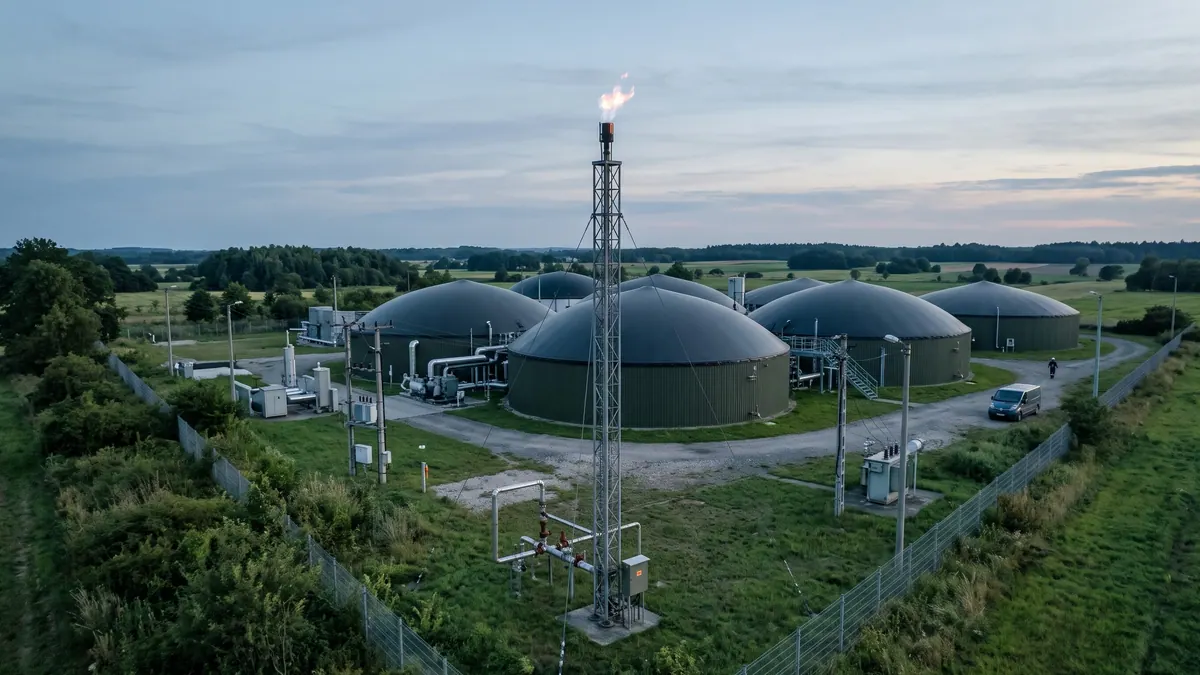
The operator round is the cheapest form of diagnostics: an experienced person picks up changes that cannot be seen in the data, that is, a new sound, a smell, a damp trace under a pipe or an overly hot housing. The prerequisite is rhythm and a record. Below we propose a structure of checks that can be adapted to a specific plant. It does not replace the operating manual, statutory technical inspections or occupational safety procedures; these are described in separate articles and in the plant documents.
What to look at, listen to and smell
Sight. We look for traces of liquid under tanks, pumps and valves, damp insulation, corrosion on fittings, damage to guards and signage. We check levels: of oil in the CHP unit and gearboxes, of liquid in tanks, of water in siphons. A membrane roof is assessed for tension, wrinkles and water collecting in depressions.
Hearing. Bearing noise (humming, knocking), motor vibration, hissing at gas leaks, the characteristic sound of cavitation in pumps. A change in sound is often an earlier signal than an alarm.
Smell. The smell of hydrogen sulphide or gas near pipelines indicates a leak, but the nose is not a sensor: hydrogen sulphide at higher concentrations dulls the sense of smell, so the detector reading decides, not the impression of smell. The smell of overheated insulation or oil signals an electrical or mechanical problem.
Daily checks
Components that can cause a failure within a day:
- the general condition of the site: no leaks or spills, passable roads and unloading bays,
- readings of critical measurements: temperatures, gas pressure, levels, alarms from the last day,
- condensate: condensate traps and siphons, especially during frosts,
- the condition of the feeder: unusual sounds, accumulated biomass, blockages,
- running equipment: noise, housing temperature, vibration,
- safety devices and signage: availability of fire extinguishers, legibility of signs, clear evacuation routes.
It is worth adjusting the order of checks to the season: in winter the round starts with condensate traps, siphons and trace heating, in summer with emergency cooling, ventilation of the engine room and the digester temperature. Such a seasonal insert in the checklist costs nothing and directs attention to the risks that occur most often at a given time of year.
Weekly checks
- the oil level in the CHP unit, filters and agitator gearboxes,
- the condition of seals and pump glands,
- the tightness of flanged connections (visually, and with a detector if an instrument is available),
- the condition of membranes and the roof: wrinkles, damage, traces of water,
- checking play and the tension of belts or chains in conveyors,
- tidiness at workstations and access to emergency switches.
Monthly and periodic checks
Once a month it is worth carrying out a more thorough inspection: testing the gas sensors (according to the manufacturer's instructions), checking the condition of gate valves and valves in their end positions, assessing corrosion and coating losses, checking earthing conductors and equipotential bonding connections, checking stocks of parts and consumables. Inspections required by regulations, e.g. of equipment subject to technical supervision, are carried out on the dates indicated in the documentation and decisions.
Working alone
At small plants the operator often works alone. Basic rules that do not duplicate the detailed health and safety procedures:
- constant contact with a second person (telephone, radio) and a fixed check-in time after the round,
- a personal gas detector worn during the round (the hazards are described in the article on hydrogen sulphide as a hazard to people),
- knowledge of the rules concerning explosion hazard zones, including the ban on using unsuitable equipment; the general requirements follow from Directive 1999/92/EC and from national regulations (see ATEX at a biogas plant),
- a ban on entering confined spaces alone; procedures for such work are described separately,
- knowing where the emergency switch is and how to call for help.
Recording and trend
A round without a record is quickly forgotten. A simple checklist with "OK / remarks" fields and a date is enough. It is worth recording on it not only faults but also small changes ("slightly damp under pump no. 2"). The trend of such records makes it possible to plan a repair earlier than a failure would force it. A model log is described in the guide to the operator log.
It is also good to adopt a few organisational rules. The route of the round should always be the same, so that skipping any point is immediately visible. The checklist should fit on one page and be available at the workstation, not only in the office. After the round the operator passes remarks to the person responsible for servicing, and significant observations go into the event log. Once a quarter it is worth checking whether the list still matches the plant after modernisations, and adding new equipment that has appeared since the last update. New employees should do their first round together with an experienced operator.
Key takeaways
A good round is short, repeatable and documented. Daily checks cover critical components, weekly ones the condition of equipment, monthly ones detailed inspections. The round supplements, and does not replace, the inspections required by regulations and the manufacturer's manual.
Sources
Related articles