Operation and failuresExplainer
Corrosion at a biogas plant: where it occurs, how to detect it and what it risks
Biogas is wet and contains traces of sulphur compounds, so corrosion at a biogas plant has several distinct zones. We describe where to look for damage and how to detect it.
Other language versions: Polski, Deutsch, Español, Français, Italiano, Nederlands.
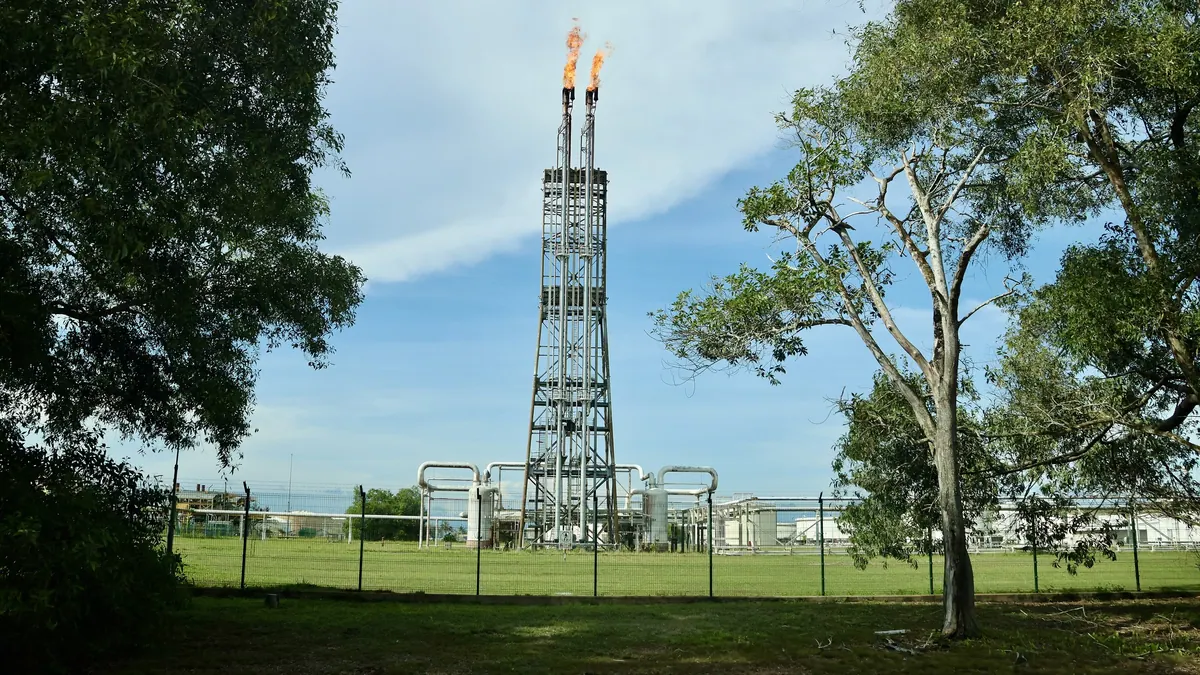

Corrosion at a biogas plant is not a single phenomenon but a set of processes in different zones, each with its own chemistry, its own materials and its own inspection methods. The common denominator is moisture, a temperature of about 40 °C and the presence of sulphur compounds, which turn into acids in the gas and condensate. Hydrogen sulphide is only the cause here; its removal is described in the articles on desulphurisation (biological and chemical), and the construction of tanks and membranes in the articles on tanks. Here we focus on where corrosion occurs and how to detect it.
Risk zones
The gas space above the liquid. This is the most exposed zone. Biogas contains water vapour, which condenses on the cooler walls and vault. CO₂ and sulphur compounds dissolve in the condensate, lowering the pH. In addition, sulphur-oxidising bacteria on the surface can convert hydrogen sulphide into sulphuric acids, and such an acidic film accelerates the destruction of the material.
The liquid line. In the zone of variable level, alternating wetting and drying favours corrosion. With steel, cracking and loss of coatings are added, and with concrete the leaching of the binder.
Fittings and gas pipelines. Valves, condensate traps, flanges and sensors are in contact with wet gas. Condensate collects at low points, and there corrosion progresses fastest.
The gas engine and flue gas heat exchangers. Flue gases contain compounds that, once cooled below the dew point, form acidic condensate. This applies especially to flue gas heat exchangers and exhaust systems, and to oils that become acidified.
Components inside the digester. Agitators, pipes and heat exchangers work in a liquid of variable pH containing sulphides and chlorides, and are also exposed to abrasion.
Concrete versus steel
Concrete suffers two main types of corrosion. Sulphate corrosion consists of the reaction of sulphate ions with cement components; compounds that increase in volume are formed, which leads to cracking and spalling. Biogenic corrosion results from the action of acids formed from hydrogen sulphide on the concrete surface; the acid dissolves the cement matrix, and a thin surface layer flakes off. The result is loss of cross-section, exposure of the reinforcement and its secondary corrosion.
Carbon steel corrodes in wet gas and in liquid uniformly or by pitting. Stainless steel is much more resistant, but it is not resistant to everything: chlorides and low pH can cause pitting and crevice corrosion, and stress cracking is a risk in specific conditions. The choice of steel grade depends on the zone, temperature and composition of the medium, and should be consulted with the designer or manufacturer.
How to detect it
- Visual inspection. Change of colour, streaks, coating flaking, concrete spalling, deposition of corrosion products. It is best to inspect after emptying or during planned work, and in operation through inspection openings.
- Thickness measurement. Ultrasonic measurement of the wall thickness of pipelines, steel tanks and housings gives a numerical value to compare with the previous measurement. It is worth taking it at fixed points.
- Condensate pH. A sample from condensate traps; a fall in pH in successive measurements indicates worsening conditions. pH alone is not a measure of the rate of corrosion, but it is a cheap indicator of the trend.
- Concrete testing. Assessment of the depth of damage (e.g. by trial pits or testing of samples taken) carried out by specialists.
- Engine oil analysis. Acidification indicators and metal content in the oil show the condition of the engine.
- The log. A record of location and condition: without a record, comparison over time is impossible.
What corrosion risks
- Loss of tightness of gas and liquid pipelines, that is, the risk of leaks and explosion hazards.
- Weakening of structures: covers, supports, gate valves, agitators.
- Increased service costs and downtime.
- Failures of the engine and flue gas heat exchangers.
- In extreme cases, loss of load-bearing capacity of concrete elements.
For these reasons corrosion inspection should be written into the inspection plan, even when the plant runs without disruption.
General-level prevention
The basis is choosing materials and coatings for the zone at the construction stage and keeping coatings in good condition. In operation, what matters is regular drainage of pipelines, keeping insulation dry, repairing local coating damage and monitoring the concentration of sulphur compounds in the gas as an indicator of corrosive load. Specific coating systems, material grades and parameters are the task of the designer and manufacturer, not the operator.
The mechanism of concrete corrosion is described more broadly in the article on biogenic corrosion of concrete in the gas zone of a tank, and the protection of the interior of concrete tanks in the article on coatings and linings. It is worth recording the results of thickness measurements together with the point number and date, because only comparison with the previous measurement shows the rate of loss, and not just its momentary value.
Key takeaways
Corrosion at a biogas plant has zones with different mechanisms: the most dangerous is the gas space with acidic condensate. Visual inspection, thickness measurement, condensate pH and the log make up a simple early detection system. Neglecting inspection ends in leakage and costly repair.
Sources
Related articles