InnovationExplainer
Electro-fermentation and bioelectrochemistry in biogas: MEC, MFC and electrodes in the digester
Electrodes in the digester can support methanogenesis, and MFC and MEC cells yield current or hydrogen. We explain the basics and why this is still a field of research.
Other language versions: Polski, Deutsch, Español, Français, Italiano, Nederlands.
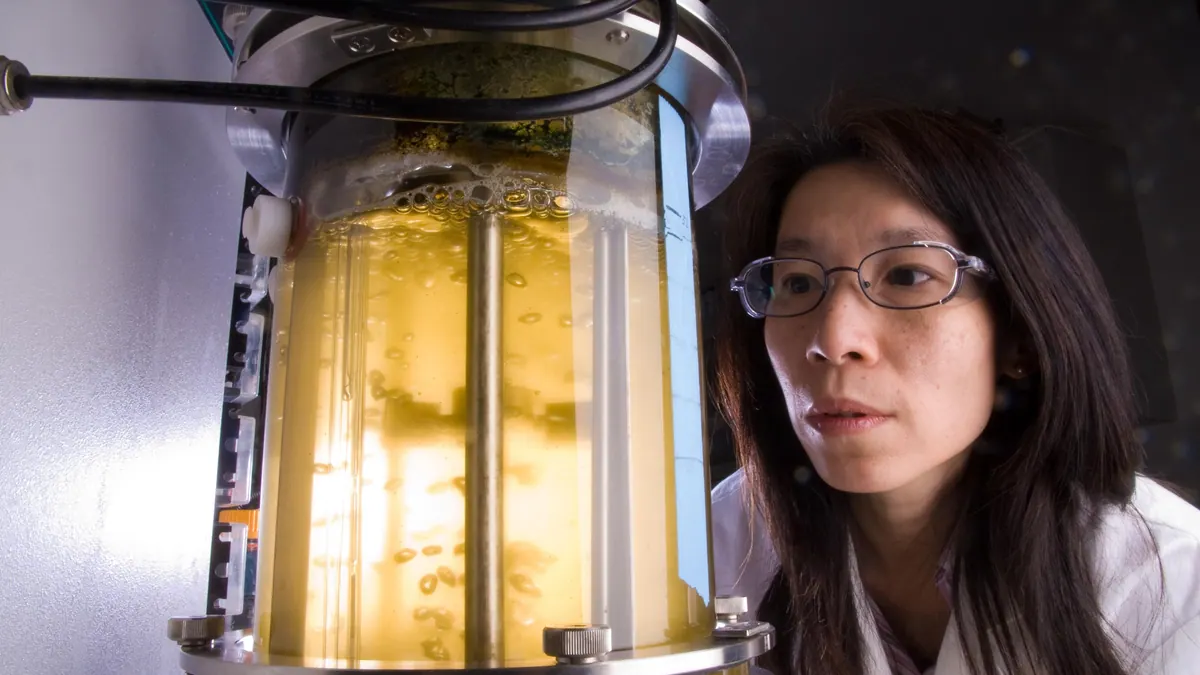

Electrochemistry and methane fermentation have a common denominator: the flow of electrons. Electroactive bacteria can donate electrons to an electrode or take them from it, which opens the way to generating current, hydrogen or supporting methane production. It is a fascinating field, but still mainly a research one.
Electroactive bacteria and electrodes
Some microorganisms (e.g. of the genera Geobacter or Shewanella) can pass the electrons produced during the oxidation of organic substances to an external conductive surface. This happens through direct contact, conductive appendages or redox shuttles. Microorganisms on the anode oxidise organic compounds and release electrons, and on the cathode others (including hydrogenotrophic methanogens) can take up these electrons in order to reduce CO₂ to methane or protons to hydrogen.
MFC and MEC
- MFC (Microbial Fuel Cell) — electrons from the anode flow through an external circuit to the cathode, where oxygen is reduced. The gain is electric current, usually of low power density.
- MEC (Microbial Electrolysis Cell) — a small voltage, of the order of 0.2–1 V, is applied to the circuit (much less than for water electrolysis, which theoretically needs more than 1.2 V and markedly more in practice). Hydrogen or, under suitable conditions, methane forms at the cathode.
The difference is fundamental: an MFC generates energy, while an MEC consumes little of it in order to obtain a fuel. This should not be confused with classical water electrolysis or with power-to-gas technology, in which the hydrogen comes from an external electrolyser.
AD-MEC: electrodes in the digester
In an AD-MEC system (anaerobic digestion coupled with a microbial electrolysis cell), the electrodes are located in the digestion chamber itself. The assumption is that the cathode supplies electrons and hydrogen consumed by hydrogenotrophic methanogens, and the electrodes support electron transfer in a similar way to the conductive materials described in the article on DIET with biochar and magnetite. In theory this may increase the rate of acid degradation, stabilise the process under overload and improve the methane share in the biogas. The roles of methanogens are described in the article on acetoclastic and hydrogenotrophic methanogens.
What research shows
In laboratory and pilot reactors, faster start-up and recovery after overload, a higher methane share in the biogas and, in some systems, a reduction in volatile acid concentration have been reported. The results are, however, highly varied and depend on the electrode material, voltage, substrate type and configuration. Most studies were carried out on model substrates or wastewater, not on the typical mix of an agricultural biogas plant with silage and slurry, and the duration of studies is sometimes short.
Scale-up problems
- Electrode cost. Materials with good properties (carbon, stainless steel, platinum as a catalyst in some systems) are expensive per large surface area.
- Surface area. The reaction rate is proportional to electrode surface area, and a large-volume digester would require a great deal of it.
- Current distribution. In a large tank it is hard to ensure the same potential across the whole surface; electrolyte resistance increases with distance.
- Corrosion and fouling. Slurry, hydrogen sulphide and biofilm settle on the electrodes and reduce efficiency.
- Mixing. Electrodes conflict with the design of agitators and the servicing of tanks.
- Safety. Additional cables and power supply in an explosion hazard zone require documentation and solutions compliant with explosion protection requirements.
Technology maturity
Bioelectrochemical technologies have a low to medium TRL: the operating principle is confirmed, pilots exist mainly in wastewater, and as of the date of this entry we know of no commercial deployments at the scale of a typical agricultural biogas plant. This is an honest assessment, not criticism: many technical solutions have gone down this path. Maturity assessment is discussed in the guide How to assess a new technology.
Curiosity or direction
For the operator of an agricultural biogas plant, electro-fermentation is today a curiosity: there is no ready offer, doses or references, and simpler ways of improving stability (load control, trace elements, mixing) are cheaper and better described. It may become a direction if data appear from full-scale installations on agricultural substrates, a documented energy balance and design solutions for the electrodes. Until then it is worth following the literature and possibly supporting research, rather than buying ready-made installations. Information on hydrogen from biomass is contained in the biohydrogen section, including the article on electrolysis versus biohydrogen.
How to follow developments
It is enough for the operator to watch a few things: whether publications appear from reactors with a volume of at least a few cubic metres, whether studies concern agricultural substrates, whether an energy balance is given that includes the power supplied to the electrodes, and whether anyone has documented electrode lifetime in slurry. As long as these data are lacking, it is more sensible to invest in process control, instrumentation and good laboratory analysis than in solutions at the research stage.
Sources
Related articles