
Biogas plant operating procedures in winter conditions: an operator's guide
Winter changes the heat balance, substrate logistics and the risk of freezing in the installation. The guide describes what to include in a biogas plant's winter procedures and how to verify them.
Other language versions: Polski, Deutsch, Español, Français, Italiano, Nederlands.
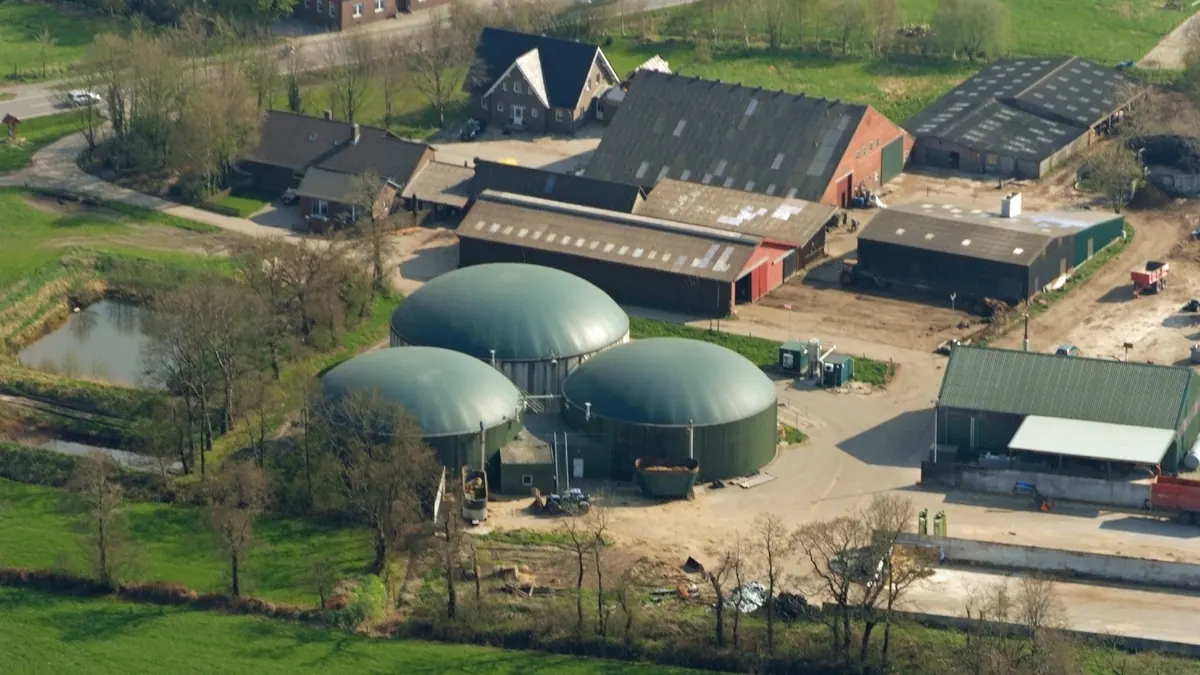
A winter procedure is a set of defined activities and checks that protects a biogas plant against typical winter problems: a drop in process temperature, freezing of the installation, difficult substrate logistics and hazards to people. An effective document is not a general appeal to "be careful in winter", but a list of tasks with an assigned owner, a deadline and a way of confirming completion.
1. Heat balance and process temperature
In winter, heat losses through the walls and roof of tanks rise, and the feed is sometimes colder than in summer. At the same time part of the heat from the CHP is absorbed by the plant's own heating, so the reserve of thermal capacity is smaller. What to include in the procedure:
- The target temperature of the digesters and permissible deviations (mesophilic operation tolerates fluctuations of a few degrees over a day, thermophilic much less so).
- Measuring the feed temperature before it is fed in, if the substrate lies outside (frozen silage, manure with lumps of ice).
- The rule that cold feed is fed in portions and evenly, not in a single large dose.
- Checking the insulation, doors and manholes, and the condition of heat exchangers and circulation pumps.
The heat energy balance is described in more detail in the article on waste heat from CHP and seasonality.
2. Freezing of fittings and condensate
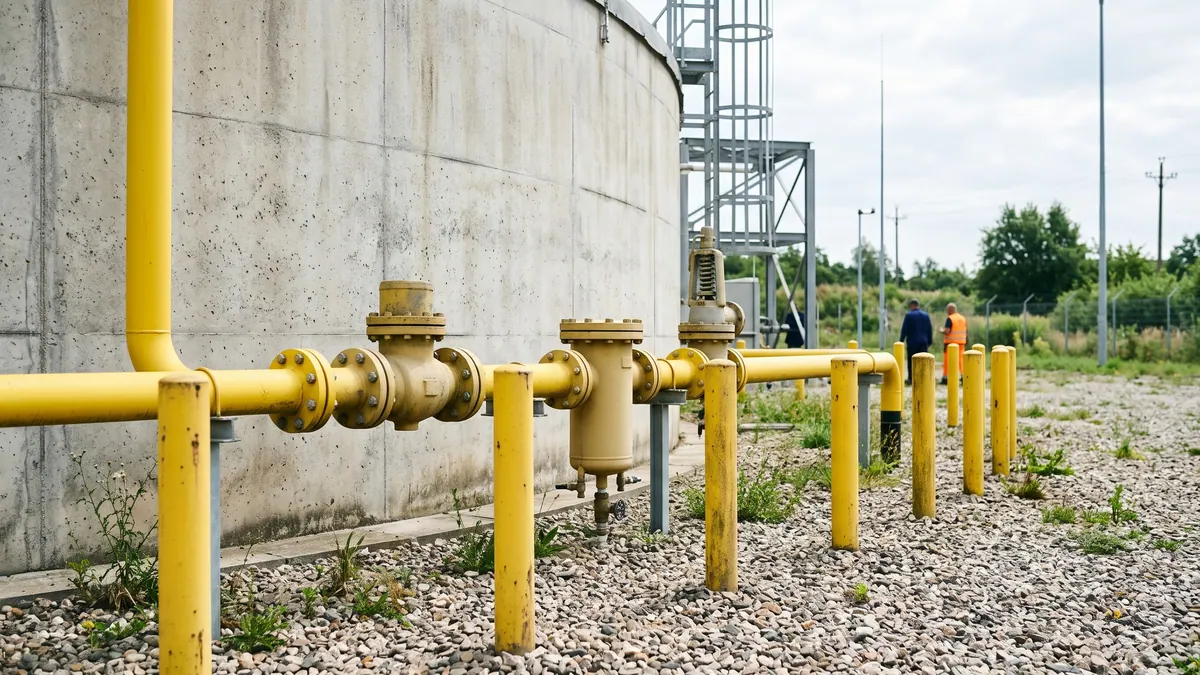
Biogas is moist, so condensate forms in gas lines. In winter, freezing can block drains, condensate wells, valves and impulse lines. The consequences are false pressure readings, blocked safety valves or gas flow, and incorrect operation of safety systems. In the procedure include:
- a list of critical points (drains, pressure indicators, safety fittings, foam systems and pumps outside),
- the method of insulation and anti-freeze heating and how it is checked,
- the frequency of rounds at night and on days of severe frost,
- a rule that safety-system faults are reported at once to the person responsible for operations.
Work on gas systems and in explosion-hazard zones is carried out only by authorised persons in accordance with the plant's instructions and the explosion protection document. The general principles are described in the article on ATEX in a biogas plant.
3. Logistics and preparation of substrates
- Storing silage and manure so as to limit freezing of the clamp or heap (covering, windbreaks, setting aside a stock "close by").
- A plan for snow-blocked roads and unloading: clearing and gritting access roads, designating a turning area for vehicles.
- Checking frozen lumps before they go into the feeder, so as not to damage agitators and augers.
- Reserve stocks of substrate in case of snowed-in roads.
- Adjusting the feeding schedule to the actual feed temperature.
4. Membrane tanks and snow
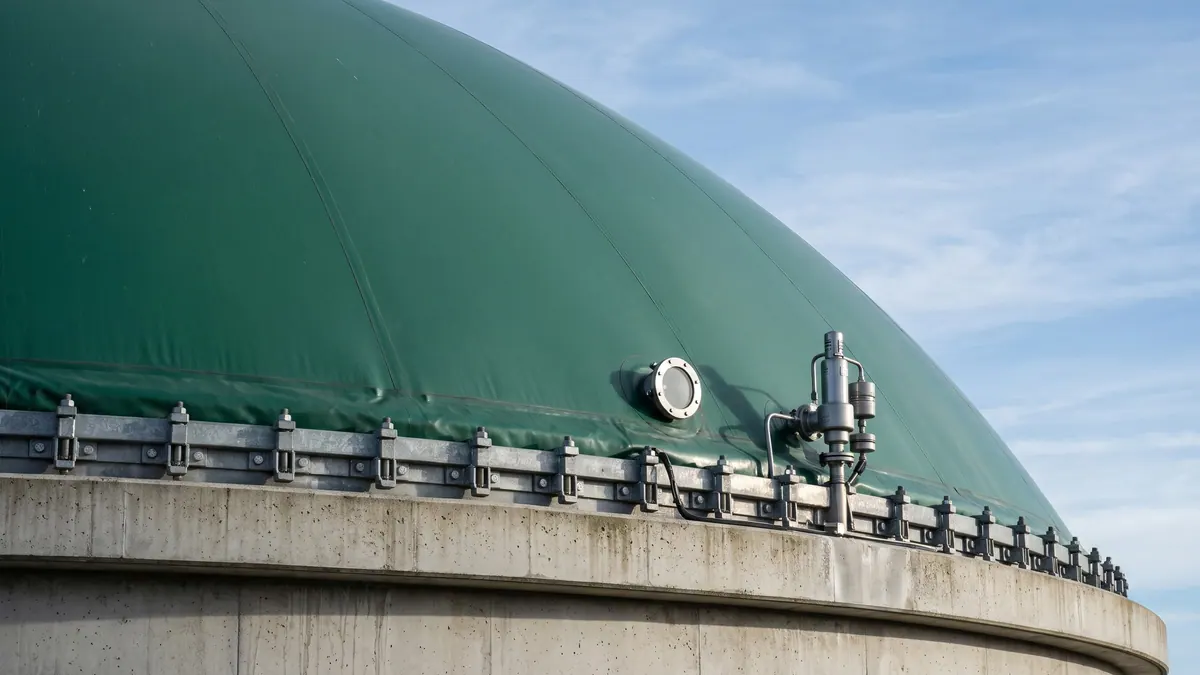
On tanks with a membrane roof, snow and ice change the load on the roof and can hinder the operation of the system inflating the outer membrane. The procedure should specify who assesses the snow cover and when, how it is to be removed safely (without walking on the membrane and without sharp tools) and what pressure and inflation parameters are to be maintained in line with the manufacturer's instructions. More details in the article on biogas storage with a double-membrane roof.
5. Power supply and failures
In winter a power failure is particularly dangerous, because mixing and pumping are lost, and depending on the heat source, heating too. The plan should include emergency power for safety systems and automation, a procedure for operating without electricity and a list of emergency numbers. See biogas plant emergency plan.
6. Occupational safety
- Slippery surfaces, stairs and walkways: gritting, lighting, footwear with a suitable sole.
- Falling icicles and snow slides from roofs and tanks: designated exclusion zones.
- Lone working: a rule of making contact at set intervals.
- A cold environment and gas detection equipment: checking detector operation at low temperatures according to the manufacturer's instructions, including whether the sensor's operating temperature range matches conditions on site (some sensors require a cover or heating).
7. The role of people and communication
The best procedures fail if people do not know them. Before the season, discuss with the team who is on duty at weekends and on public holidays, how quickly alarms should be responded to and whom to call if fittings freeze or the power fails. Establish who has the right to stop feeding or shut down the engine unit in a hazardous situation. Make sure that the telephone numbers of service engineers, the grid operator and the emergency services are visible in the control room and available to the duty staff. A good practice is a short exercise on the scenario "night, frost, no power": it makes it possible to check whether emergency power works, whether everyone knows the order of actions and whether the contact list is up to date.
8. Review after the season
After winter, analyse the records: which elements froze, where the process temperature fell the most, how often snow required intervention and whether any point of the procedure turned out to be unworkable. Make corrections to the document and record the date of their approval. This way the next season starts with better procedures, and knowledge does not depend on the memory of individuals.
Seasonal checklist (to be adapted to the site)
| Area | Check question | Responsible | Deadline |
|---|---|---|---|
| Heating | Have circulation pumps and exchangers been checked before the season? | operations manager | before the first frosts |
| Condensate | Do drains and outdoor fittings have protection against freezing? | service | before the season, then during frosts |
| Substrate | Is the stock of feed protected against freezing? | logistics | weekly |
| Membrane | Is snow assessed and removed in line with the instructions? | operations manager | after snowfall |
| Power supply | Does the emergency power for safety systems work? | electrician | before the season |
| OHS | Are walkways cleared of snow and gritted? | everyone | daily |
Records and learning
A procedure without a record becomes a declaration. Record temperatures, failures, frozen elements and interventions, because after the season they make it possible to improve the plan. Before each winter, run a short training session with new people and remind the whole team of the rules. Treat the winter document as a supplement to the plant's operating instructions and risk assessment, not a substitute for it.