
Safety and ATEXAnalysis
Starting a cold gas engine: control sequence and conditions for a safe start
What conditions the controller checks before starting a cold biogas engine and why: lubrication, purging, gas path tightness, gas quality and load ramp-up.
Other language versions: Polski, Deutsch, Español, Français, Italiano, Nederlands.
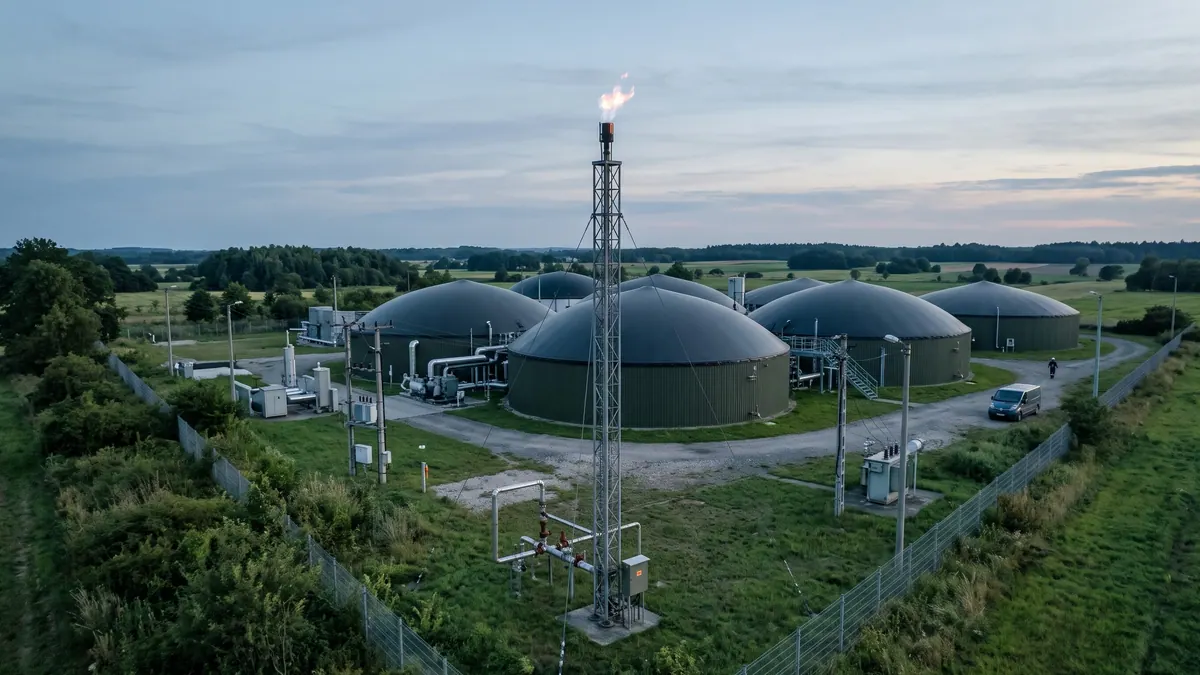
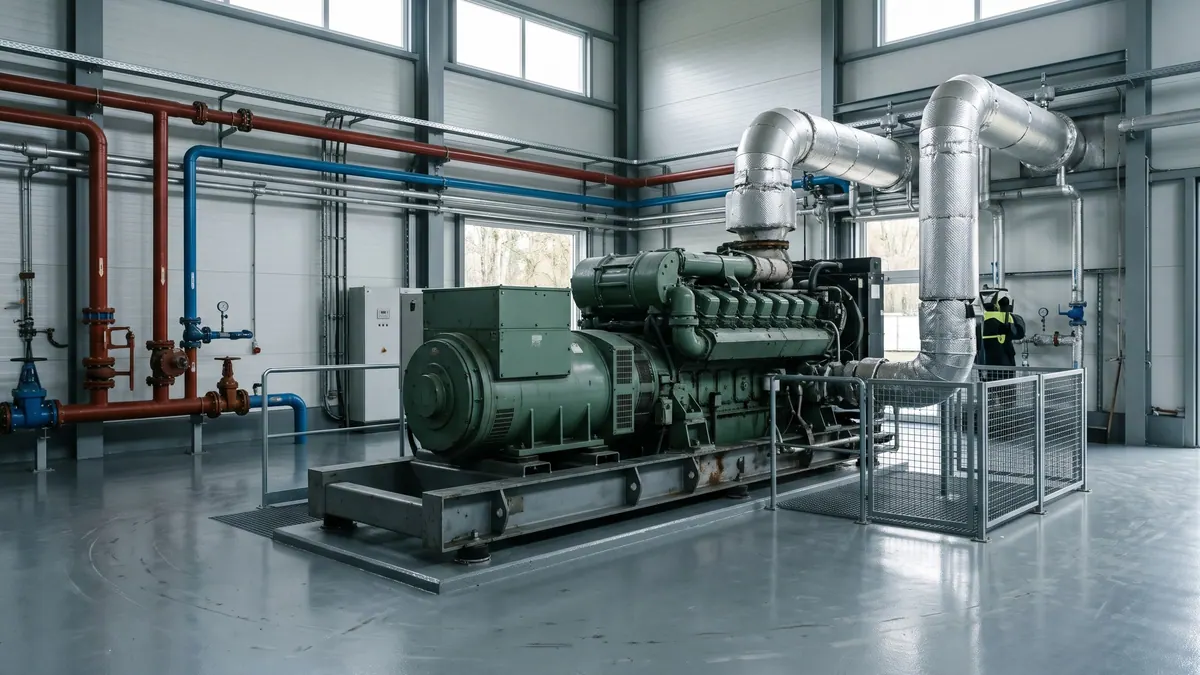
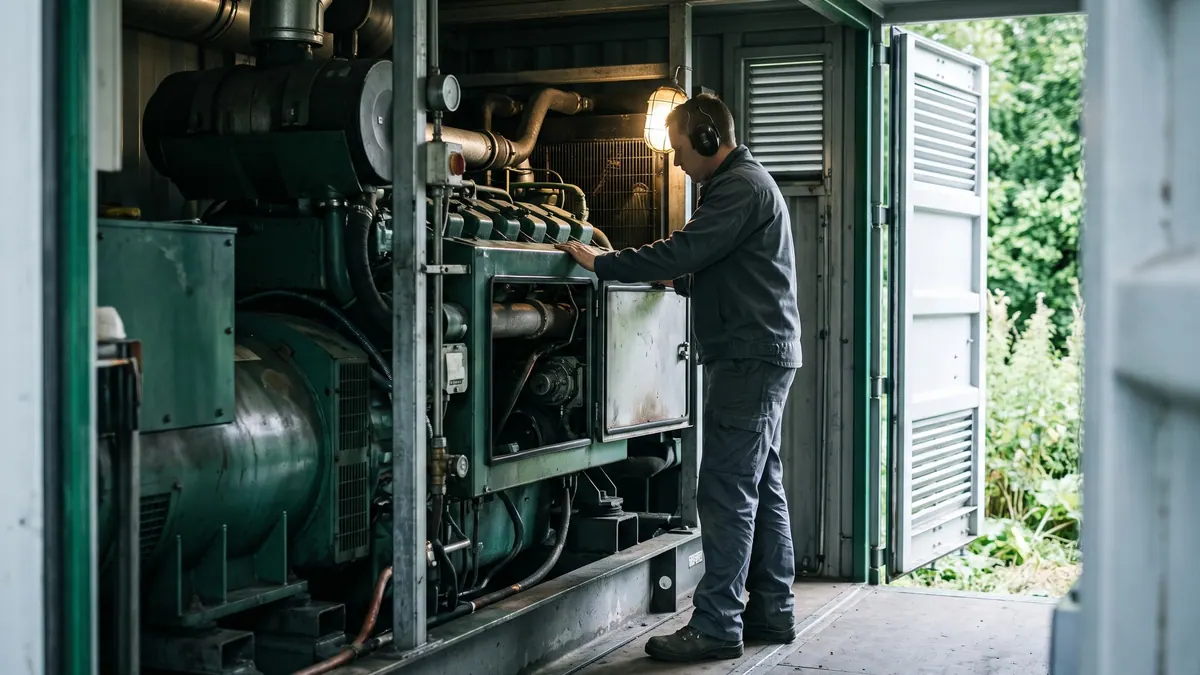
Starting a cold gas engine fuelled by biogas is a strictly defined sequence in which the controller first checks the safety conditions, then prepares the engine (lubrication, heating, purging), and only then opens the gas and ignites the mixture. After the start, the load rises gradually as the temperature rises. The principles below describe the logic of a typical sequence; the exact parameters, order and settings follow from the manufacturer's instructions and the plant's documentation, and commissioning work is a task for authorised personnel. This is not an instruction for independent action.
Why a cold start is special
At low temperature the oil is thicker, the clearances differ from those in the operating state, and the mixture ignites less readily. Biogas is also a moist gas and contains impurities (hydrogen sulphide, siloxanes), so on cold surfaces water condenses with dissolved acidic compounds. The controller therefore aims to reach operating temperatures as quickly as possible without a large load, and before the start the coolant and oil are often pre-heated. The effect of the gas on wear is described in the topics on hydrogen sulphide and on the servicing of CHP engines.
Typical logic of the sequence
| Stage | Purpose |
|---|---|
| Checking start conditions | No active alarms, availability of power, adequate gas pressure, state of the safety switches |
| Temperature check and pre-heating | Coolant and oil within the range that permits a start |
| Pre-lubrication | Oil pressure before turning |
| Gas path tightness test | No leaks through the shut-off valves |
| Ventilation (purging) of the engine and exhaust system | Removal of any residual gas before ignition |
| Cranking | Driven by the starter motor |
| Opening the gas and ignition | Checking that ignition occurred in the set time |
| Stabilisation and synchronisation with the grid or an island system | Matching voltage, frequency and phase |
| Load ramp-up | In line with temperatures and the manufacturer's curve |
What is checked from a safety perspective
Tightness of the gas path. The shut-off valves are usually double, with the possibility of checking tightness. If a valve leaks, gas may enter the engine before ignition is ready.
Ventilation before ignition. The aim is to remove unburned gas from the combustion chamber and exhaust system. Gas in the exhaust system is dangerous, because any ignition can damage the system and endanger people. The controller therefore monitors the time and conditions of purging and limits the number of failed attempts.
Gas quality and pressure. The controller compares the composition and pressure with the permissible range. Too low a methane content (see variability of biogas composition) causes ignition problems, and the presence of air or impurities affects safety and wear.
Ventilation and detection in the room. The engine room has ventilation and gas detectors, and a fault in them prevents a start. The explosion-hazard zones and the requirements for equipment follow from the explosion protection document; see ATEX in a biogas plant.
Emergency system. The emergency stop button, shut-off valves on the gas side and overspeed protection are machinery safety requirements (Directive 2006/42/EC) and must not be bypassed.
Load ramp-up
After ignition the engine first runs at idle or with a small load, and then the controller increases output according to the manufacturer's curve. The load is limited until the water and oil temperatures are reached, because operation at full load of a cold engine increases wear and the risk of knocking combustion, especially when the gas has a low methane number.
Typical causes of failed starts
- Water or oil temperature too low with no pre-heating.
- Gas at too low a pressure or too low a methane content.
- Worn spark plugs or ignition system.
- Gas valves that do not open or do not close.
- Incorrect mixture setting (the result of a change in gas composition).
- Auxiliary power, for example starter batteries weakened by frost.
Rules of conduct in operation
- If the engine does not start, do not retry endlessly; investigate the cause using the controller logs.
- Do not bypass or block safety systems, safety inputs and sensors.
- After a shutdown, overhaul or replacement of gas components, carry out start-up in line with the manufacturer's procedure and by authorised persons.
- Before winter, check the pre-heating, batteries, oil, room heating and the operation of detection.
- Keep a log of starts and events that makes it possible to catch growing problems.
The winter heat balance affects the readiness of the system to start (engine pre-heating draws on the boiler or the network); see Heat balance of a biogas plant in winter.
What the operator can observe without interfering with the system
The operator does not change safety settings, but observes whether the sequence proceeds as expected: the pre-heating time, oil pressure before turning, time to ignition, stability of speed after the start and the rate at which temperatures rise. Deviations from the usual course (longer pre-heating, several start attempts, speed fluctuations) are information for the service, even if the engine eventually started. A good practice is to compare records from several winter days and report the trend before a failure stops the unit.
Why not to shorten the sequence
The temptation to shorten the purging or pre-heating time appears when the unit has to return to operation quickly, for example after a grid failure. Shortening these stages increases wear and the risk of unburned gas in the exhaust system, and in an extreme case endangers the safety of people and equipment. The solution is rather to maintain pre-heating, which shortens the readiness time without interfering with the safety systems, and auxiliary power for the controls. Any changes to the sequence, settings and sensors are made only by authorised service in agreement with the manufacturer.
Sources
Questions and answers
Can you repeat start-up after a failed attempt?
The number of attempts is limited by the controller and the manufacturer's instructions; after a failed attempt the cause must be removed. Excessive repetition causes unburnt gas to enter the system.
Why should an engine not be loaded straight after starting?
A cold engine has incorrect clearances and oil viscosity, and in cold places of the exhaust water vapour condenses with acids, which accelerates corrosion and wear. The controller permits loading only after the required fluid temperatures have been reached.
Related articles