Tanks and membranesGuide
Membrane roof inspection: visual checks, measurements and inspection schedule
A membrane roof ages gradually, and failures are usually preceded by visible symptoms. We provide a checklist, rules for a defect register and escalation criteria.
Other language versions: Polski, Deutsch, Español, Français, Italiano, Nederlands.
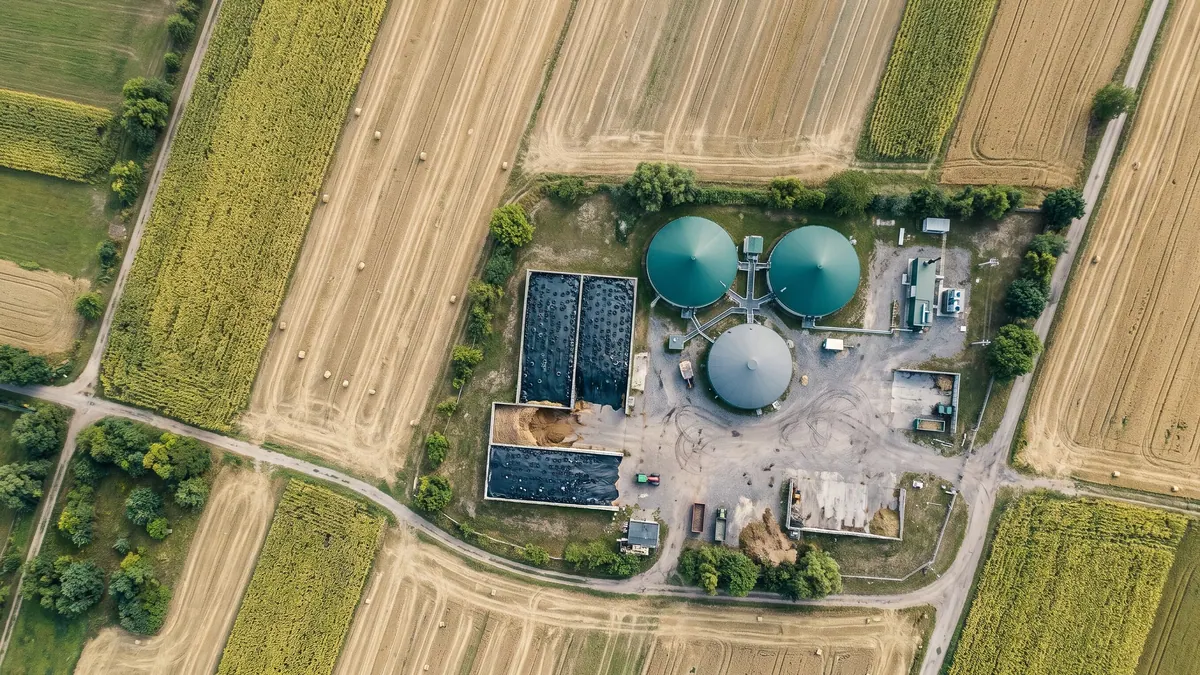
A membrane roof is an element that the operator sees every day, and yet damage is often noticed too late. A good inspection does not require expensive equipment, only a fixed checklist, repeatable dates and a register that makes it possible to compare the condition with the previous season. Below we propose a scope of inspection that can be adapted to your own installation and to the instructions of the system manufacturer.
Three levels of inspection
| Level | Frequency | Who | Scope |
|---|---|---|---|
| Walk-round | daily | operator | roof shape, blower sounds, smell of gas, water or snow on the roof |
| Review with a checklist | monthly | operator or technician | perimeter, penetrations, pressure valves, condensate, condition of safeguards |
| Detailed inspection | at least once a year | specialist with qualifications and equipment | full external and internal inspection, measurements, documentation |
It is good to schedule the detailed inspection for spring, after the frost period, and to repeat it after extraordinary events such as a storm, hail, heavy snowfall or overflow.
External inspection checklist
Examine the roof surface, preferably when there is no wind and the gas pressure is moderate. Pay attention to:
- Creases and folds that persist at different fill levels, because the material becomes fatigued there.
- Abrasion and rubbing at points of contact with ropes, the supporting structure and the wall edge.
- Welds: separation, wrinkling, blisters, colour change.
- Coating degradation: chalking, cracks, places of exposed fabric. UV radiation ages the surface over time, especially in places with strong sunlight.
- Standing water or snow, which load the membrane unevenly and increase the risk of abrasion.
- Perimeter and penetrations: corrosion of bolts, cracked gaskets, loose bands.
- Pressure-vacuum valves: free passage, condition of the sealing liquid or seals, cleanliness of the openings.
Inspection from the inside and from the inter-membrane space
In a double-membrane roof the outer membrane is held in shape by air supplied by a blower. The content of this space is a simple indicator: if the inner or outer membrane is leaking, the blower runs more often or longer, or the pressure falls faster. It is therefore worth recording the blower running time in hours per day and comparing it with the temperature and wind. A steady increase in running time without a change in conditions is a signal for inspection.
Inspection from the inside (the inner membrane, from the gas side) is possible only with the tank emptied and inerted and is subject to the regulations on work in confined spaces; it is not planned for everyday use but for major overhauls. At every entry, ensure a procedure, safety rope arrangements and atmosphere measurement.
Measurements and leak detection methods
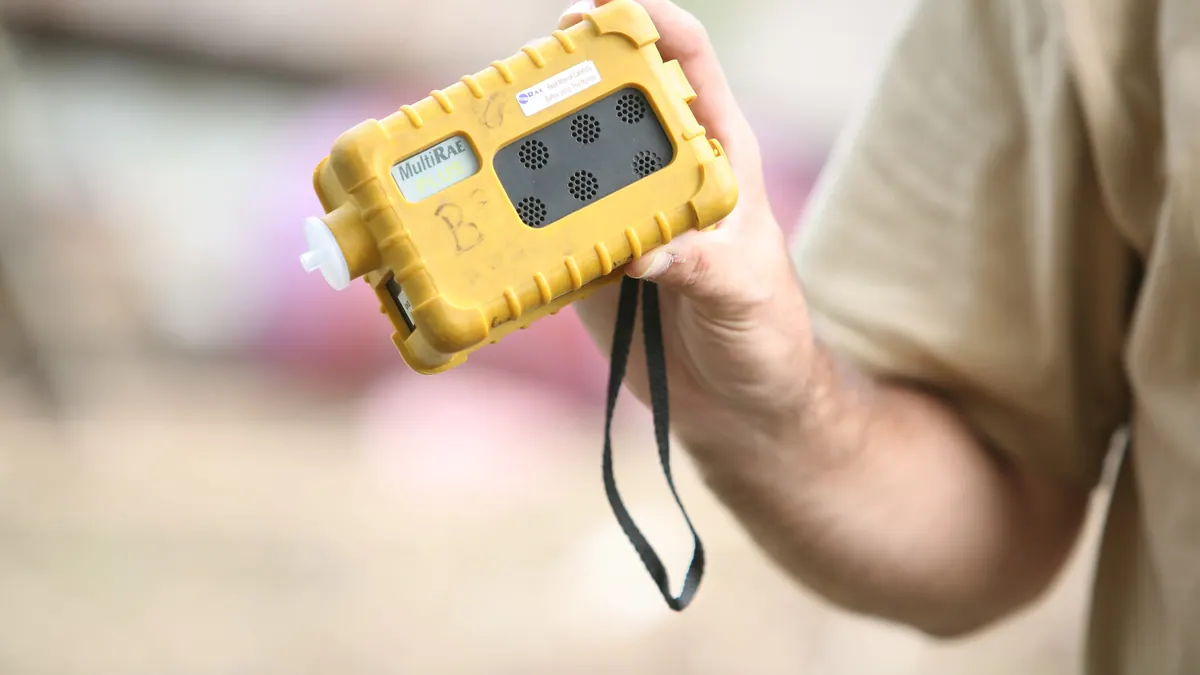
Visual checks are supplemented by measurements: a methane detector at the perimeter and penetrations, sometimes a gas imaging camera or a foaming solution at small suspicious spots. Leak detection methods and inspection programmes are described in separate articles, including on optical gas imaging and on the leak detection and repair programme. What matters here is that a measurement result should always be linked to a location on the roof and a description in the register.
Defect register and escalation criteria
For each entry the register should contain: the date, the location (for example on a roof diagram divided into sectors), a photograph, a description, an assessment of severity and a decision. A simple three-level scale is useful:
- observation, when the change is cosmetic and is to be checked at the next inspection;
- planned repair, when the damage is growing or concerns a weld but does not cause a current leak;
- urgent repair, when a gas leak, a tear or loss of roof stability has been detected.
It is determined in advance who decides on limiting the operation of the tank or stopping the installation, and within what time. In the event of a gas leak the rules of conduct follow from the emergency plan and the explosion protection document.
First inspection after installation and after winter
Special attention is worth paying to the first season after installation or replacement of the roof. During this time the material settles, and the fasteners and gaskets lose their initial pressure, so it is good to plan an additional perimeter check after several months of operation and after the first winter. The photographs and values recorded then, such as blower running time, become a reference point for all later comparisons. The rules of wind and snow loads are described in the article on wind, snow and ice and the membrane roof, and the procedure in case of an incident in the entry on the emergency plan of a biogas plant.
How to put this into the schedule
The roof inspection can be combined with inspections required for the facility and the installation, for example with the technical inspection and the inspection of pressure equipment, but the scope of inspections should be set individually, on the basis of regulations and insurer requirements. For the operator the most important thing is that the inspection has a fixed date in the calendar and that the conclusions from the previous year are checked at the next inspection. This makes it visible whether a crease or abrasion is growing or is stable, and repair decisions are based on data, not on impressions.