

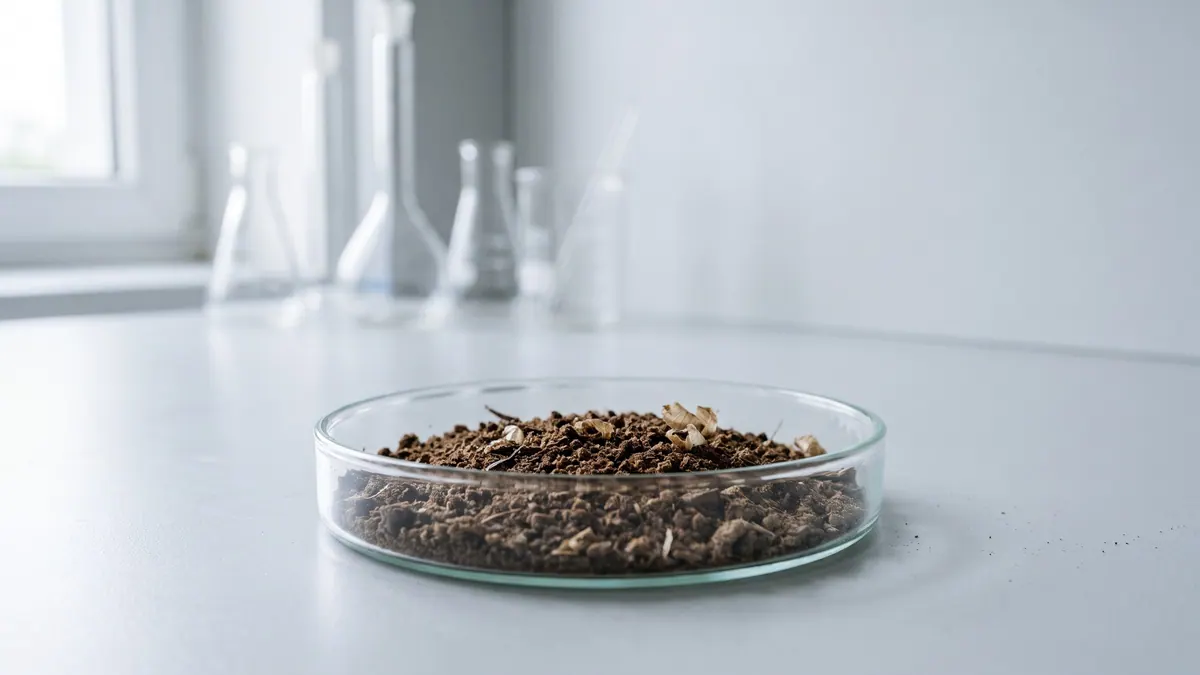
BMP testingAnimal excreta (slurry, manure, poultry litter)single study (2 samples)
Insect frass — BMP: 2 studies, weighted mean 244 m³ CH₄/t VS
Frass from Hermetia illucens (BSF) larvae gave 201-287 m³ CH₄/t VS from six samples in one publication, i.e. results close to animal excreta, with attention to a high nitrogen share.
Illustration: FeedstockData (AI, Google Gemini)
- Weighted mean
- 244m³ CH₄/t VS
- Range
- 201–287m³ CH₄/t VS
- Records
- 2single study (2 samples)
- Publications
- 1source
- Temperatures
- —of the test
Methane in biogas
Medium methane content · ≈ 5.5 kWh/m³ of biogas
estimate from the substrate type The collected studies contain no measurement. The interval follows from the approximate composition (nitrogen-rich (process classification)) and the yields of compound groups according to FNR.
Rating for biogas plants
not rated — editorial rating for biogas plants
Not rated: no dry matter or volatile solids in the data. We calculate the rating when the dry matter and volatile solids of the material are known.
Add to the co-digestion calculator CSV data
BMP curves from 2 studies
Weighted mean Individual records
Dashed lines are a model curve (first-order kinetics, B(t) = B₀·(1 − e−kt)); the end point comes from the publication. All curves are model curves.
Cumulative methane production over the test [m³ CH₄/t VS]. The thick line is the weighted mean of all records (244); dots mark the end values given in the publications. Point at the chart to read values; click a legend item to hide or show a record.
Records and sources
Download CSV| Source | BMP m³ CH₄/t VS | Temperature | Sample | Curve |
|---|---|---|---|---|
| Wedwitschka et al. (2023) · 1 DOI | 201 | — | Hermetia insect frass, sample with the lowest SMY (of 6) | end point (model curve) |
| Wedwitschka et al. (2023) · 2 DOI | 287 | — | Hermetia insect frass, sample with the highest SMY (of 6) | end point (model curve) |
| Weighted mean | 244 | arithmetic mean 244, SD 61 | ||
Process properties
Low confidence: the description is based on general characteristics of the substrate group, not on studies of this material. Treat it as a hint to be verified.
Advantages
- Methane potential: 201-287 m³ CH₄/t VS: extreme values from 6 BSF samples, similar to animal excreta (Wedwitschka et al. 2023).
- In semi-continuous co-digestion (CSTR), frass from a pilot plant gave 167 m³/t VS with no signs of inhibition by the material (Wedwitschka et al. 2023).
- High organic matter content; heat from the biogas plant can power insect rearing (Wedwitschka et al. 2023).
Drawbacks and risks
- High nitrogen content: it must be taken into account for stable operation (ammonia risk) (Wedwitschka et al. 2023; Chen et al. 2008).
- One publication, 6 samples, identity of the extreme samples unknown; spread over 40% (Wedwitschka et al. 2023).
Co-digestion — what to combine it with, what to watch out for
- combines well
substrates: carbon-rich — e.g. Wheat straw, Maize silage (whole crop), Cereal straw (unspecified), Willow (short rotation), Cardboard and paperboard
A carbon component lowers the nitrogen share in the mixture and reduces the ammonia risk.[1][2]
- caution
substrates: nitrogen-rich — e.g. Pig slurry, Poultry manure, Waste activated sludge (secondary sludge), Chlorella vulgaris, Nannochloropsis salina
Combining with other nitrogen-rich substrates adds up the risk of ammonia inhibition.[2]
Dosing
No source dose limit. The authors point to the high nitrogen content; start from a small share, combine with a carbon component and monitor ammonia and pH.
Introduce gradually, starting with a small dose and monitoring the process (e.g. FOS/TAC, pH, gas composition).
Practical requirements
- BMP test for the specific batch
- Check the legal status of the material (animal by-products)
Sources of the process data
- Wedwitschka, Gallegos Ibanez, Jáquez (2023). Biogas Production from Residues of Industrial Insect Protein Production from Black Soldier Fly Larvae Hermetia illucens (L.): An Evaluation of Different Insect Frass Samples. Processes 11(2), 362
- Chen, Cheng, Creamer (2008). Inhibition of anaerobic digestion process: A review. Bioresour. Technol.
The co-digestion calculator will assess a specific mixture containing this substrate.
What it is and where it comes from
Frass is the excreta of insect larvae together with feed residues, collected in industrial rearing facilities. The study presented concerns black soldier fly larvae (Hermetia illucens, BSF), reared on a large scale as a source of feed protein. Frass is today usually used as a soil additive, and there is little information on its suitability for biogas. The data in the compilation come from a single publication: Wedwitschka, Gallegos Ibanez and Jáquez (2023, Processes). The authors tested six frass samples in BMP tests and gave in the abstract only the range from 201 ± 9 to 287 ± 37 m³ CH₄/t VS. The records in the database are therefore the lowest and highest value from six samples, not two independent measurements, and we do not know which samples stand behind them.
Properties relevant to digestion
According to the authors, frass has a high share of organic matter, and its methane yield is similar to the animal excreta used in agricultural biogas plants (cattle manure, pig slurry). In the experimental part, semi-continuous digestion was also carried out in CSTR reactors with frass from a pilot plant: the yield was 167 ± 15 m³/t VS, i.e. less than in the batch tests, which is typical for continuous operation. The authors did not observe inhibition of the process by the material, but stress that a high nitrogen content must be taken into account for stable operation. High nitrogen means a risk of ammonia, particularly at thermophilic temperature and with a large share in the mixture (Chen et al. 2008).
How to read the spread of results
The difference of 201-287 m³/t (over 40%) comes from six samples, and the abstract does not describe what exactly distinguishes them (larval feed, age of the frass, share of residues). The mean of 244 m³/t is therefore only the midpoint of the interval. A single publication and the absence of information on the identity of the samples mean that it cannot be assessed whether a given batch will be closer to the lower or the upper limit; your own BMP test is needed.
In biogas plant practice
Frass arises near plants producing insect protein, so it may be locally available as a waste, and the authors also point to the possibility of using heat from the biogas plant to heat insect rearing facilities. The source does not give a safe dose limit, which is why the calculator applies no threshold for frass: it is recommended to start with a small share, combine it with a carbon-rich substrate (for example straw) and observe the ammonia concentration and pH. Before accepting a batch, the legal status of the material should also be checked, including any requirements for by-products of animal origin.
Methodology in brief
BMP is the amount of methane obtained from volatile solids (VS) in a batch test, given in m³ CH₄ per tonne of VS (numerically the same as NmL CH₄/g VS in the publications) and converted to normal conditions (0 °C, 101.325 kPa). The weighted mean gives each publication a total weight of 1, split equally between its results for the substrate — a paper testing twenty varieties does not outweigh a paper with a single sample. In inter-laboratory programmes the unit is the laboratory (total weight 1), and within it the weight of a test grows with the number of bottles (replicates). Results after pretreatment (e.g. thermal, chemical, enzymatic) are shown separately and are not included in the mean.
Solid lines are curves measured in the tests. Where a publication gives only the final result, we draw a first-order kinetic model, B(t) = B₀·(1 − e−kt): only the end point comes from the publication, and the shape of the curve serves purely as visualisation — do not read the production on a particular day from it. For this substrate k = 0.393 d−1 was assumed (median of rate constants k reported in the sources and/or fitted to the mean measured curves).
The statistics describe the spread of published results — a descriptive compilation, not a meta-analysis or a guarantee of plant yield.
Bibliography
- Wedwitschka, H.; Gallegos Ibanez, D.; Jáquez, D.R. (2023). Biogas Production from Residues of Industrial Insect Protein Production from Black Soldier Fly Larvae Hermetia illucens (L.): An Evaluation of Different Insect Frass Samples. Processes 11(2), 362. DOI: 10.3390/pr11020362 DOI
All sources of the site: bibliography.
Other substrates in the group “Animal excreta (slurry, manure, poultry litter)”
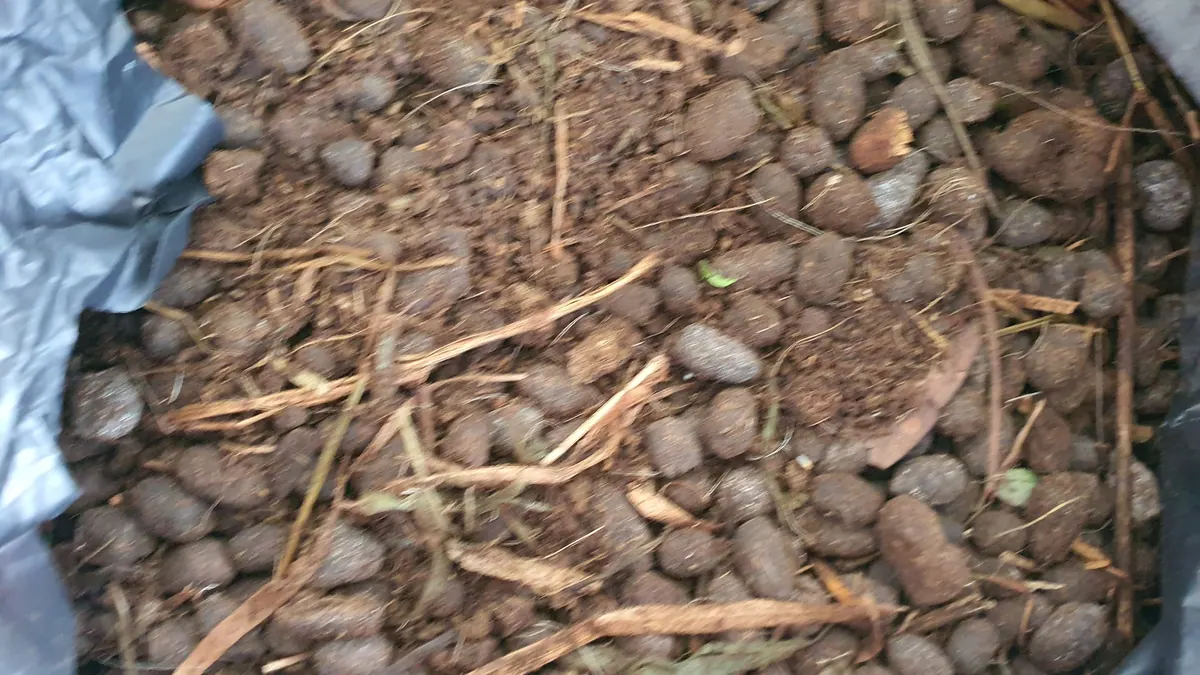
Goat manure — BMP: 2 studies, weighted mean 157 m³ CH₄/t VS
157 m³ CH₄/t VS weighted mean from 2 studies
good — editorial rating for biogas plants≈54 %
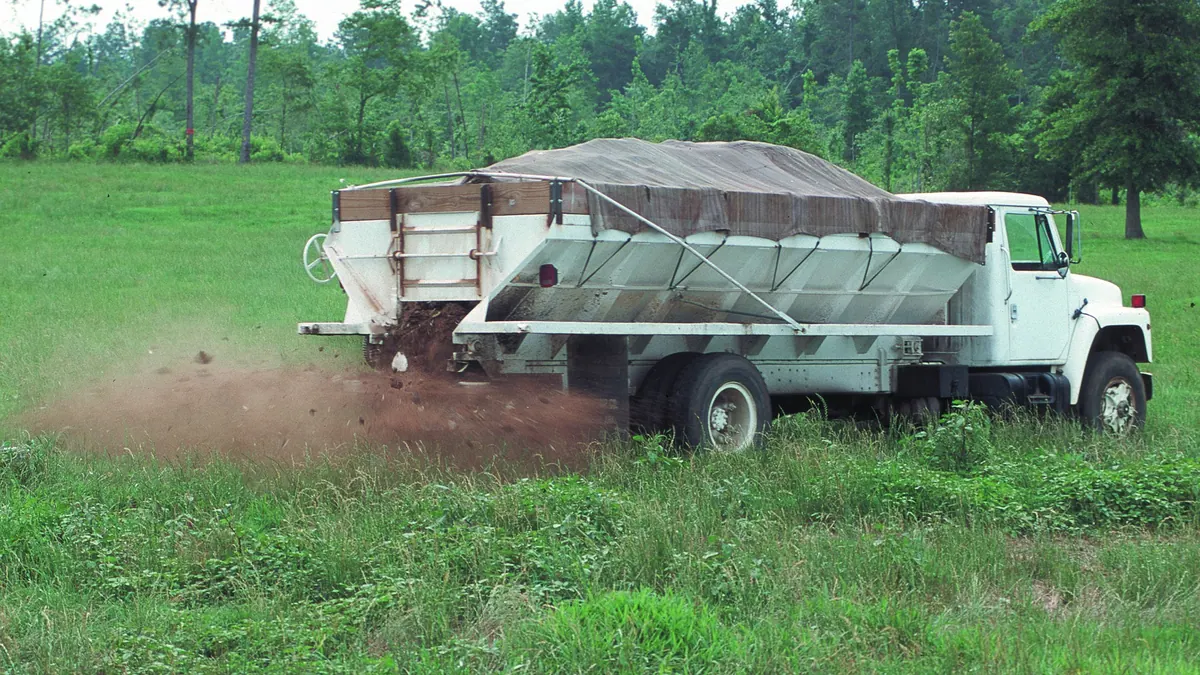
Poultry manure — BMP: 13 studies, weighted mean 214 m³ CH₄/t VS
214 m³ CH₄/t VS weighted mean from 13 studies
neutral — editorial rating for biogas plants≈55 %
Pig slurry — BMP: 15 studies, weighted mean 260 m³ CH₄/t VS
260 m³ CH₄/t VS weighted mean from 15 studies
very good — editorial rating for biogas plants≈55 %
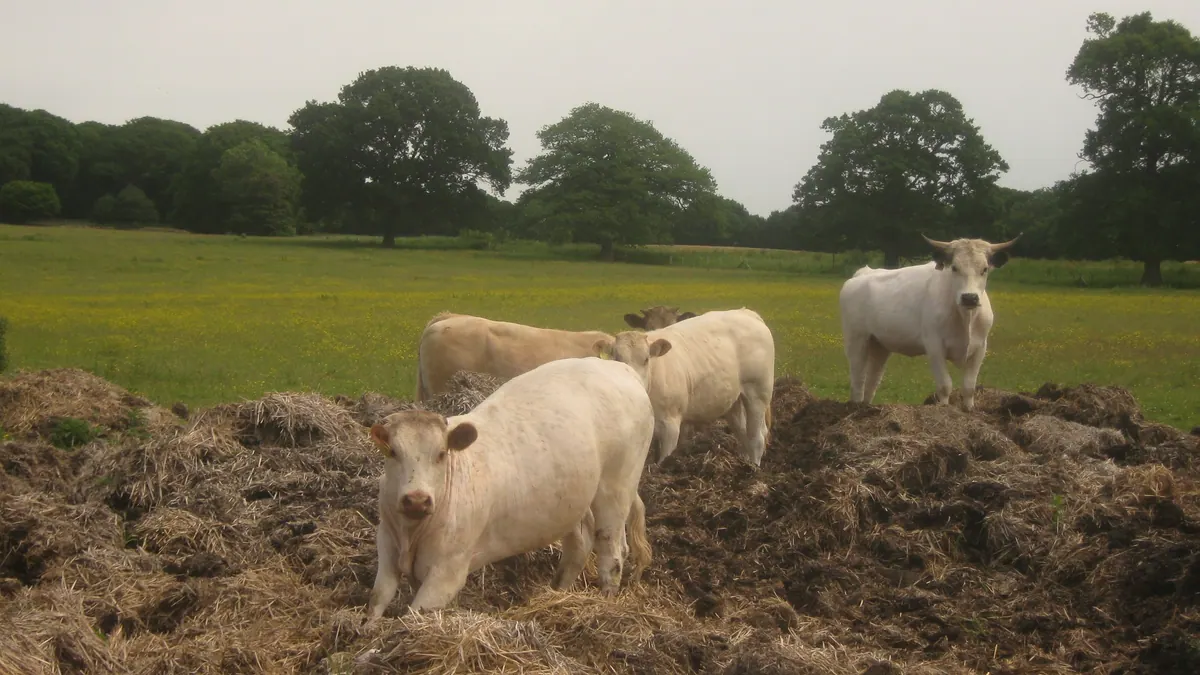
Cattle manure — BMP: 27 studies, weighted mean 149 m³ CH₄/t VS
149 m³ CH₄/t VS weighted mean from 27 studies
good — editorial rating for biogas plants≈52 %