
Cogeneration and enginesAnalysis
Emergency biogas flaring, part 3: a second CHP unit and a microturbine as a consumer of surplus gas
Will a second cogeneration unit or a microturbine reduce flaring of biogas? How it works, when it pays off, and what the data say about efficiency and emissions.
Other language versions: Polski, Deutsch, Español, Français, Italiano, Nederlands.
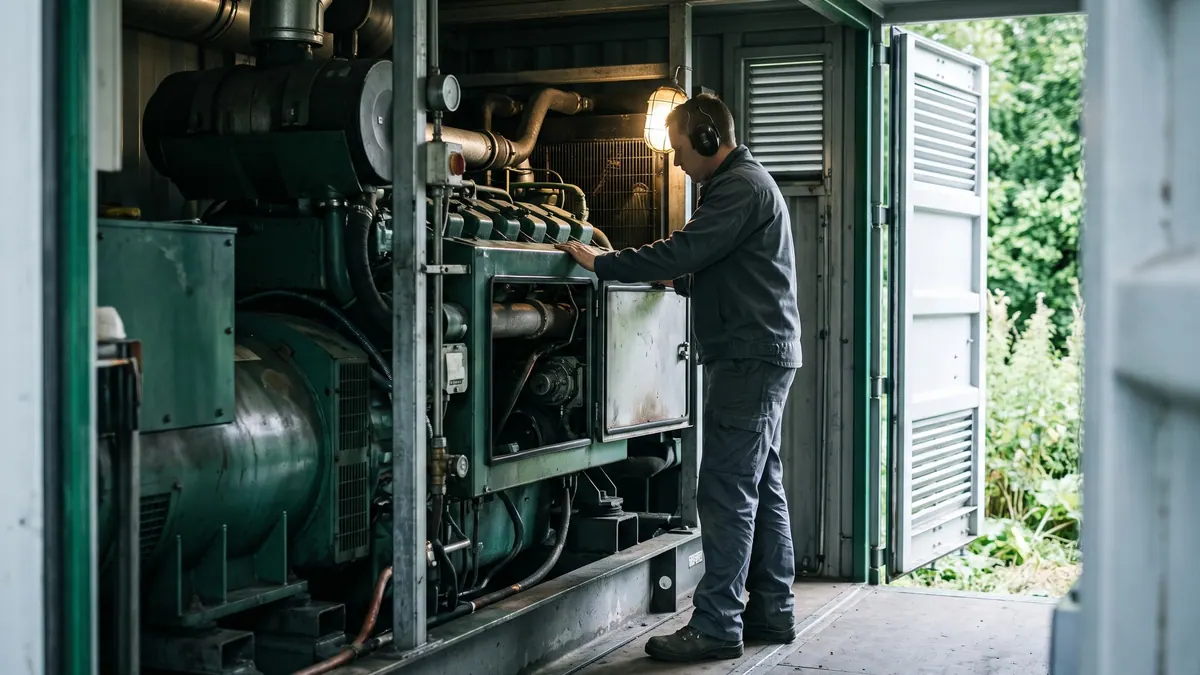
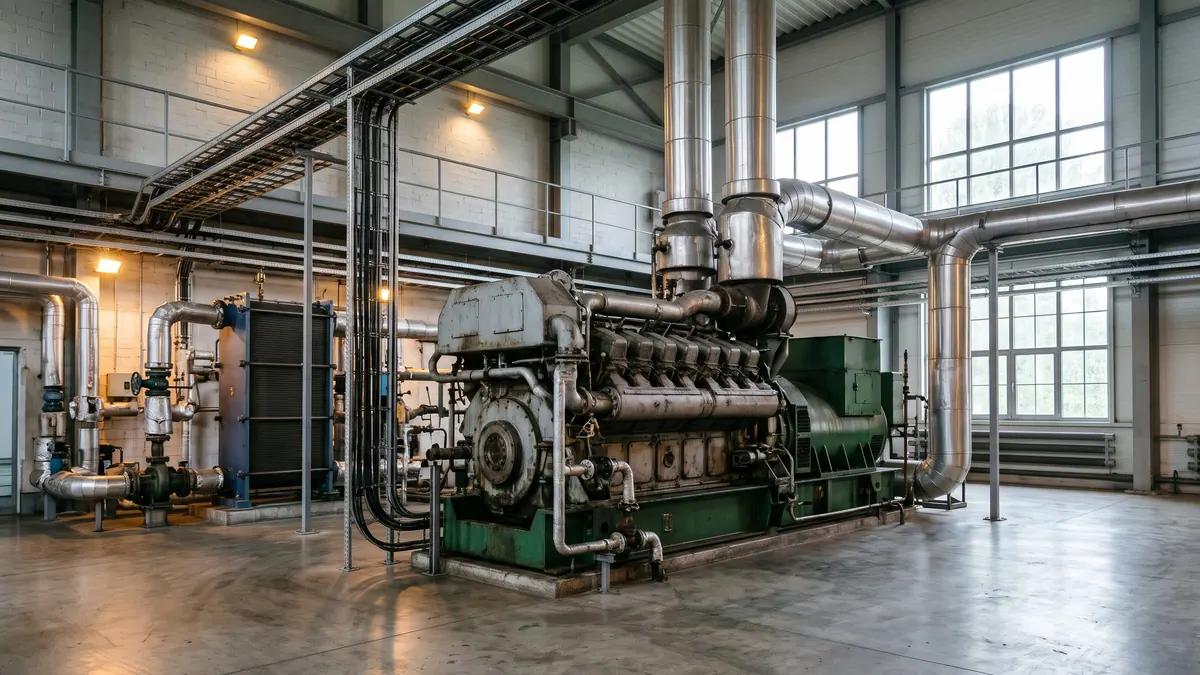
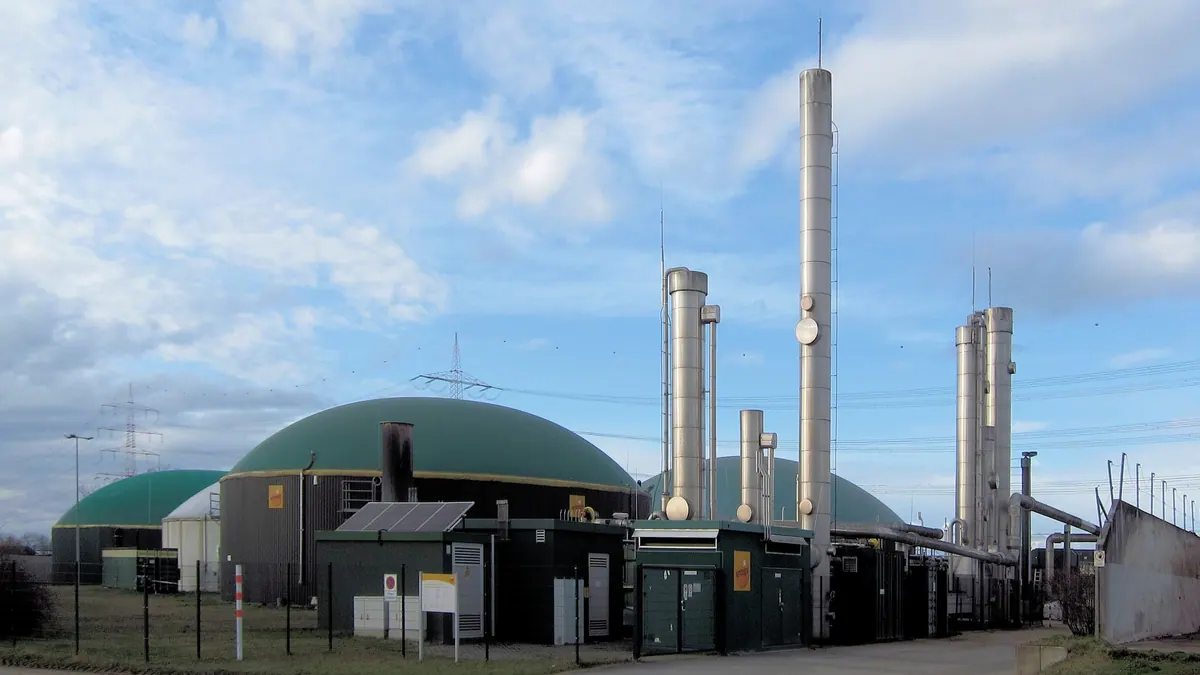
A second cogeneration unit reduces emergency flaring, because it takes over gas when the first one is standing or when production exceeds the capacity of one unit. It does not, however, replace the flare, because the flare is meant to work even when both units fail. This article is part of the series "Emergency biogas flaring"; the context of the requirements is described in part 1, and the types of flares in part 2. The efficiency of engines is discussed in the article CHP engine at a biogas plant: electrical, thermal and total efficiency.
How surplus cogeneration capacity works
There are two arrangements. In the first, the installation has two units, each of which can take over a significant part of the gas. In the second, it has one unit larger than the average production would imply, so that with a constant gas supply it operates with periodic interruptions (in Germany this is called surplus installed capacity in the case of flexible operation). In both cases the aim is the same: to convert the gas into energy rather than burn it to no purpose.
The benefit depends on what part of the flare's operating time results from the unavailability of a unit and what part from production peaks. Data on the operating hours of the flare and the units are worth collecting before the decision. If the flare runs mainly during inspections, an additional unit makes sense. If it runs because of grid constraints or a lack of heat offtake, a second unit will not help.
What the studies say
A German study on the flexibilisation of biogas plants (Schäfer, Britz and Kuhn, 2017) indicates that flexible operation, that is, generating energy on demand, usually requires technical modifications, such as a larger gas store and a higher engine capacity. The authors also analyse an alternative: a reduced digester load, which gives additional store and capacity without capital expenditure, but requires economic compensation. In a parliamentary question in Lower Saxony from 2022 (document 18/11145), members of the state parliament describe that biogas plants with heat offtake are shut down on the instruction of the electricity grid operator (redispatch), and the biogas produced then is sometimes burned in the emergency flare; this is a description contained in the question, not a finding of the government. Conclusion: an additional unit will not suffice if there is nowhere to deliver heat and electricity.
Part-load operation
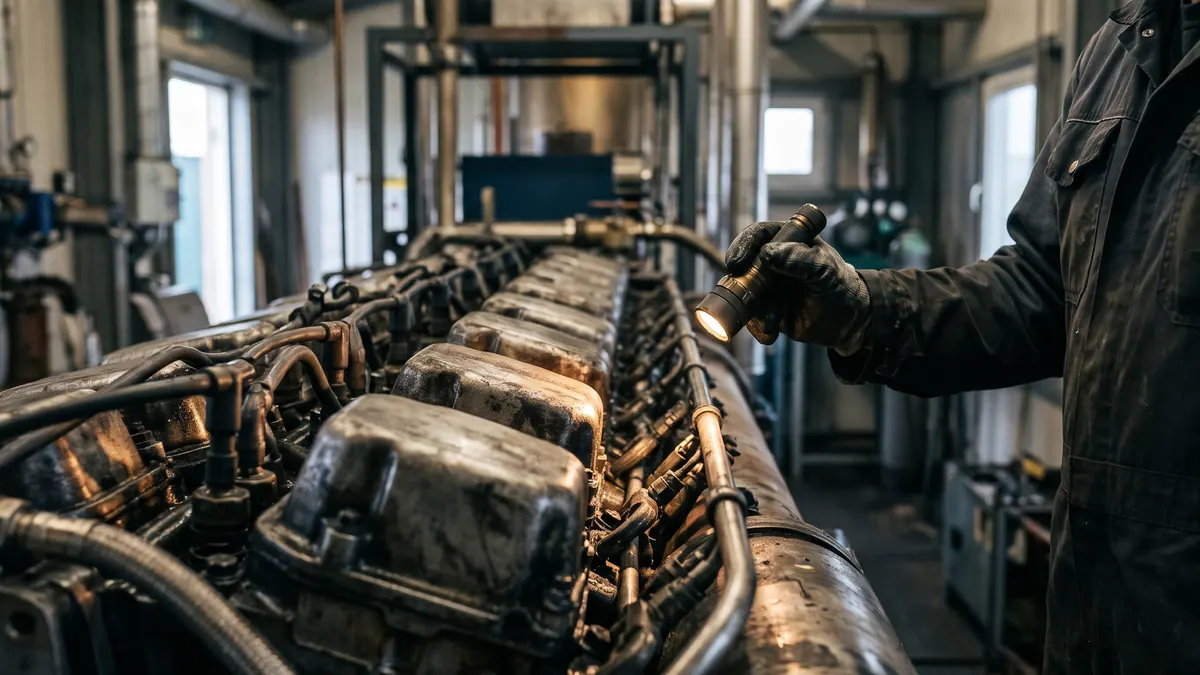
A second unit operating often below nominal capacity has a lower efficiency and a higher unit cost of servicing. The sizing of the two units must therefore be verified in an hourly model: how often both run, how often one, how often none. Sizing capacity to heat demand is discussed in the article Waste heat from cogeneration at a biogas plant, and servicing in the article on servicing gas engines. It is also worth considering common causes of failure: a shared gas treatment system, a shared cooler, shared power supply and control.
Microturbine
A microturbine is a small gas turbine with exhaust heat recovery. Its advantages and disadvantages follow from its construction:
| Feature | Microturbine (according to the EPA catalogue) |
|---|---|
| Electrical efficiency | of the order of 24–31% (LHV) for units of 30–333 kW, rising with capacity (manufacturers' data in the EPA catalogue) |
| Fuels | including fermentation and landfill gas (EPA); the permissible gas composition, including H₂S, is given by the manufacturer |
| Heat recovery | possible; total CHP efficiency in the examples in the EPA catalogue approx. 63–70% (HHV) |
| Part load | at 50% of capacity the electrical efficiency falls by approx. 15% (an example of one model in the EPA catalogue) |
| Notes | data for your own project must be obtained from the manufacturer |
A microturbine is sometimes considered when the installation is small or gas of variable composition has to be used; emissions must be confirmed for gas from the specific installation. Reciprocating engines usually have a higher electrical efficiency.
Selecting the unit
Engines and microturbines for biogas are offered by many manufacturers. We do not give cost ranges, because they depend on capacity, equipment and the exchange rate; a reliable price can only be given by a manufacturer's offer for a specific project.
When a second unit makes sense
- when the flare runs mainly because of inspections and unit failures,
- when there is a consumer of heat and electricity for the additional capacity,
- when the gas store is small and extending it is difficult,
- when you are planning flexible operation.
It does not make sense when the reason for flaring is a lack of energy offtake or low gas quality. Other measures described in the following parts of the series are then better.
Common causes of failure and the independence of consumers
The biggest mistake when adding a second unit is to assume that the failures of the two units are independent. In reality many elements are shared: the gas treatment system (dewatering, desulphurisation), the compressor or blower, the electrical supply, the supervisory controller and the cooling system. Before the decision is taken, draw a simple gas flow diagram and mark which elements serve both units. Each such element is a point at which the second unit will not help, and the flare will still be needed.
It is also worth analysing what happens during a power loss. During a loss of grid power the unit usually stops (island operation requires special equipment), and the gas system must go into a safe state. The flare should therefore have emergency power and be included in the power supply concept, and a second unit does not replace this requirement.
Servicing as a cheaper alternative
A quicker and cheaper improvement than an additional unit is often given by shortening downtime: planning inspections for periods of lower production, availability of parts and a service agreement with a defined response time. Good data on the flare's operating hours, broken down by cause, will show whether the problem is the equipment or the organisation.
Questions for the unit manufacturer
Before buying a second unit or a microturbine it is worth asking the manufacturer several specific questions: what is the efficiency at 50% and 75% of capacity, how does the unit behave with gas of reduced methane content, what is the time from the start command to full power, what is the guaranteed availability in the service agreement and what are the requirements for gas quality, including the content of hydrogen sulphide and siloxanes. Written answers make it possible to compare offers in a single calculation.
The decision on sizing is taken by the designer on the basis of data from the installation, and the flare remains a safety device.
Sources
Questions and answers
Is a microturbine suitable for running on biogas?
Yes, EPA materials describe microturbines as units that can run on digester and landfill gas; the permissible gas composition, including H₂S content, is given in the manufacturer's data sheet, and the gas requires appropriate conditioning.
Will a second CHP unit replace the flare?
Not in the role of a safeguard. A second generator set reduces the number of hours the flare runs, because it takes over the gas when the first is down for servicing or a failure, but it does not remove the need for safe disposal of gas.
Related articles