
Digestate and fertilisersGuide
Digestate and nutrient recovery in place of part of mineral fertilisers: what works, what stands in the way
Digestate, ammonium sulphate from stripping, struvite and organo-mineral fertilisers can replace part of mineral fertilisers. What is being implemented, and what is blocked by regulations and economics.
Other language versions: Polski, Deutsch, Español, Français, Italiano, Nederlands.
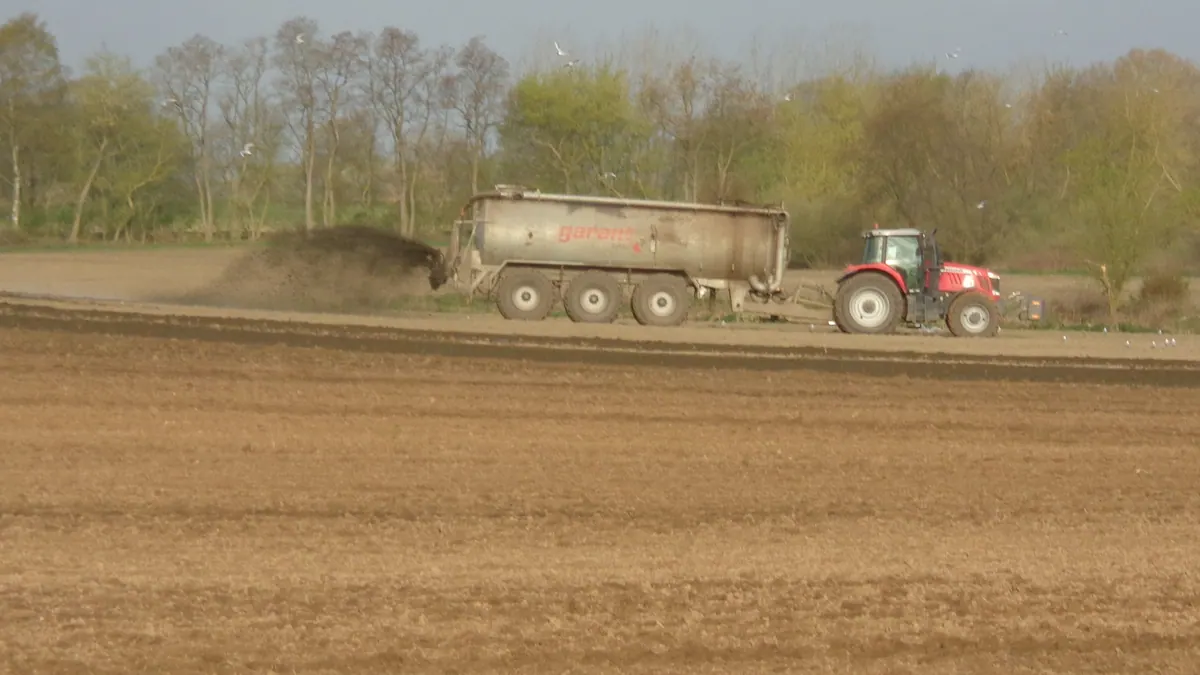

Digestate is the residue after fermentation in which the fertiliser components of the substrate (nitrogen, phosphorus, potassium) remain, while mainly the carbon converted into biogas disappears. Treating it solely as waste is therefore a waste of a resource: in agriculture, which buys nitrogen, phosphorus and potassium in bags and tankers, it is a material of real value. In a conversation about national self-sufficiency fertilisers cannot be left out, because their production and price are closely tied to natural gas and global markets.
How much it can deliver, according to the data
The report of the European Biogas Association (EBA), "Digestate in Europe: State of Play in 2026", estimates that digestate from European biogas plants could technically replace over 16% of the mineral nitrogen used in European agriculture, up to 30% of the phosphorus and up to 10% of the potassium (EBA, production data for 2024). According to the same study, manure and slurry make up about 60% of the feedstock in European biogas plants. This should be read with caution: it is technical potential calculated from the mass of nutrients, not a forecast of replacement. Between the balance table and the field lie transport, the work schedule, legal requirements and habits.
Level one: direct application
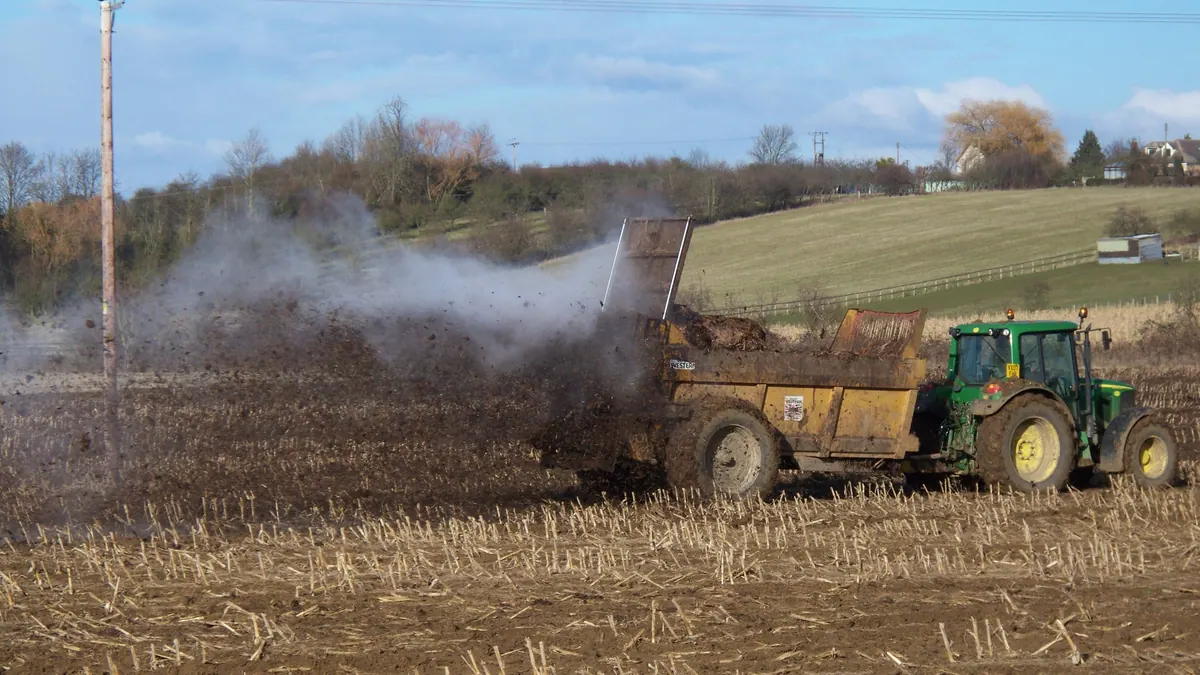
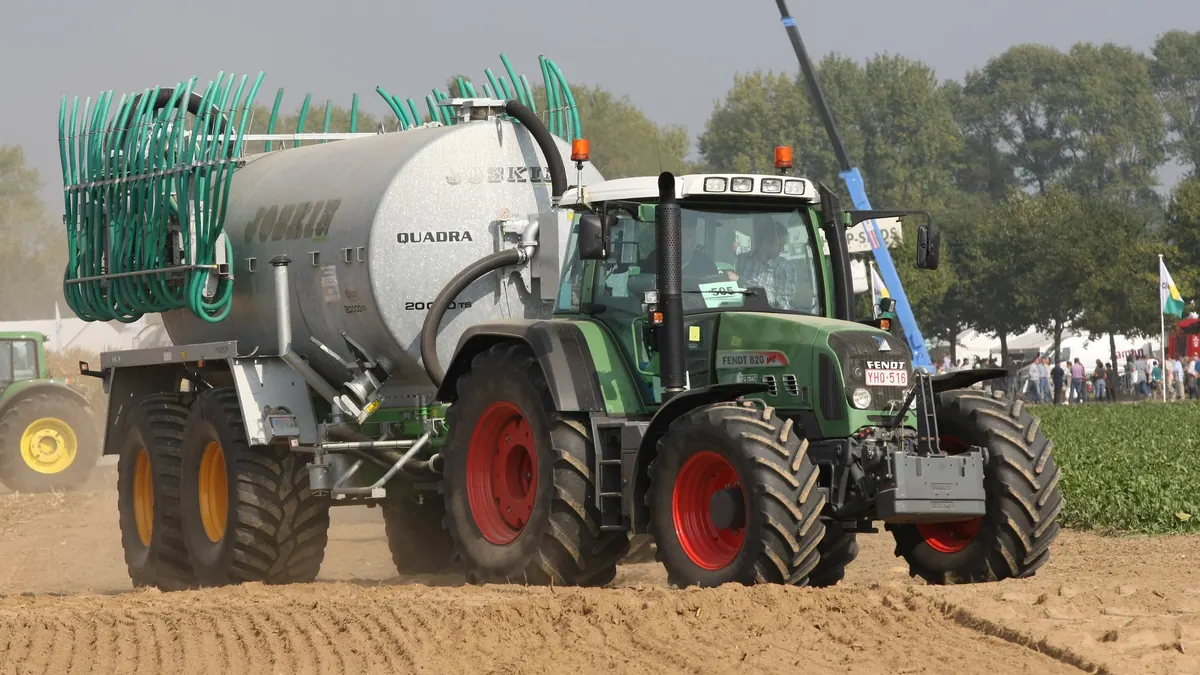
The cheapest and simplest option is to take digestate to the fields with a nutrient balance, as is done with natural fertilisers. In practice this solution works best when:
- the biogas plant cooperates with farms at a short distance that collect the digestate at agreed times,
- the dose is set on the basis of a digestate test and crop needs, not by eye,
- techniques that limit ammonia losses are used, such as trailing hoses or injection,
- storage (a tank, a lagoon) holds the output from the period in which fertilisation is prohibited.
It is worth knowing how to calculate: the details are given in the articles Nitrogen balance and digestate doses: a worked example and Applying digestate on fields: doses, deadlines, the 170 kg N limit. For manure and slurry from a biogas plant, restrictions arising from the Nitrates Directive apply, so digestate is not a way of getting around the limits, but a way of making better use of nitrogen within them.
Level two: processing and nutrient recovery
Where there are no recipients nearby or there is too much nitrogen for a given area, processing comes into play:
| Technology | What is produced | What it gives | What to watch for |
|---|---|---|---|
| Mechanical separation | solid and liquid fractions | the solid contains phosphorus and organic matter, the liquid nitrogen and potassium; easier transport | energy, polyelectrolytes, management of both fractions |
| Ammonia stripping with acid | ammonium sulphate solution | concentrated nitrogen in a form familiar to farmers | energy and acid cost, legal requirements for a fertiliser |
| Struvite precipitation | solid magnesium ammonium phosphate | phosphorus in a form that is easy to transport | profitability depends on the phosphorus concentration in the stream |
| Drying and granulation | granules or pellets | transport over a greater distance, easy application | drying energy, seasonality |
| Organo-mineral fertilisers | blends with added nutrients | predictable composition | registration, composition control |
We discuss them in detail in the texts Ammonia stripping from digestate: ammonium sulphate, Digestate separation: technologies, fractions, balance and Granulation and pellets from digestate. The rule is common: the more processing, the more predictable the product and the further it can be transported, but the higher the cost of energy and chemicals, and the recovered fertiliser has to compete on price with the mineral one.
Legal barriers
Digestate can be used as a fertiliser or a growing aid if it meets the requirements of the Act on Fertilisers and Fertilisation (ustawa o nawozach i nawożeniu), or as an EU fertilising product under Regulation 2019/1009 if it carries the CE marking and meets the requirements for composition, contaminants and pathogens. In other cases it retains waste status and is applied under recovery rules (R10). The choice of route depends on the feedstocks, and above all on whether the plant processes waste. This is described in the articles Digestate: fertiliser or waste: legal routes and Regulation 2019/1009: digestate as an EU fertilising product. Before starting a project, the chosen route should be consulted with the competent authority; the rules have their nuances and exceptions.
Economic and practical barriers
Competitiveness against mineral fertilisers depends on their prices, which change over time, so the profitability of processing has to be checked across price ranges, not on a single scenario. Farmers accept digestate when its composition is consistent and the delivery date predictable. A permanent testing system and take-off agreements help here. Quality issues also remain: contamination from packaging waste (plastic, glass), heavy metals, pathogens. The articles on sanitary testing of digestate and depackaging show that control at the input decides whether the product at the output is suitable for the field.
How this connects to independence
Every tonne of nitrogen from the domestic cycle, rather than from imported ammonia, means less exposure of farms to price swings. But the calculation has another side: mineral fertilisers will remain necessary where digestate does not reach, and its use requires care, because ammonia losses and runoff into waters are a real hazard. Wise use of the resource means choosing the dose and the timing, not simply abandoning mineral fertilisers. In a cycle that closes locally, a farm gains control over its own nutrient balance, and the environment benefits from fewer tonnes transported over long distances.
Digestate is therefore not a miracle fertiliser, but it is a serious, partly already used resource. How energy from waste and fertilisers fit together into one system is described in the previous article in this series: Energy independence starts locally.
Sources
Questions and answers
Can digestate replace mineral fertilisers?
Digestate can partly replace mineral fertilisers, but the scale of replacement depends on its composition and the needs of the crops.
What is struvite and why is it precipitated?
Struvite is magnesium ammonium phosphate. It is precipitated from the liquid fraction in order to recover phosphorus and part of the nitrogen in the form of a solid, easily transported fertiliser with slowly released nutrients.
Related articles