

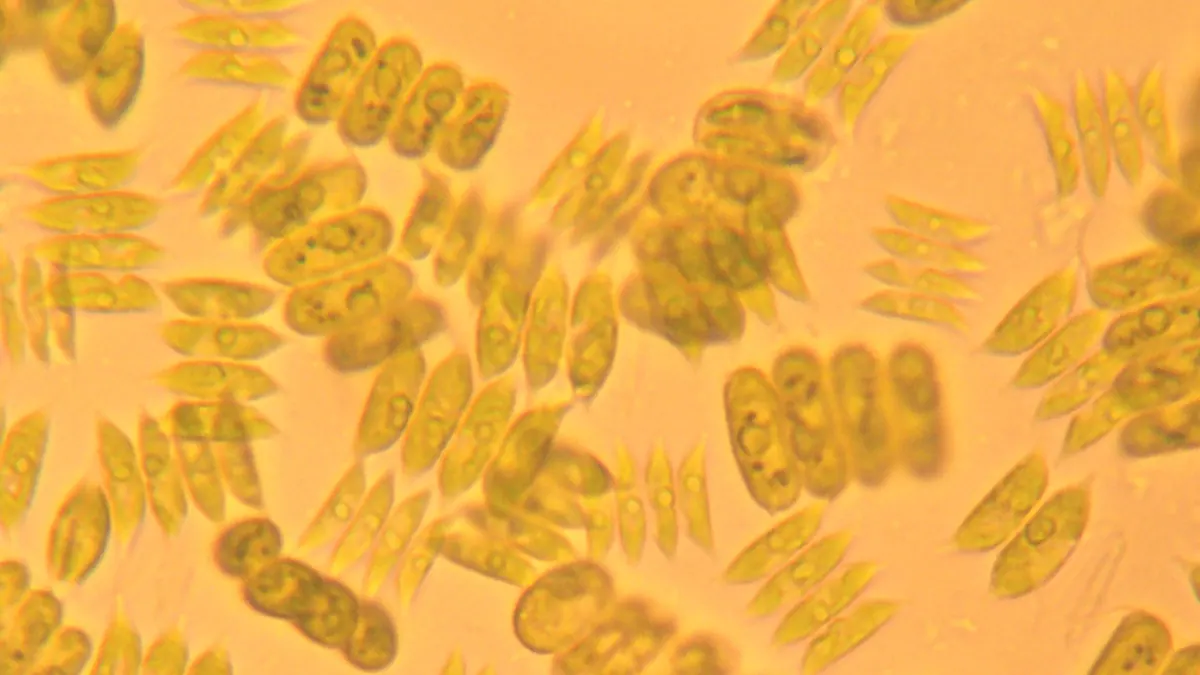
BMP testingAlgae and aquatic plants
Scenedesmus sp. — BMP: 4 studies, weighted mean 204 m³ CH₄/t VS
Scenedesmus sp. without an identified species is a generic entry combining samples from different studies, so the results also reflect differences in strains and cultivation.
rating: neutralCH₄ ≈ 58 % (estimate)
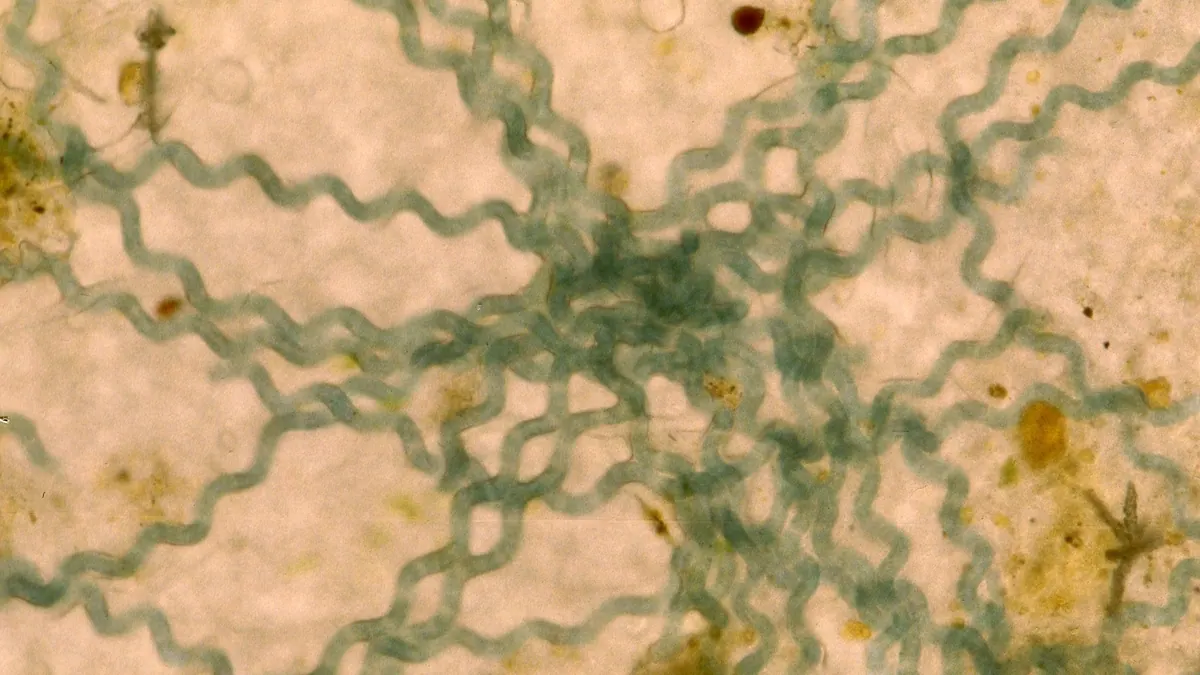
Photo Gabenitez / Wikimedia Commons, licence CC0 1.0, source file; changes: cropping

- Weighted mean
- 204m³ CH₄/t VS
- Range
- 140–261m³ CH₄/t VS
- Records
- 4studies
- Publications
- 3sources
- Temperatures
- 37 °C, 38 °Cof the test
Methane in biogas
Medium methane content · ≈ 5.8 kWh/m³ of biogas
estimate from the substrate type The collected studies contain no measurement. The interval follows from the approximate composition (protein-rich (process classification)) and the yields of compound groups according to FNR.
Rating for biogas plants
neutral — editorial rating for biogas plantsNo clear advantages — worth charging a fee for accepting it
Potential per tonne of fresh matter: moderate (42 m³ CH₄/t); process risk: protein / nitrogen. Handling costs: slow degradation.
Why? Rating factors
Potential per tonne +1
- +1potential 42 m³ CH₄/t fresh matter (BMP 204 × DM 31.3 % × VS 66.1 %)
Process stability −1
- −1protein / nitrogen: risk of ammonia inhibition at higher shares
Handling and costs −0.5
- −0.5slow degradation — long retention time
Total points: −0.5 · thresholds: ≥ 2.5 very good, ≥ 1 good, below — neutral; negative with cumulative process risk.
Add to the co-digestion calculator CSV data
BMP curves from 4 studies
Weighted mean Individual records
Dashed lines are a model curve (first-order kinetics, B(t) = B₀·(1 − e−kt)); the end point comes from the publication. All curves are model curves.
Cumulative methane production over the test [m³ CH₄/t VS]. The thick line is the weighted mean of all records (204); dots mark the end values given in the publications. Point at the chart to read values; click a legend item to hide or show a record.
Records and sources
Download CSV| Source | BMP m³ CH₄/t VS | Temperature | Sample | Curve |
|---|---|---|---|---|
| Jankowska et al. (2017) · 1 DOI | 180 | 38 °C · mesophilic | (orig.: “Scenedesmus”): value quoted in a literature review | end point (model curve) |
| Jankowska et al. (2017) · 2 DOI | 240 | 38 °C · mesophilic | (orig.: “Scenedesmus”): value quoted in a literature review · pretreatment: particle size reduction/sample preparation (MY-D: physical treatment) | end point (model curve) |
| Ramos-Suárez et al. (2014) DOI | 140 | 37 °C · mesophilic | M. Scenedesmus | end point (model curve) |
| Roberts et al. (2019) DOI | 261 | 38 °C · mesophilic | Scenedesmus sp. | end point (model curve) |
| Weighted mean | 204 | arithmetic mean 205, SD 55 | ||
Typical composition
- Dry matter (DM)
- 31.3% (range 31.3–31.3)
- Volatile solids (VS)
- 66.1 % DM (range 48.2–83.9)
Median and range of the determinations reported in the publications behind this substrate's BMP records (read from: MY-D); dry matter: 1 determination, volatile solids: 2 determinations. DM from a single determination – indicative value.
Sources: Ramos-Suárez et al. (2014); Roberts et al. (2019).
The composition of the raw material varies between batches — for plant calculations use an analysis of your own sample. The calculator inserts typical values automatically.
Process properties
Low confidence: the description is based on general characteristics of the substrate group, not on studies of this material. Treat it as a hint to be verified.
Advantages
- Methane yield in the compendium: median 210 (range 140–261) m³ CH₄/t VS, 4 records from 3 papers (weighted mean 204).
Drawbacks and risks
- The high protein content of the cells causes release of ammonia, which can be toxic to the process (Sialve et al. (2009); Rajagopal et al. (2013))
Co-digestion — what to combine it with, what to watch out for
- combines well
substrates: carbon-rich — e.g. Wheat straw, Maize silage (whole crop), Cereal straw (unspecified), Willow (short rotation), Cardboard and paperboard
The low C/N of algal sludge was balanced by the addition of paper: 50-60% VS of paper increased the rate of methane production, optimum C/N 20-25.[1][2]
- caution
substrates: nitrogen-rich — e.g. Pig slurry, Poultry manure, Waste activated sludge (secondary sludge), Chlorella vulgaris, Nannochloropsis salina
Algal protein releases ammonia; additional nitrogen sources increase the risk of ammonia inhibition.[2][3]
Dosing
No source limits on the dose for this substrate.
Introduce gradually, starting with a small dose and monitoring the process (e.g. FOS/TAC, pH, gas composition).
Practical requirements
- Do not dry the biomass before feeding: drying lowered biogas production to about 80% (Mussgnug et al. (2010))
- Monitor ammonia (high protein) and, for marine species, sodium (Sialve et al. (2009))
Sources of the process data
- Anaerobic co-digestion of algal sludge and waste paper to produce methane
- Anaerobic digestion of microalgae as a necessary step to make microalgal biodiesel sustainable
- A critical review on inhibition of anaerobic digestion process by excess ammonia
- Biogas from microalgae: Review on microalgae's cultivation, harvesting and pretreatment for anaerobic digestion
- Optimization of the digestion process of Scenedesmus sp. and Opuntia maxima for biogas production
- Semi-continuous anaerobic digestion of the marine micro-algal species I. galbana and D. salina grown under low and high sulphate conditions
- Microalgae as substrates for fermentative biogas production in a combined biorefinery concept
The co-digestion calculator will assess a specific mixture containing this substrate.
What it is and where it comes from
Scenedesmus is a genus of freshwater green algae forming characteristic colonies of several cells. The entry collects samples whose authors did not give the species, so they may represent different strains. These algae occur in natural water bodies and in wastewater treatment plants, and in research they are cultivated in ponds and photobioreactors. The values are quoted in literature reviews.
Properties relevant to digestion
Scenedesmus cells have a rigid wall made of a resistant biopolymer, so without cell disruption enzymes have limited access to the interior. The biomass contains a lot of protein, which lowers the C/N ratio and risks the release of ammonia, particularly in mono-digestion or at a high load. The proportions of lipids, starch and protein change depending on cultivation conditions, especially nitrogen availability. Biomass from treatment plants may also contain bacteria and detritus, which change its properties.
How to read the spread of results
The differences between records arise from the fact that the entry combines different strains and different cultivation conditions. The result is also affected by the growth phase, the form of the sample (fresh suspension, freeze-dried, after cell disruption), the temperature and duration of the test, the substrate-to-inoculum ratio and inoculum adaptation. Values from reviews have a simplified description of conditions. With a small number of records it is not possible to indicate a typical range unambiguously.
In biogas plant practice
Scenedesmus is not used in typical biogas plants. In systems where the biomass is obtained as a product of wastewater treatment or a biorefinery, it is recommended to combine it with carbon-rich substrates and to consider cell disruption. It is also worth monitoring the ammonium nitrogen concentration. Actual results depend on the biomass batch, so a BMP test on your own material is advisable. The legal status depends on the origin of the biomass and the permits of the plant.
It is worth noting that algae of the genus Scenedesmus are among the most commonly encountered in wastewater treatment plants and ponds. Biomass from such systems is a mixture of species, so results for pure laboratory cultures describe real feedstocks only in part.
These data should therefore be treated as indicative and supplemented with your own BMP test when practical use of a specific biomass is being considered.
Methodology in brief
BMP is the amount of methane obtained from volatile solids (VS) in a batch test, given in m³ CH₄ per tonne of VS (numerically the same as NmL CH₄/g VS in the publications) and converted to normal conditions (0 °C, 101.325 kPa). The weighted mean gives each publication a total weight of 1, split equally between its results for the substrate — a paper testing twenty varieties does not outweigh a paper with a single sample. In inter-laboratory programmes the unit is the laboratory (total weight 1), and within it the weight of a test grows with the number of bottles (replicates). Results after pretreatment (e.g. thermal, chemical, enzymatic) are shown separately and are not included in the mean.
Solid lines are curves measured in the tests. Where a publication gives only the final result, we draw a first-order kinetic model, B(t) = B₀·(1 − e−kt): only the end point comes from the publication, and the shape of the curve serves purely as visualisation — do not read the production on a particular day from it. For this substrate k = 0.102 d−1 was assumed (median of rate constants k reported in the sources and/or fitted to the mean measured curves).
The statistics describe the spread of published results — a descriptive compilation, not a meta-analysis or a guarantee of plant yield.
Results after pretreatment (4) — excluded from the mean
| Source | BMP m³ CH₄/t VS | Pretreatment | Sample |
|---|---|---|---|
| Jankowska et al. (2017) | 330 | chemical | Scenedesmus |
| Jankowska et al. (2017) | 380 | unspecified | Scenedesmus |
| Jankowska et al. (2017) | 273 | physical-chemical | Scenedesmus |
| Jankowska et al. (2017) | 212 | physical-chemical | Scenedesmus |
Bibliography
- Jankowska, E.; Sahu, A.K.; Oleskowicz-Popiel, P. (2017). Biogas from microalgae: Review on microalgae's cultivation, harvesting and pretreatment for anaerobic digestion. Renewable and Sustainable Energy Reviews 75, 692–709. DOI: 10.1016/j.rser.2016.11.045 DOI
- Ramos-Suárez, J.L.; Martínez, A.; Carreras, N. (2014). Optimization of the digestion process of Scenedesmus sp. and Opuntia maxima for biogas production. Energy Conversion and Management 88, 1263–1270. DOI: 10.1016/j.enconman.2014.02.064 DOI
- Roberts, K.P.; Heaven, S.; Banks, C.J. (2019). Semi-continuous anaerobic digestion of the marine micro-algal species I. galbana and D. salina grown under low and high sulphate conditions. Algal Research 41, 101564. DOI: 10.1016/j.algal.2019.101564 DOI
All sources of the site: bibliography.
Other substrates in the group “Algae and aquatic plants”
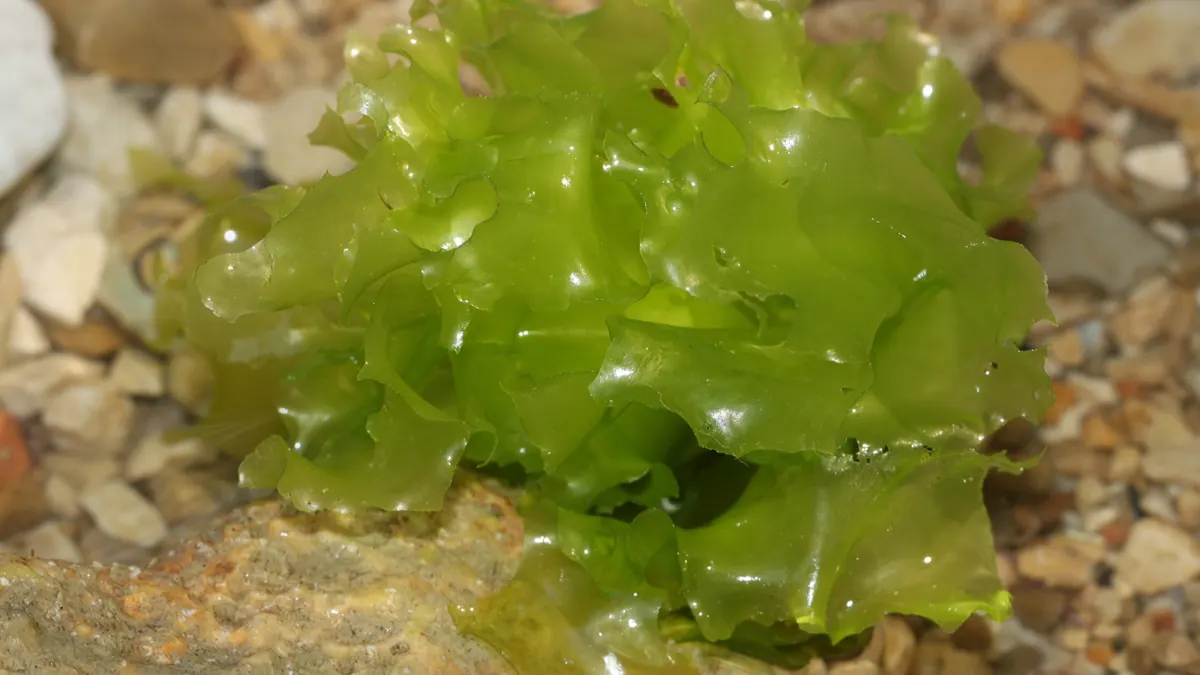
Sea lettuce (Ulva lactuca) — BMP: 2 studies, weighted mean 247 m³ CH₄/t VS
247 m³ CH₄/t VS weighted mean from 2 studies
≈52 %
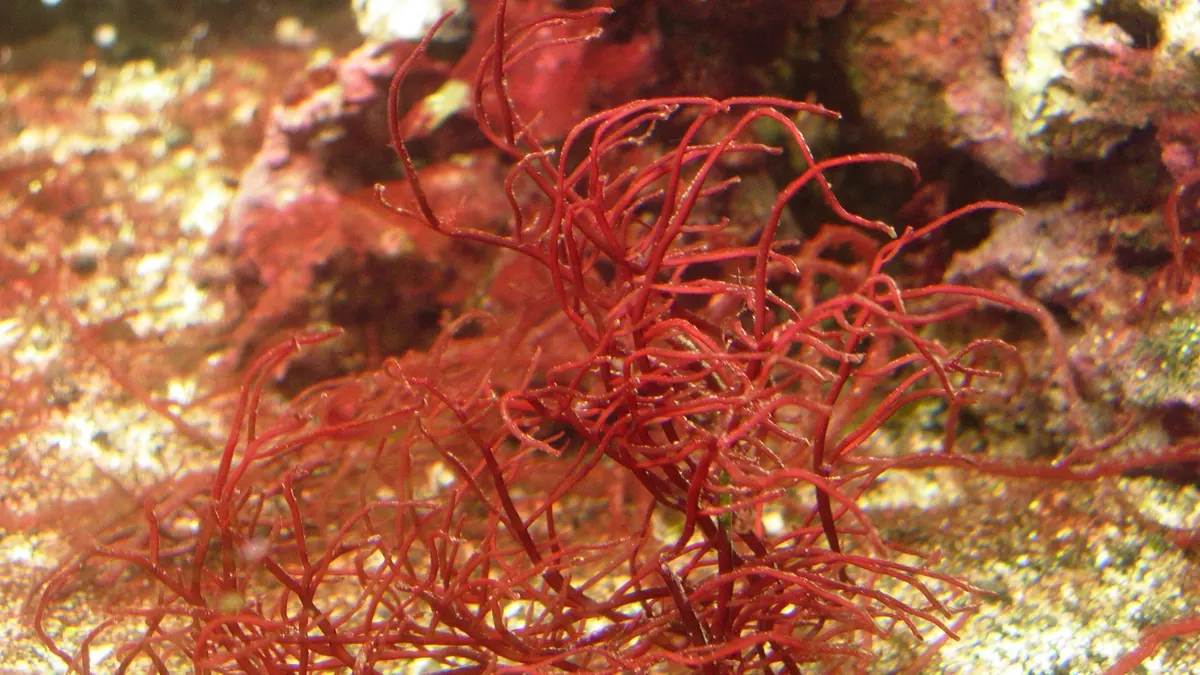
Red seaweeds (Gracilaria, Palmaria) — BMP: 2 studies, weighted mean 206 m³ CH₄/t VS
206 m³ CH₄/t VS weighted mean from 2 studies
≈52 %
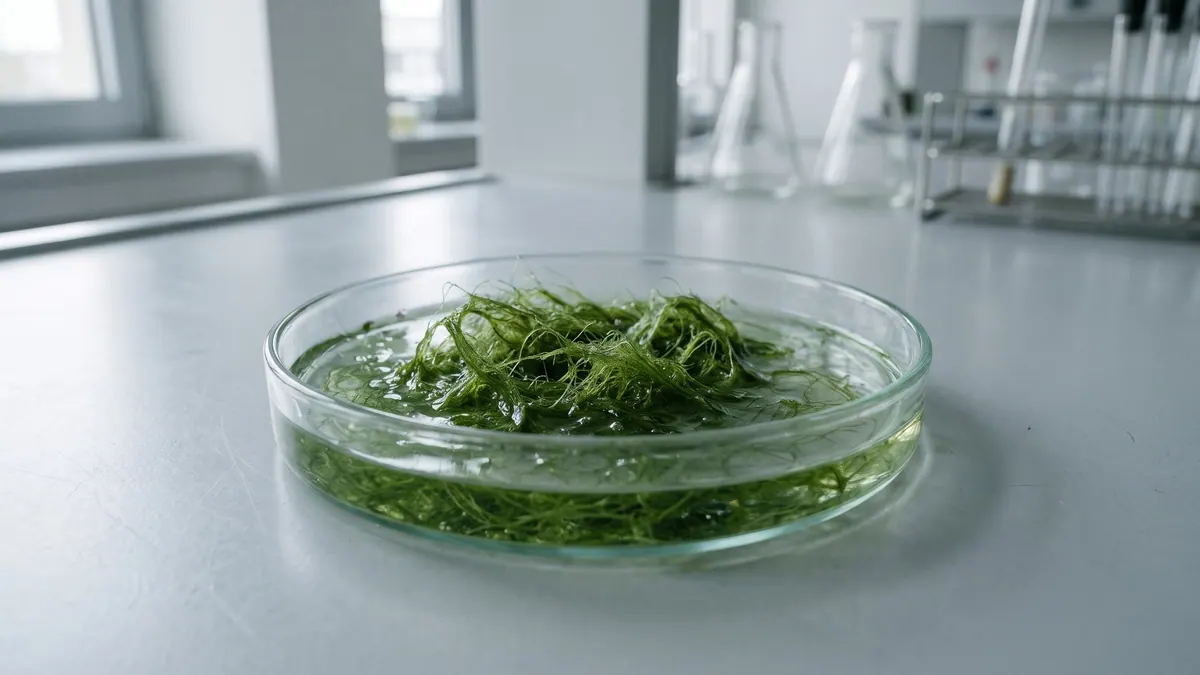
Microspora sp. — BMP: 2 studies, weighted mean 334 m³ CH₄/t VS
334 m³ CH₄/t VS weighted mean from 2 studies
≈52 %
Spirulina (Arthrospira) — BMP: 3 studies, weighted mean 257 m³ CH₄/t VS
257 m³ CH₄/t VS weighted mean from 3 studies
≈58 %