Digestate and fertilisersAnalysis
What a biogas plant gives farmers: slurry collection, digestate as fertiliser and income from substrates
Collection of slurry and manure, digestate as fertiliser in place of part of the mineral kind, income from substrates and less odour when spreading. What biogas plants give farmers and what to watch in the contract.
Other language versions: Polski, Deutsch, Español, Français, Italiano, Nederlands.
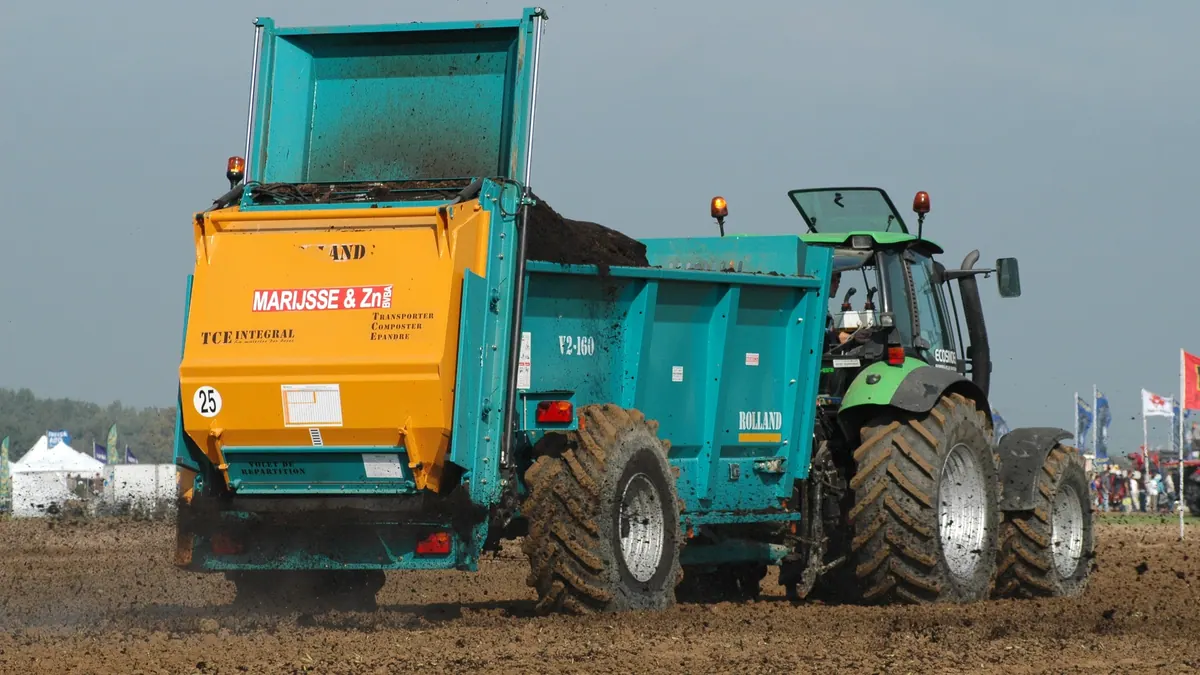

A farmer can gain three things from a biogas plant: secure collection of slurry, manure and other raw materials, fertiliser in the form of digestate, and additional income from substrate deliveries. A fourth benefit is less odour nuisance when spreading digestate compared with raw slurry. All this depends on the contract and on the application technique. This article is the second in the series on the biogas plant in the countryside; you will find the part on benefits for the municipality in the text What a biogas plant gives a municipality.
Collection of slurry and manure
For livestock farms, natural fertilisers are at once a resource and a nuisance: they require tank capacity, spreading dates and avoiding odour for neighbours. A biogas plant takes them as substrate and returns digestate. We know this centralised biogas plant model from, among other places, Denmark, alongside individual installations (see Denmark: green gas in the grid). Slurry has a low biogas yield per tonne of fresh mass, because it is diluted with water, so installations usually add co-substrates, and the transport of large volumes of water is sometimes the main logistical cost. We write about how to calculate and limit this cost in the following articles of the digestate series.
The Act of 13 July 2023 (Journal of Laws (Dz.U.) 2023, item 1597) is not without significance. The entity entitled to invest may be, among others, a farmer running a farm, a group of agricultural producers, a cooperative or a company in which such an entity holds shares (Article 3(1)). For a biogas plant covered by the act, at least part of the substrates must come from an entitled entity that has a legal title to the property (Article 4(1)(1)). For a farmer this means a real possibility of taking part in the project as a supplier, and often also as a shareholder.
Digestate as fertiliser
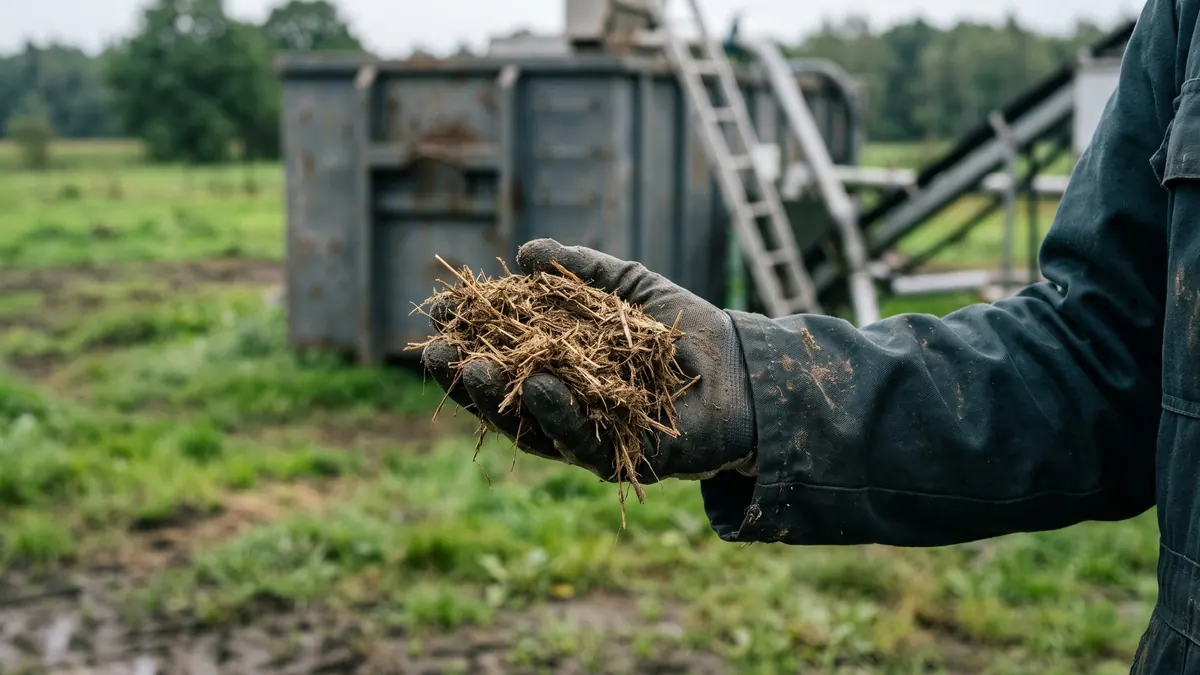
Fermentation does not change the total amount of nitrogen: digestate contains the same amount of nitrogen as the substrate. Its form changes. According to a study by IEA Bioenergy Task 37, part of the organic nitrogen is converted into ammonium nitrogen, which is available to plants more quickly than organic nitrogen (the degree of utilisation depends on timing, application technique and soil conditions). The literature review by Möller and Müller (2012) describes how fermentation changes the availability of nutrients and affects yield, and the outcome depends on the substrate, the soil and the application technique.
For scale: according to Fachverband Biogas, German biogas plants generate about 96 million tonnes of digestate a year, containing about 735,000 tonnes of total nitrogen, 478,000 tonnes of phosphorus expressed as P₂O₅ and 725,000 tonnes of potassium expressed as K₂O. The association stresses that these nutrients do not have to be imported or produced from fossil raw materials. These are figures for the whole country; they do not translate directly into savings for a single farm. In Poland digestate, like other fertilisers, is subject to limits and bans: the Act on Fertilisers and Fertilisation prohibits, among other things, applying digestate on frozen, flooded, water-saturated or snow-covered soils (Article 20(1)). Under the nitrates programme (Regulation of the Council of Ministers of 31 January 2023, Dz.U. 2023, item 244) the annual dose of natural fertilisers is limited to 170 kg N/ha of agricultural land; check the rules for digestate from a specific installation in the programme and with an adviser (see Nitrates programme: the 170 kg N/ha limit). Digestate therefore does not exempt you from planning fertilisation, it only allows you to reduce the purchase of part of the mineral fertilisers.
You will find practical guidance in the texts Digestate and nutrient recovery in place of part of the mineral fertilisers, Digestate for winter and spring wheat and Can digestate be spread in winter?.
Income from substrates
A farmer who sells silage, slurry or production residues to a biogas plant has an additional source of revenue. Using the municipality of Michałowo as an example, KOWR describes how the possibility of long-term contracts for maize deliveries encourages farmers to invest in poorer soil classes, and thanks to the biogas plant numerous areas of fallow farmland are being brought back into use. We do not give prices, because they depend on the region, the substrate and the contract. When signing a contract it is worth checking:
- the duration and the possibility of indexing the price,
- quality requirements (dry matter, contaminants) and the method of sampling,
- who is responsible for transport,
- the rules for returning digestate: quantity, timing, quality, price,
- the consequences of a break in the installation's operation (where the farmer will take the raw material).
How to assess whether it pays for the farm
Before you sign the contract, work out your own balance, not an average from the literature:
- Quantity and composition. How much slurry, manure or silage you will deliver per year and how much digestate will return. The composition of digestate is determined from laboratory analysis, because it depends on the mix of substrates at the given installation.
- Area and limits. Whether you have land on which the digestate will fit within the fertilisation limits and deadlines.
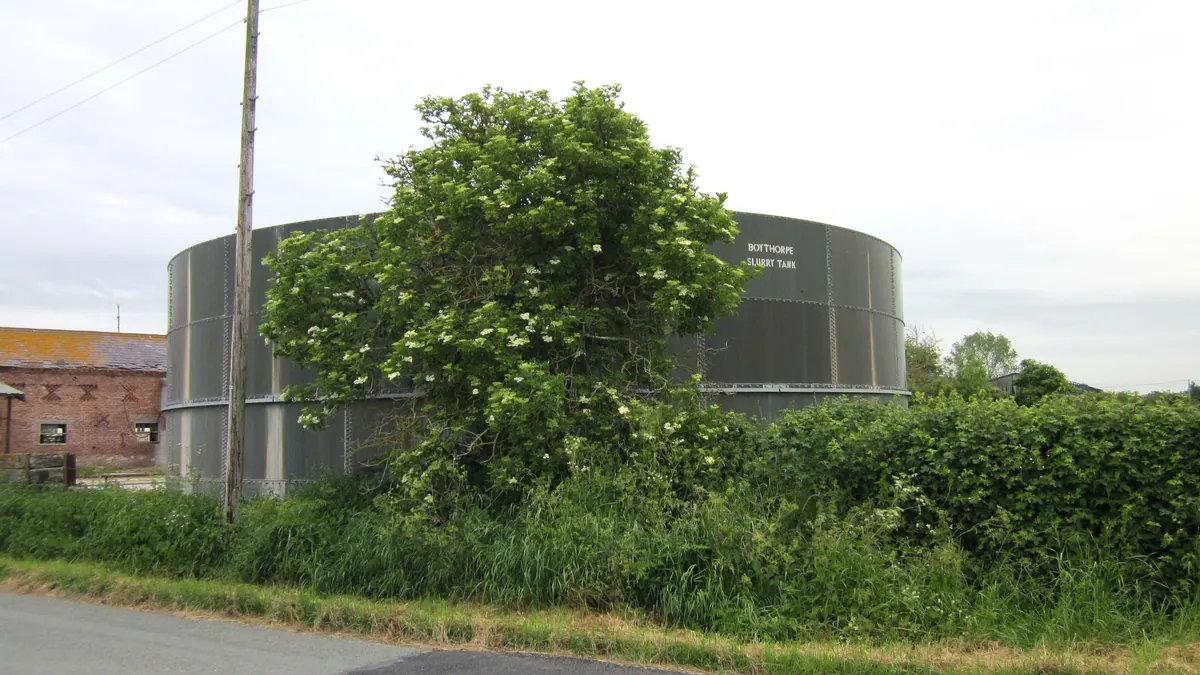
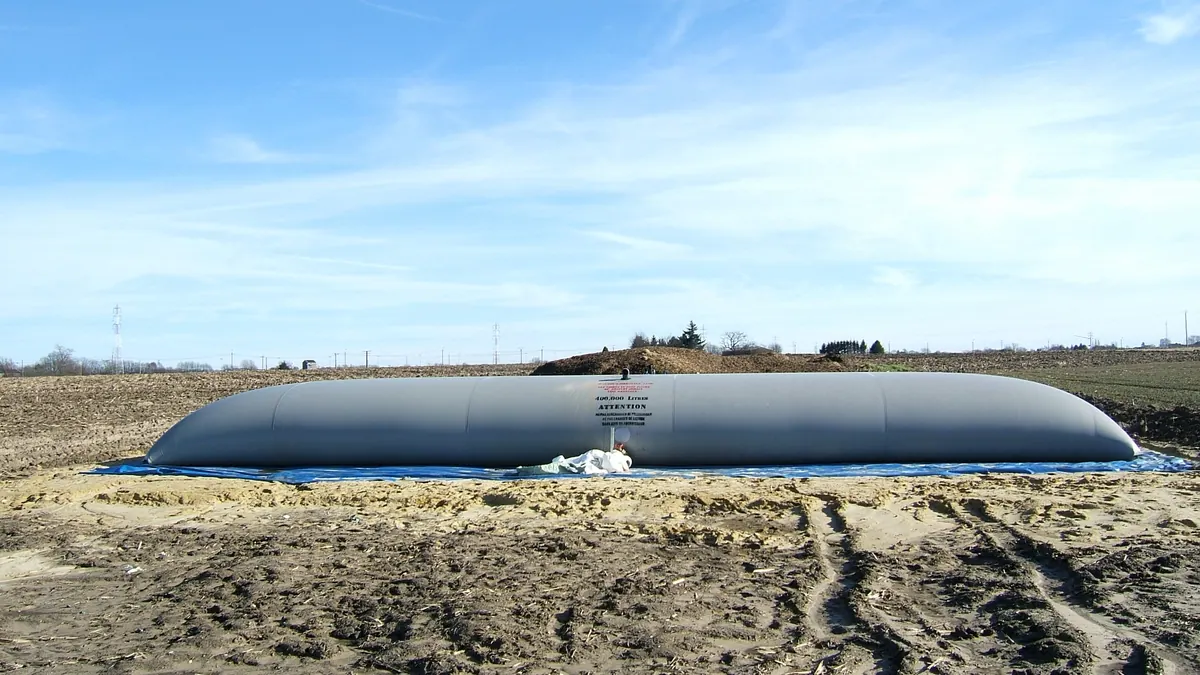
- Storage capacity. Whether the digestate tank will cover the period of the fertilisation ban.
- Logistics. Who transports it and with what, over what distance, and whether the transport cost eats up the benefit of the fertiliser.
- Fallback conditions. What will happen if the installation stops or limits collection.
Only such a calculation will show whether digestate will replace part of the fertiliser purchases and to what extent.
Odour when applying digestate
The IEA Bioenergy study shows that, compared with raw slurry, digestate has less odour, soaks into the soil faster and is associated with a much lower risk of nuisance during and after application. This is also indicated by Danish research (Hansen et al. 2004), according to which fermentation significantly reduces the concentration of many compounds responsible for unpleasant odour. The French ADEME guide of 2018 expressly notes that digestate is much less odour-generating than raw natural fertilisers when spread, and describes livestock farmers who chose fermentation precisely in order to reduce odour when fertilising.
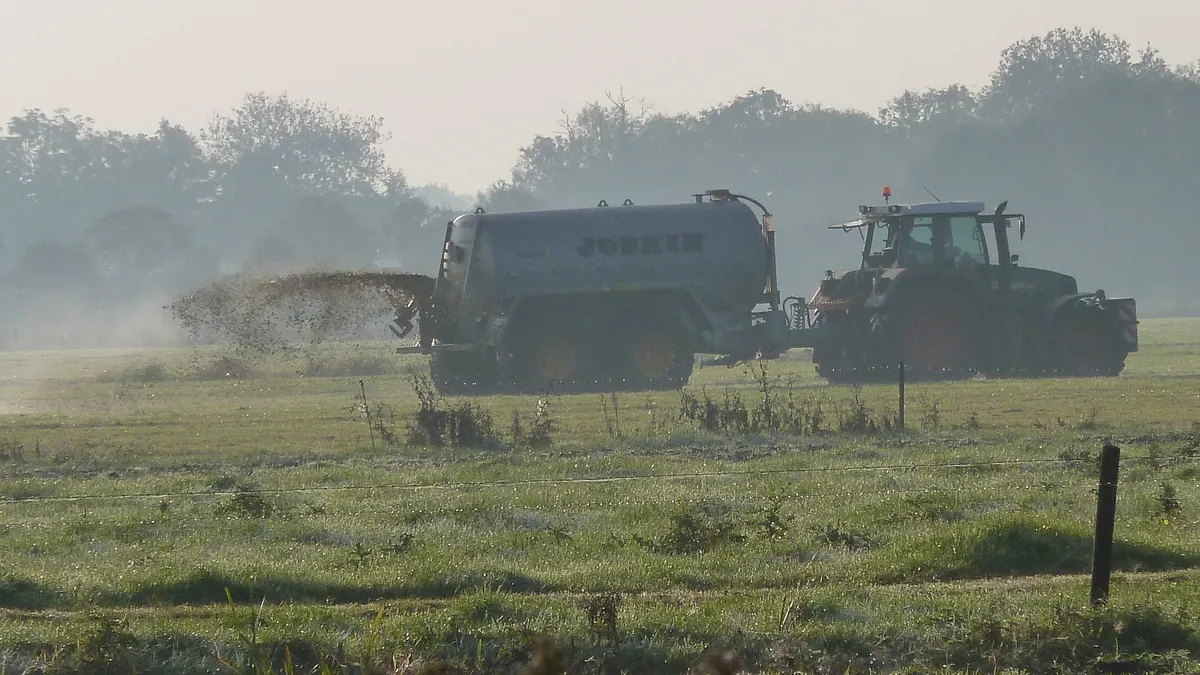
This does not mean that odour disappears. The IEA guide points out that odour may be released when digestate is pumped from the tank into tankers, and, because of the higher ammonia content, ammonia emissions during application may be greater than with raw slurry. Techniques that limit contact with the air are therefore recommended: trailing hoses, injection into the soil and rapid incorporation, not splash-plate spreading. The principles are described in the texts Ammonia emissions from digestate: application techniques and Storage and application of digestate. The sanitary quality of digestate is discussed in the article Sanitary testing of digestate and substrates.
Risks for the farmer: in brief
- Dependence on a single customer. When the installation stops, you must have a plan for storage and disposal.
- Digestate transport costs. They are large when mainly water is being hauled; separation and route planning help.
- Fertilisation limits and deadlines. Digestate is subject to the bans in the Act on Fertilisers (e.g. a ban on application on frozen soils) and to fertilisation limits; check the details for your installation in the nitrates programme.
- Ammonia emissions and odour with poor technique. They are limited by injection into the soil and rapid incorporation.
A sound contract and good technique mean that the benefits outweigh the risk, but responsibility for making use of them rests with both sides.
Sources
- IEA Bioenergy Task 37 — Utilisation of digestate from biogas plants as biofertiliser (Lukehurst, Frost, Al Seadi, 2010)
- Möller K., Müller T. (2012), Effects of anaerobic digestion on digestate nutrient availability and crop growth: A review — DOI
- Fachverband Biogas — Branchenzahlen 2025 (2026)
- ADEME — Informer et dialoguer autour d'un projet de méthanisation (2018)
- KOWR — Agro OZE: biogazownia rolnicza, korzyści dla mieszkańców gminy
- Rozporządzenie Rady Ministrów z 31 stycznia 2023 r. w sprawie Programu działań mających na celu zmniejszenie zanieczyszczenia wód azotanami ze źródeł rolniczych (Dz.U. 2023 poz. 244)
Questions and answers
Can digestate replace mineral fertilisers?
Digestate can partly replace mineral fertilisers, but the scale of replacement depends on its composition and the needs of the crops.
Related articles