

BMP testingFats, oils and animal by-products
Animal fats — BMP: 3 studies, weighted mean 690 m³ CH₄/t VS
Animal fats (lard, tallow, slaughterhouse fat) are a concentrated, high-energy substrate, but risky for the process and subject to the regulations on animal by-products.
rating: neutralCH₄ ≈ 63 % (estimate)
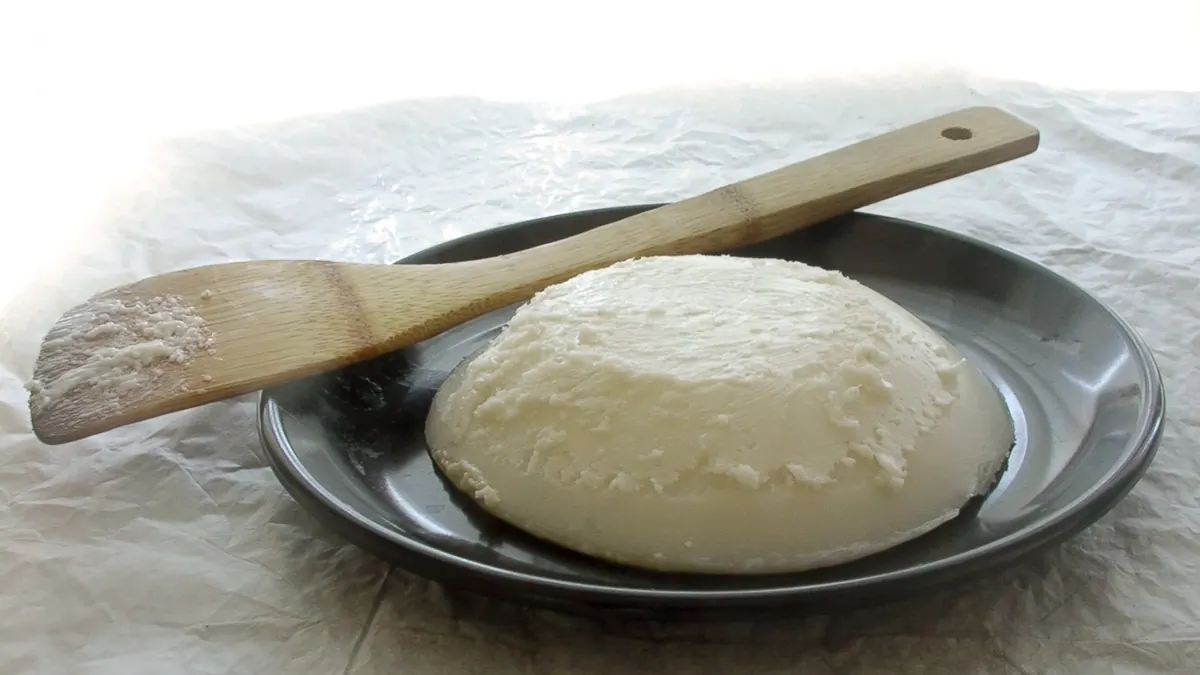
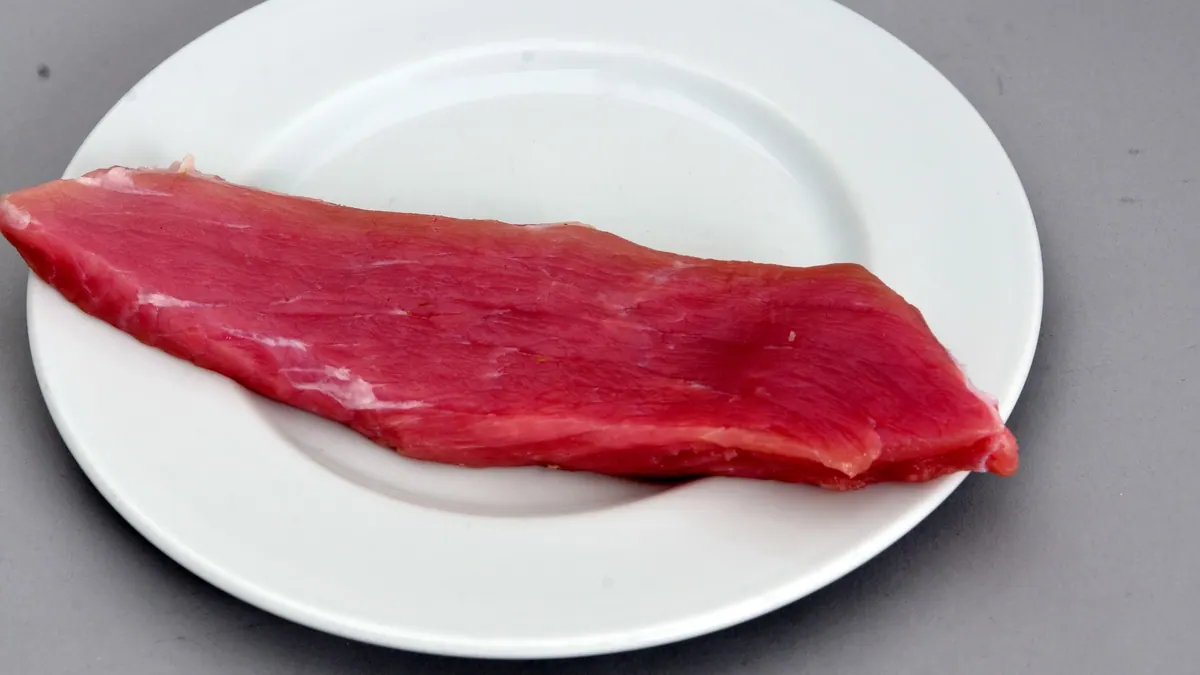
Photo No machine-readable author provided. Peter G Werner~commonswiki assumed (based on copyright claims). / Wikimedia Commons, licence CC BY 2.5, source file; changes: cropping

- Weighted mean
- 690m³ CH₄/t VS
- Range
- 639–776m³ CH₄/t VS
- Records
- 3studies
- Publications
- 3sources
- Temperatures
- 35 °C, 37 °Cof the test
Methane in biogas
High methane content · ≈ 6.3 kWh/m³ of biogas
estimate from the substrate type The collected studies contain no measurement. The interval follows from the approximate composition (carbohydrate-dominated (no protein or fat characteristics); fat-rich (process classification)) and the yields of compound groups according to FNR.
Rating for biogas plants
neutral — editorial rating for biogas plantsNo clear advantages — worth charging a fee for accepting it
Potential per tonne of fresh matter: very high (688 m³ CH₄/t); process risk: fats, foaming, acidification. Handling costs: ABP cat. 3, fibres, floating layer.
Why? Rating factors
Potential per tonne +3
- +3potential 688 m³ CH₄/t fresh matter (BMP 690 × DM 99.7 % × VS 99.9 %)
Process stability −1.5
- −1fats: risk of accumulation of long-chain fatty acids (LCFA), flotation and overloading
- −0.25foaming: tendency to form foam in the digester
- −0.25acidification: rapid degradation / acidic pH, risk of VFA accumulation, needs buffering
Handling and costs −1.5
- −1ABP cat. 3: pasteurisation at 70 °C / 60 min
- −0.5fibres, floating layer — shredding and intensive mixing
Total points: 0 · thresholds: ≥ 2.5 very good, ≥ 1 good, below — neutral; negative with cumulative process risk.
Add to the co-digestion calculator CSV data
BMP curves from 3 studies
Weighted mean Individual records
Dashed lines are a model curve (first-order kinetics, B(t) = B₀·(1 − e−kt)); the end point comes from the publication. All curves are model curves.
Cumulative methane production over the test [m³ CH₄/t VS]. The thick line is the weighted mean of all records (690); dots mark the end values given in the publications. Point at the chart to read values; click a legend item to hide or show a record.
Records and sources
Download CSV| Source | BMP m³ CH₄/t VS | Temperature | Sample | Curve |
|---|---|---|---|---|
| Holliger et al. (2017) DOI | 639 | — | Slaughterhouse waste fat | end point (model curve) |
| Kouas et al. (2017) DOI | 656 | 35 °C · mesophilic | fat | end point (model curve) |
| Li et al. (2013) DOI | 776 | 37 °C · mesophilic | Used animal oil | end point (model curve) |
| Weighted mean | 690 | arithmetic mean 690, SD 75 | ||
Typical composition
- Dry matter (DM)
- 99.7% (range 99.7–99.7)
- Volatile solids (VS)
- 99.9 % DM (range 99.9–99.9)
Median and range of the determinations reported in the publications behind this substrate's BMP records (read from: MY-D); dry matter: 1 determination, volatile solids: 1 determination. Samples were tested dried/air-dry – the DM refers to the material in the test, not to fresh material.
Sources: Li et al. (2013).
The composition of the raw material varies between batches — for plant calculations use an analysis of your own sample. The calculator inserts typical values automatically.
Process properties
Advantages
- Methane potential in the Substraty.pl BMP dataset: weighted mean 690.3 m³ CH₄/t VS (SD 74.7; 3 records, 3 sources).
- Concentrated lipids: a very large contribution to biogas per unit of feed mass, so small doses raise production (Long et al. 2012; Pitk et al. 2014).
- Adding fat to a feed based on slurry/manure is described in the literature as feasible while keeping the share low (Pitk et al. 2014).
Drawbacks and risks
- At a technical fat share above 2% of the feed mixture, in a study with dairy slurry floating granules (lipids + LCFA calcium salts) formed and process efficiency fell (Pitk et al. 2014).
- Hydrolysis releases LCFA that inhibit acetogens and methanogens; the consequences are biomass flotation and foaming (Long et al. 2012; Chen et al. 2008).
- Fat is solid or semi-liquid at room temperature - it requires heating for pumping and thorough distribution (Long et al. 2012).
Co-digestion — what to combine it with, what to watch out for
- combines well
substrates: high alkalinity (buffer) — e.g. Cattle manure, Pig slurry, Cattle slurry, Duck slurry, Rumen and digestive tract content
Slurry/manure dilutes LCFA and provides alkalinity and trace elements; in the studies the fat was added to a feed based on slurry.[1][2]
- caution
substrates: protein-rich — e.g. Food waste, Municipal sewage sludge (mixed), Poultry manure, Organic fraction of municipal solid waste, Grass clippings
Fat + protein (e.g. slaughterhouse waste) gives two inhibition mechanisms at once: LCFA and ammonia.[3][4]
- avoid
substrates: fat-rich — e.g. Food waste, Spent coffee grounds, Primary sludge, Sunflower seeds, Olive pomace / olive mill solid waste
Combining animal fat with another fat (oil, FOG, soapstock) accumulates the LCFA load; the limit applies to the sum of lipids, not to each separately.[5][1]
Dosing
Indicative limit from the literatureup to 2% fresh mass of the feed[1]
Basis: share of fat in the feed mixture (fresh matter). Pitkä et al. (2014): in mesophilic co-digestion with dairy slurry, technical fat added as the only lipid additive above 2% of the mixture caused the formation of floating granules (lipids and LCFA calcium salts) and a fall in process efficiency. 2% is therefore the threshold from which problems were observed in one laboratory study, not an optimum value or a guarantee for a plant. Introduce gradually, in small daily doses, monitoring VFA and foaming; the limit applies to the total lipid load.
Introduce gradually, starting with a small dose and monitoring the process (e.g. FOS/TAC, pH, gas composition).
Practical requirements
- ABP cat. 3 (Art. 10 of Reg. 1069/2009; admitted to biogas plants by Art. 14): hygienisation before the digester in a mandatory unit: shredding to a maximum of 12 mm, temperature throughout the mass of at least 70 °C for at least 60 min without interruption (Reg. 142/2011, Annex V Ch. I Section 1 and Ch. III Section 1); the installation requires approval by the competent authority (Art. 24(1)(g) of Reg. 1069/2009).
- Do not feed hygienised substrate into the digester hot (FNR 2010, Ch. 3: hygienisation).
- Control floating crust and sediment: when solids are fed directly into the digester, the risk of their formation depends on the substrate (FNR 2010, Ch. 3).
Sources of the process data
- Pitk et al. (2014). Mesophilic co-digestion of dairy manure and lipid rich solid slaughterhouse wastes. Bioresour. Technol.
- Creamer et al. (2010). Stable thermophilic anaerobic digestion of dissolved air flotation (DAF) sludge by co-digestion with swine manure. Bioresour. Technol.
- Palatsi et al. (2011). Anaerobic digestion of slaughterhouse waste: main process limitations and microbial community interactions. Bioresour. Technol.
- Pitk et al. (2013). Co-digestion of sewage sludge and sterilized solid slaughterhouse waste: methane production efficiency and process limitations. Bioresour. Technol.
- Long et al. (2012). Anaerobic co-digestion of fat, oil, and grease (FOG): A review of gas production and process limitations. Process Saf. Environ. Prot.
- Chen, Cheng, Creamer (2008). Inhibition of anaerobic digestion process: A review. Bioresour. Technol.
- Rozporządzenie (WE) nr 1069/2009 określające przepisy sanitarne dotyczące produktów ubocznych pochodzenia zwierzęcego (art. 9, 10, 12–14, 24)
- Rozporządzenie Komisji (UE) nr 142/2011 wykonujące rozporządzenie (WE) nr 1069/2009 (zał. IV rozdz. III, zał. V rozdz. I i III)
- FNR (2010). Guía sobre el Biogás – Desde la producción hasta el uso (hiszp. wydanie „Leitfaden Biogas”, GIZ 2013)
The co-digestion calculator will assess a specific mixture containing this substrate.
What it is and where it comes from
Animal fats arise mainly in slaughterhouses, meat plants and processing: this is slaughterhouse fat, lard, tallow, and also used fats from kitchens and industry. The dataset contains several records: slaughterhouse fat, pork fat and used animal fat, from several different studies. Some fats have commercial value, e.g. for the feed or oleochemical industry, so fractions of poorer quality usually reach biogas plants.
Properties relevant to digestion
Fat is a material almost without water, rich in triglycerides of very high energy density. After hydrolysis, glycerol and long-chain fatty acids (LCFA) are formed, some of which, particularly in excess, inhibit acetogenic bacteria and methanogenic archaea. The consequences are a fall in methane production, accumulation of acids and flotation of biomass with foaming. Animal fats are solid or semi-liquid at room temperature, so they must be heated in order to pump and distribute them evenly. Introduction should be gradual, and the dose matched to the load and the adaptation of the microflora.
How to read the spread of results
The records concern fats of different origin and degree of purity, from raw slaughterhouse fat to used fat. The fatty acid composition, the content of water and contaminants and the way the sample was prepared (emulsification, dissolution) affect the result. In batch tests the substrate-to-inoculum ratio is particularly important, because too large a fat load causes inhibition and underestimates the result, while too small a one gives a picture dependent mainly on the method. Added to this are differences in inoculum, test length and temperature, which was not given in one of the sources.
In biogas plant practice
Animal fats are tempting because of the high biogas yield per unit mass, but require special treatment: a heated tank, dosing in small portions, and control of volatile fatty acids, pH and foaming. As an animal by-product the material is subject to EU and national regulations, covering classification into a category, the required treatment (e.g. pasteurisation in the case of category 3), documentation and the plant's permit. The specific requirements depend on the category and origin, so they must be checked before acceptance. Because of the variability of batches, it is worth carrying out a BMP test.
Methodology in brief
BMP is the amount of methane obtained from volatile solids (VS) in a batch test, given in m³ CH₄ per tonne of VS (numerically the same as NmL CH₄/g VS in the publications) and converted to normal conditions (0 °C, 101.325 kPa). The weighted mean gives each publication a total weight of 1, split equally between its results for the substrate — a paper testing twenty varieties does not outweigh a paper with a single sample. In inter-laboratory programmes the unit is the laboratory (total weight 1), and within it the weight of a test grows with the number of bottles (replicates). Results after pretreatment (e.g. thermal, chemical, enzymatic) are shown separately and are not included in the mean.
Solid lines are curves measured in the tests. Where a publication gives only the final result, we draw a first-order kinetic model, B(t) = B₀·(1 − e−kt): only the end point comes from the publication, and the shape of the curve serves purely as visualisation — do not read the production on a particular day from it. For this substrate k = 0.091 d−1 was assumed (no kinetic data for the group – the median of all available rate constants k (93 values) was used).
The statistics describe the spread of published results — a descriptive compilation, not a meta-analysis or a guarantee of plant yield.
Bibliography
- Holliger, C.; Fruteau de Laclos, H.; Hack, G. (2017). Methane Production of Full-Scale Anaerobic Digestion Plants Calculated from Substrate’s Biomethane Potentials Compares Well with the One Measured On-Site. Frontiers in Energy Research 5, 12. DOI: 10.3389/fenrg.2017.00012 DOI
- Kouas, M.; Torrijos, M.; Sousbie, P.; Steyer, J.P.; Sayadi, S.; Harmand, J. (2017). Robust assessment of both biochemical methane potential and degradation kinetics of solid residues in successive batches. Waste Management 70, 59–70. DOI: 10.1016/j.wasman.2017.09.001 DOI
- Li, Y.; Zhang, R.; Liu, G.; Chen, C.; He, Y.; Liu, X. (2013). Comparison of methane production potential, biodegradability, and kinetics of different organic substrates. Bioresource Technology 149, 565–569. DOI: 10.1016/j.biortech.2013.09.063 DOI
All sources of the site: bibliography.
Other substrates in the group “Fats, oils and animal by-products”
Raw sheep wool — BMP: 3 studies, weighted mean 37 m³ CH₄/t VS
37 m³ CH₄/t VS weighted mean from 3 studies
≈58 %
Fats, oils and grease (FOG) — BMP: 5 studies, weighted mean 488 m³ CH₄/t VS
488 m³ CH₄/t VS weighted mean from 5 studies
≈63 %
Used cooking oil — BMP: 2 studies, weighted mean 730 m³ CH₄/t VS
730 m³ CH₄/t VS weighted mean from 2 studies
neutral — editorial rating for biogas plants≈63 %
Meat and meat waste — BMP: 2 studies, weighted mean 295 m³ CH₄/t VS
295 m³ CH₄/t VS weighted mean from 2 studies
neutral — editorial rating for biogas plants≈66 %