
BiomethaneExplainer
Biomethane as a domestic fuel: the gas grid, transport, bioLNG and agriculture
Biomethane has the composition and properties of natural gas, so it goes into the existing grid and vehicles. The potential, three routes to market and the conditions on which profitability depends.
Other language versions: Polski, Deutsch, Español, Français, Nederlands.
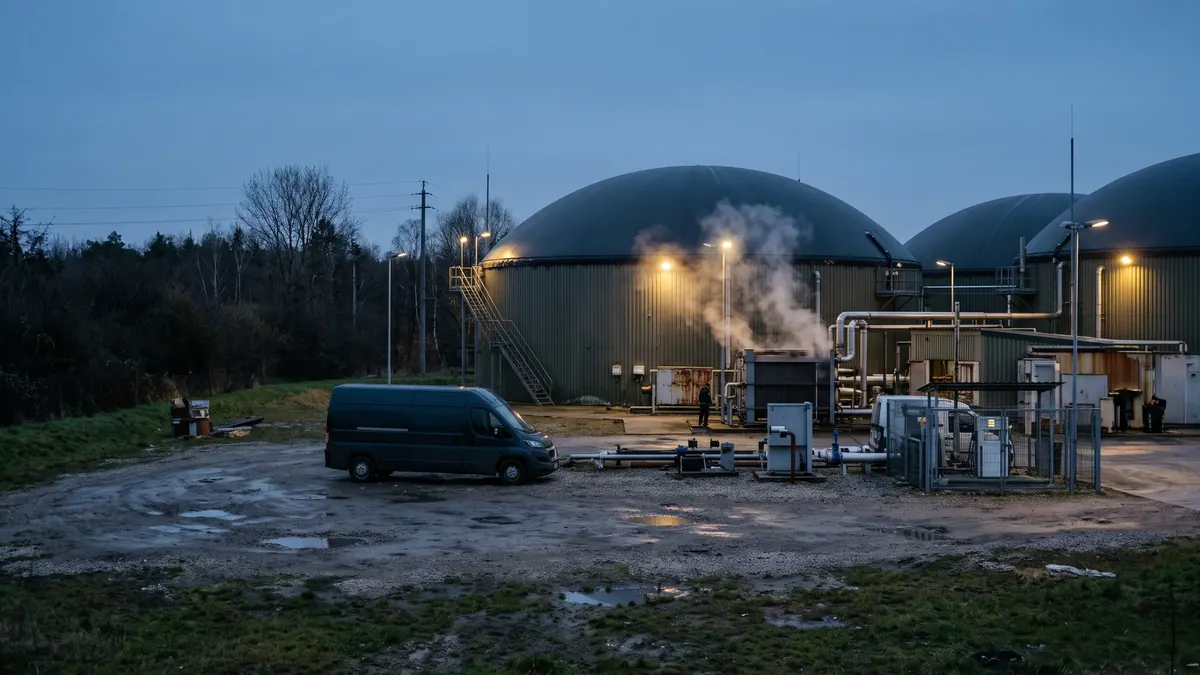
Biomethane is biogas purified of carbon dioxide and impurities to the quality parameters of natural gas. As a result it needs no new infrastructure on the customer's side: it goes into existing pipelines, boilers, CNG stations and vehicles. For a country that consumes from a dozen to more than twenty billion m³ of gas a year and imports most of it, this is a fuel whose raw material lies in its own fields and its own municipalities. It is not the only solution, but it is one of the few that can be deployed with existing grids.
How it is produced and what it must match
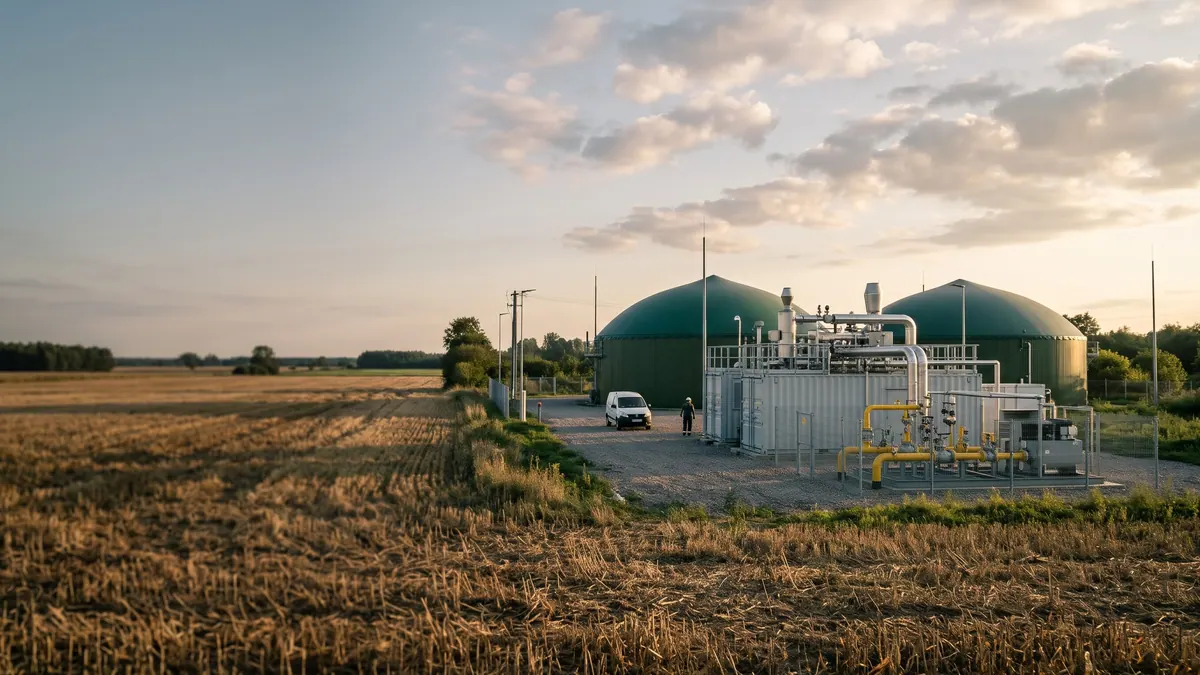
Raw biogas usually contains about half methane, and the rest is mainly CO₂ with an admixture of water vapour, hydrogen sulphide and trace compounds. Upgrading removes these components by one of several methods: membrane, amine scrubbing, water scrubbing or pressure swing adsorption. The choice depends on scale, the availability of energy and heat, and what we intend to do with the recovered CO₂. The quality requirements are described in standard EN 16723, and in the grid the operator additionally sets parameters. We described the basics in the articles Biomethane: what it is and how it differs from biogas and Membrane upgrading.
Scale: how much in Europe, how much in Poland
In 2023 Europe produced about 4.9 billion m³ of biomethane in 1510 plants; according to EBA, the main uses were transport (about 23%), buildings (about 17%), electricity generation (about 15%) and industry (about 13%) (EBA, Statistical Report 2024). This is still a small percentage of gas consumption, but a growing one. According to the International Energy Agency (IEA), the global sustainable potential of biogases is close to 1000 billion m³ of natural gas equivalent a year, and the European Union uses about 40% of its own potential (IEA, 2025). For Poland, estimates of biomethane potential lie between about 3 billion m³ (NCBR: about 3.2 billion m³) and about 8 billion m³ (theoretical potential according to DISE, which after taking feedstock and grid constraints into account is estimated at 3–4 billion m³). The difference is explained by assumptions: how much straw and manure can realistically be collected and delivered, and how many plants can be connected to the grid. This is a discrepancy that has to be treated as an honest range of uncertainty, not as an error by one of the authors.
Three routes to market
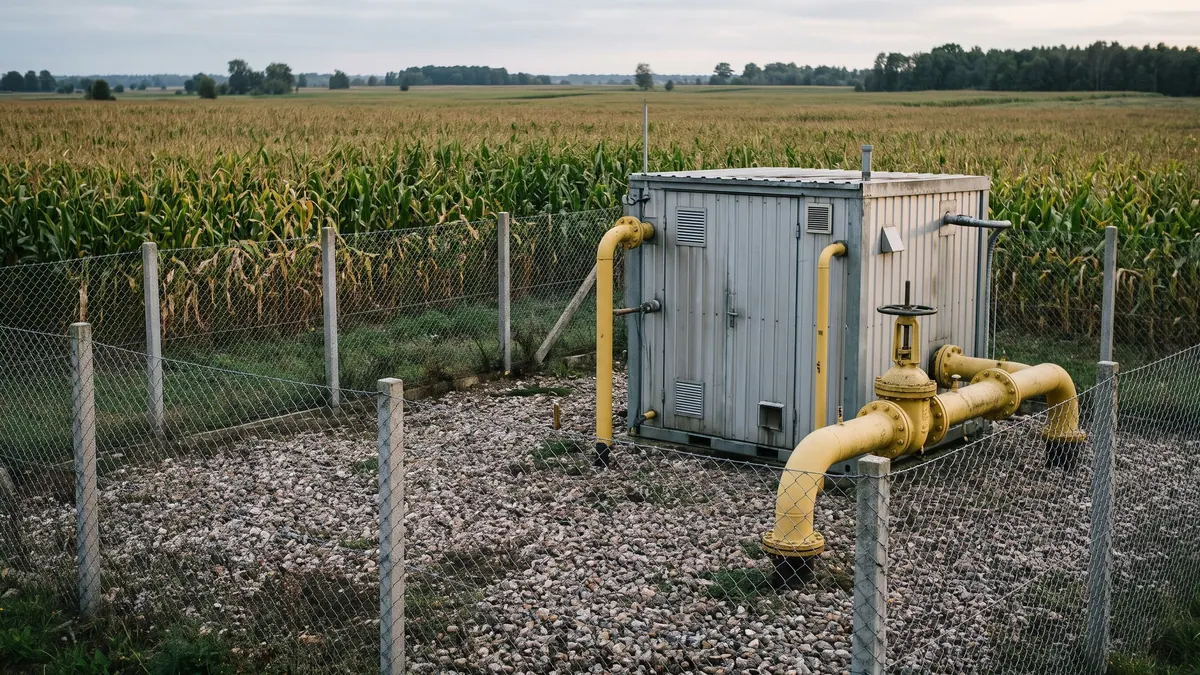
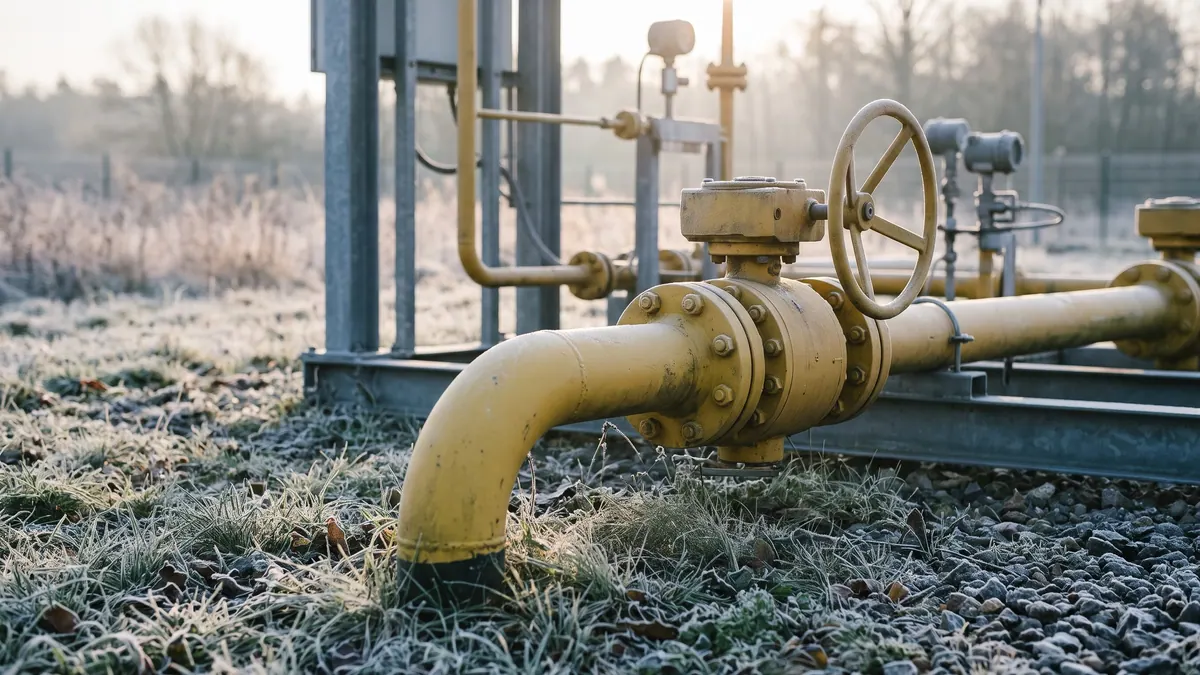
The gas grid. Injection requires a metering and settlement station, an odorisation unit, quality control and an agreement with the operator. The idea is simple, the practice complex: the connection point must be at a reasonable distance, and the grid must accept the gas also in summer, when consumption falls. The steps are described in the articles Conditions for connecting a biomethane plant to the gas grid and Biomethane grid injection station.
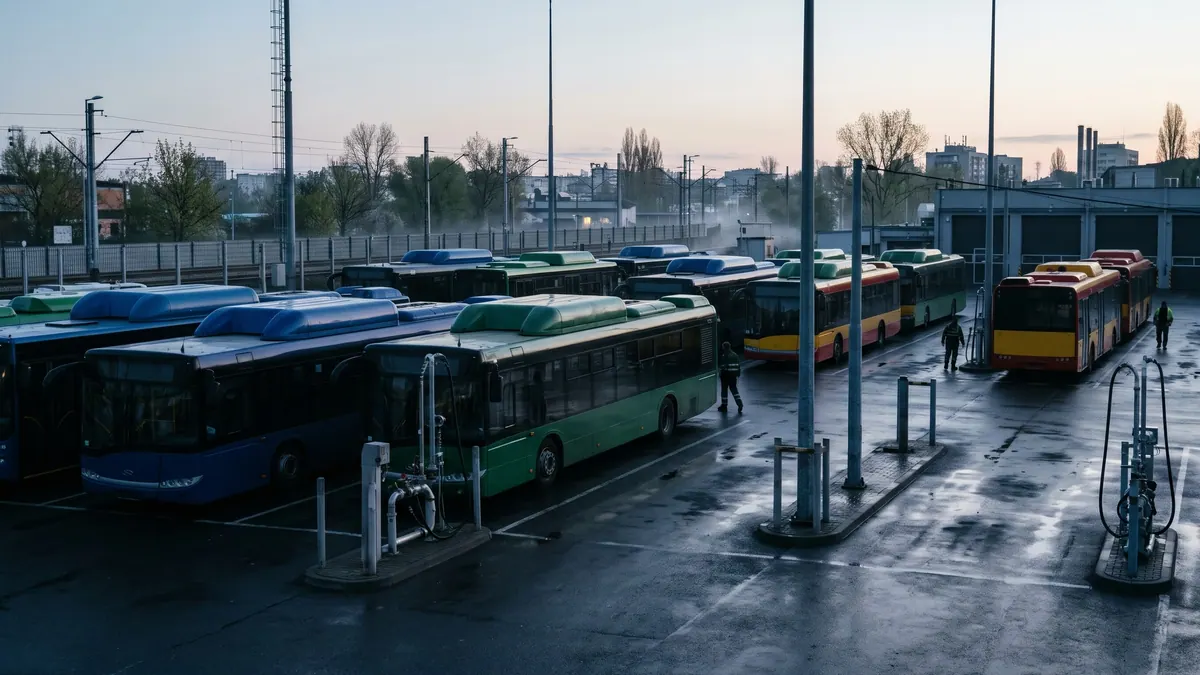
Transport: bioCNG and bioLNG. Compressed or liquefied biomethane powers buses, trucks and ships. BioLNG makes sense at larger scale and on longer routes, because liquefaction costs energy; micro-liquefiers are looking for a place in this niche. These are described in the texts BioLNG: what it is and when it makes sense and BioCNG as a fuel.
A local customer and the virtual pipeline. Where there is no grid, biomethane can be delivered in cylinders or tankers to an industrial customer or a station, see Virtual pipeline. This is a flexible solution, but transport is a cost that rises with distance.
Agriculture as producer and customer
A farmer can be at once a supplier of substrate, a producer of biomethane and a user of part of it, for example in methane-powered machinery or for drying crops. The loop is closed when the digestate returns to the field as fertiliser. Here energy and fertilisers join into a single system, and each element reduces dependence on external supplies. The scale of methane-powered machinery is, however, still small for now, and it requires access to refuelling.
What profitability depends on
- Scale: the unit cost of upgrading and of the connection falls with scale, so small plants have a harder time.
- Distance from the grid: the connecting pipeline is sometimes the largest single cost.
- Feedstock stability: a biomethane plant runs continuously, so it needs substrate contracts in advance.
- Use of CO₂ and digestate: these are additional streams that can improve or worsen the result.
- Value of guarantees of origin and certification: these depend on regulations and the market, and the RED III Directive sets the framework for renewable energy, including sustainability criteria, so every project requires a check of the rules in force.
Honestly, domestic biomethane may cost more than imported gas; the article Domestic biomethane costs more than imported gas shows that the argument is not the price itself but security, local employment and long-term stability. These values have to be assessed for each project separately.
Summary
Biomethane is a domestic fuel in a particular sense: its feedstock, place of production and part of its value remain in the country. It will not replace natural gas in full, but it can reduce imports and give customers a choice. We wrote about how the sensible use of waste is more than a matter of technology in the opening of the series: Energy independence starts locally. The digestate discussed in the text Digestate and nutrient recovery in place of part of the mineral fertilisers fits into the same system.
Sources
Questions and answers
How does biogas differ from biomethane?
Biomethane is biogas cleaned and upgraded to natural gas quality, with methane usually above 95%, whereas raw biogas has around 50–70% methane.
Is biomethane always better than generating electricity in cogeneration?
No. Biomethane offers flexibility of offtake and access to the grid and transport, but requires upgrading and usually a larger scale. Cogeneration can be better where there is a heat consumer and a small installation.
Related articles