Technology and operationAnalysis
Emergency biogas flaring, part 5: heat users, the gas grid and upgrading as an outlet for excess gas
Can heat users, dryers, the gas grid or upgrading to biomethane take over excess biogas? When it works, and when it merely moves the problem.
Other language versions: Polski, Deutsch, Español, Français, Italiano, Nederlands.
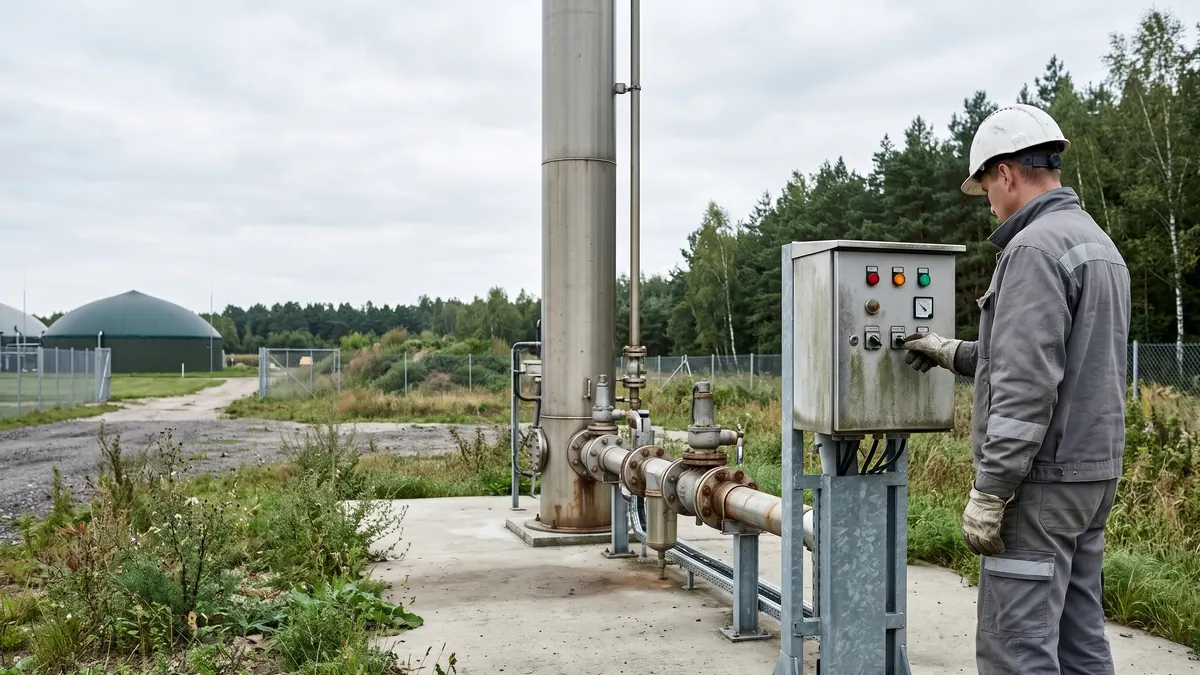
Heat users, the gas grid and upgrading to biomethane can take over energy from excess biogas, but each has limitations that mean none of them replaces the flare as a safeguard. This article is part of the series "Emergency biogas flaring". Earlier parts: hierarchy and requirements, flares, a second CHP unit and the buffer and boiler.
Heat users as an energy "outlet"
Dryers (for wood, grain, digestate), district heating networks, livestock buildings and greenhouses take heat from the CHP unit or boiler. This solution works on the heat side: it reduces the amount of heat discharged to the emergency cooler and improves the use of total energy. A description of dryers can be found in the article Dryers using heat from a biogas plant, and the balance and seasonality of heat in the article on waste heat from CHP.
An important limitation: a heat user does not take gas. When the unit is stopped, gas is still being produced, and there is no heat to give. Moreover the user may have a different profile from production: a dryer works in campaigns, building heating in winter. Heat is therefore worth treating as a way of improving efficiency, not as a safeguard.
An example from Lower Saxony shows the dependence the other way round. In a parliamentary question from 2022 (Drucksache 18/11145), members of the state parliament describe how biogas plants with heat offtake are affected by power curtailment ordered by the electricity grid operator (redispatch), the biogas produced then is sometimes flared in the emergency flare, and heat supplies, at times for several days, have to be replaced with fossil fuels. This is a description contained in the question, not a finding of the government, and it concerns German market conditions. The restriction here concerns the electricity grid, not the gas grid.
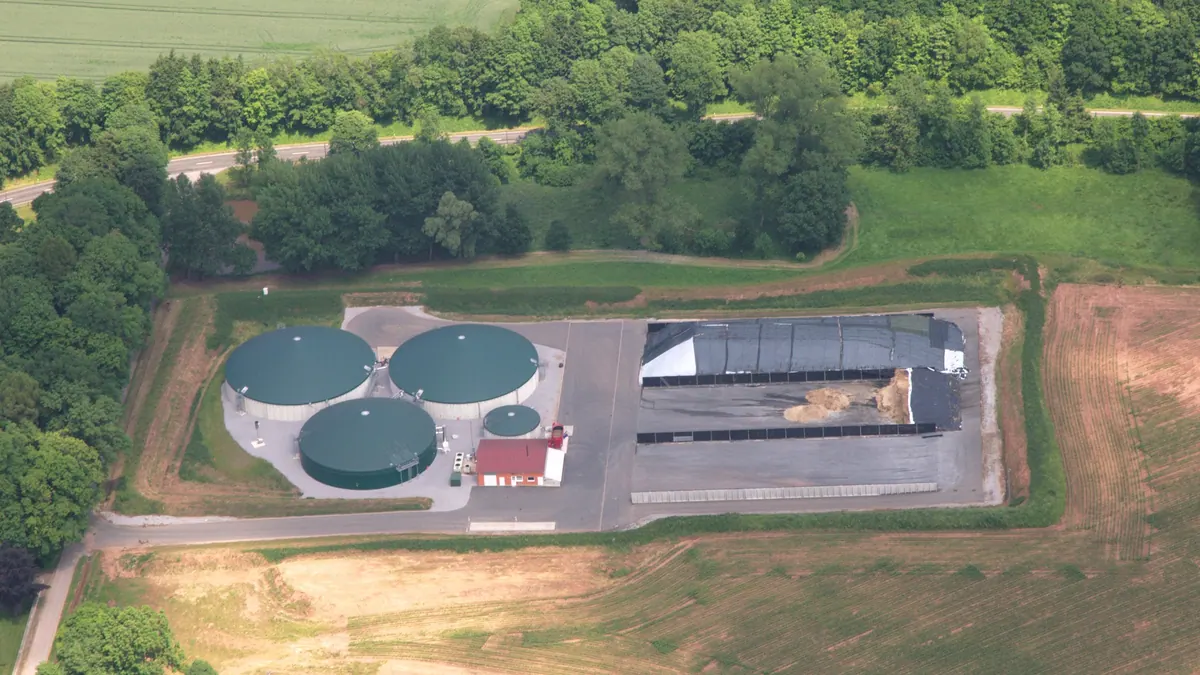
Upgrading and delivery to the grid
Gas can be upgraded to biomethane and injected into the grid, which we write about in the articles A biomethane grid injection station, Conditions for connecting a biomethane plant to the grid and Biogas upgrading technologies. The choice between cogeneration and biomethane is discussed in the article CHP or biomethane, and the conversion of an existing installation in the article on retrofit.
As a way of dealing with excess gas, upgrading has advantages: the product has a market value, and part of the stream can be diverted while the CHP unit is stopped. It also has limitations:
- the upgrading plant has its own downtime and servicing, and when it fails the same problem of excess arises,
- injection depends on the capacity and pressure of the grid and on the operator's conditions (the transmission grid is run by GAZ-SYSTEM, but connecting a biomethane plant usually involves the distribution system operator competent for the location; establish this at the start),
- the quality of the biomethane must meet the requirements; gas that does not will not enter the grid,
- investment costs are much higher than for a flare or boiler.
In the described cases of biomethane installations with a small buffer, the operator flared part of the gas when grid capacity was limited; this could have been avoided with a larger store or another outlet. For grid injection, therefore, the gas buffer is as important as for cogeneration. Biomethane installations should have their own safeguards in case of a failure of upgrading or of the grid; their scope follows from the design of the specific installation.
Comparison of energy "outlets"
| Solution | What it takes | When it does not help | Main risk |
|---|---|---|---|
| Heat user (dryer, network) | heat | when the CHP unit is stopped | variable offtake profile, dependence on the contract |
| Biogas boiler | gas (as heat) | when there is no heat offtake | competition with the CHP unit for gas |
| Upgrading and grid | gas (as biomethane) | when the grid or the plant is stopped | grid capacity, servicing |
| Flare | gas | will work with a sound system and power supply | no use of the energy |
How to assess whether it is justified
- Check whether the problem is a lack of gas offtake or a lack of heat offtake. The solutions are different.
- Collect the flare operating hours broken down by cause.
- Ask the user about minimum and maximum offtake and about the terms of the contract.
- For upgrading, check the connection conditions and the grid capacity at the injection point.
- Keep the flare as a safeguard.
Heat in the summer season
In summer the digester needs less heat, and external users, such as building heating, almost none at all. The surplus heat from the CHP unit then goes to the cooler, and a dryer is sometimes the only sensible user. It is therefore worth checking whether the user has a profile complementary to the installation, and writing it into the contract as a minimum offtake in the summer period.
Contracts and responsibility for offtake
An external user is also a contractual risk. A heat contract should describe the minimum and maximum offtake, the schedule, the method of settlement during interruptions and the consequences of the user changing its profile. Without this, economic calculations rest on an assumption that can change without the biogas plant's involvement. Similarly with the gas grid: the connection conditions specify the pressure, the gas quality and the rules for limiting injection, and compliance with them must be confirmed with the operator before investing.
Questions for the grid operator and the user
Before deciding it is worth asking the grid operator about the smallest and largest permissible flow, the required pressure, the rules for temporary limitation of injection and the manner of notification of interruptions. The heat user is worth asking about the hourly offtake profile, planned overhauls and the consequences of its own failures for the biogas plant.
What these solutions do not change
None of the described outlets removes the need for overpressure protection in the tanks and the gas store. Even an installation with excellent heat offtake and upgrading must provide for a situation in which both are temporarily not working. In the gas system there must therefore always be an element that will take the gas without depending on external contracts and grids, and that role is played by the flare.
The next part, the summary of the series, sets out all the solutions in a table and a decision tree. This article is general in nature and does not replace an analysis for a specific installation.
Sources
Questions and answers
Does a dryer or heat network solve the problem of excess biogas?
Only partly. A heat consumer will use the heat from the CHP unit or boiler, but it does not take the gas, so when the CHP unit is down for servicing or a breakdown there is no heat to deliver and gas is still being produced.
Related articles